

Inflation Surprise Sparks Volatility: Stocks Dip, Bond Yields Surge
Tuesday, November 10, 2026
INFLATION SURPRISE SPARKS VOLATILITY: STOCKS DIP, BOND YIELDS SURGE
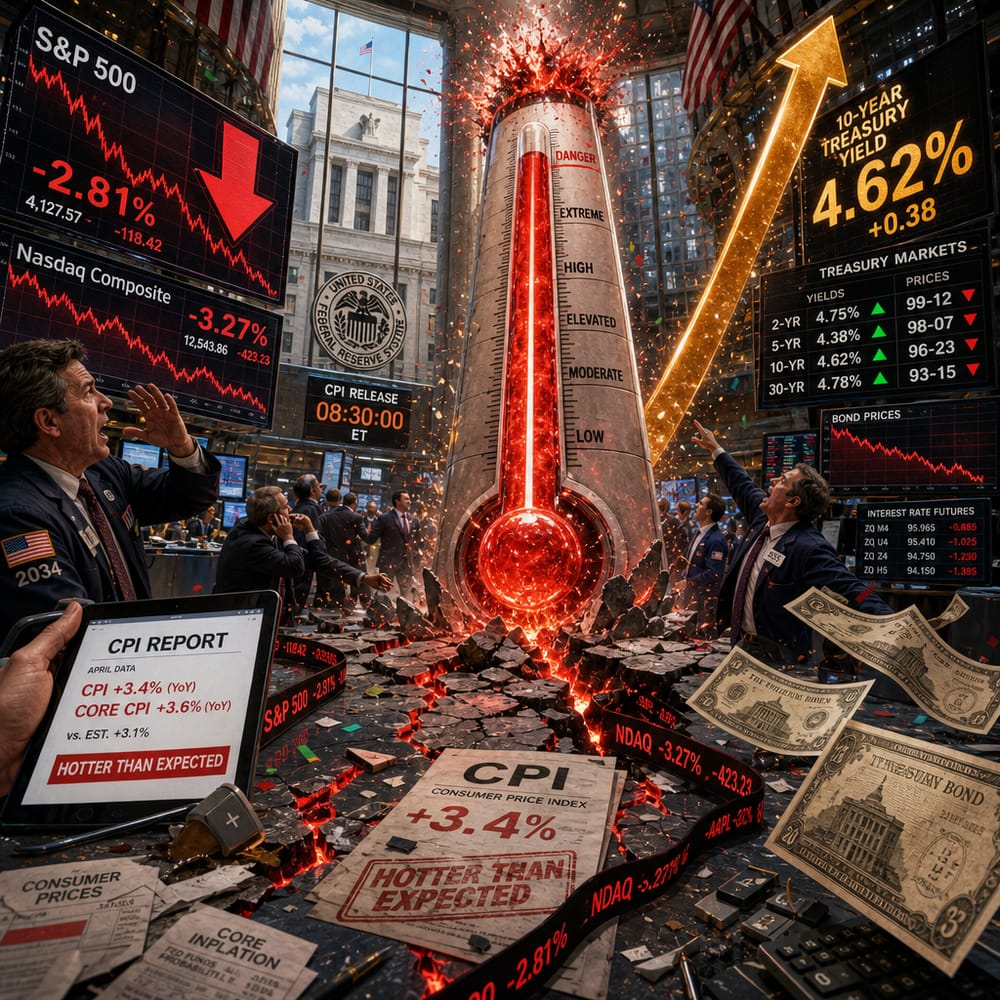
Hold on to your wallets, folks. Inflation just tossed a spicy curveball our way, and the markets are reeling like a soap opera character after a shocking revelation. The latest consumer price index (CPI) report was supposed to be a gentle nudge towards stability, but instead, it felt like a slap in the face to investors everywhere, leaving both stocks and bonds reeling.
Let’s break down the chaos: The U.S. consumer price index for October rose by 0.4%, a smidgen over the 0.3% economists were banking on. But when it comes to markets, a smidgen can mean millions. Core CPI, which conveniently skips the volatile food and energy prices, also nudged up more than anticipated. Cue the suspenseful music because this means interest rate hikes might be lurking around the corner like a villain in a horror movie.
Unsurprisingly, the stock market didn’t take kindly to the news. The S&P 500 shed 0.9% of its value, while the tech-heavy Nasdaq took a bigger hit, sliding 1.6%. Even the usually sturdy Dow Jones couldn’t escape the turmoil, dropping 302 points. Nvidia, the high-flying tech darling, nosedived 6% after news of its CEO’s entanglement with a scandal that sounds like the plot of a spy novel. Talk about a bad day at the office.
But why the tech sector’s deeper tumble? Tech stocks, already jittery from the news about rising interest rates, saw the inflation data as a neon sign flashing “Danger Ahead.” Higher interest rates typically mean bad news for growth stocks like tech companies, which rely heavily on borrowing to fuel their rocket-like expansion plans. So naturally, investors are pulling back, and fast.
While the equity markets were busy having a meltdown, the bond market was throwing its own little party—or rather, a wake. Yields on 10-year Treasury notes shot back above the 5% mark, climbing faster than your heart rate on a rollercoaster. When bond yields move up, prices move down, and investors are clearly bracing for the Federal Reserve to put its hawkish hat back on, potentially hiking rates sooner than planned. The yield on the 2-year Treasury note, which dances closest to the Federal Reserve’s tune, jumped more than 19 basis points. It’s like the bond market is screaming, “More rate hikes are coming!”
So, what does this mean for the Federal Reserve? In short, it’s a headache. With inflation hotter than anticipated, the Fed might just be pushed to continue its rate-hiking spree, a scenario that doesn’t bode well for businesses reliant on borrowing. The central bank might have to keep the screws tight on monetary policy longer than expected, playing the part of the strict parent who just won’t bend the curfew.
For retail investors, the big question is: What now? With the stock market on edge and bond yields climbing, it might be time to reassess those portfolios. Some are eyeing safer shores, pivoting towards value stocks or sectors less sensitive to interest rate changes. Others are battening down the hatches, diversifying their holdings to shield against volatility. Cash, often overlooked, becomes a compelling alternative—ready to deploy once the storm settles.
In the meantime, keep an eye on the Federal Reserve’s next moves. If they signal a more aggressive stance on rate hikes, expect more turbulence. Conversely, if inflation data in the coming months start to cool off, markets might breathe a sigh of relief.
So as inflation throws its wild card on the table, investors will need to play their hands wisely. Whether it’s adjusting asset allocations or keeping a wary eye on Fed announcements, staying informed and agile is key in these volatile times. Remember, in the world of investing, fortune favors the prepared.
This article is for informational purposes only and is not investment advice. Always do your own research or consult a licensed financial professional before making investment decisions.
© Copyright 2024. All Rights Reserved.
© Copyright 2024. All Rights Reserved.