

Inflation Surprise and Its Impact on Market Sentiment
Saturday, August 29, 2026
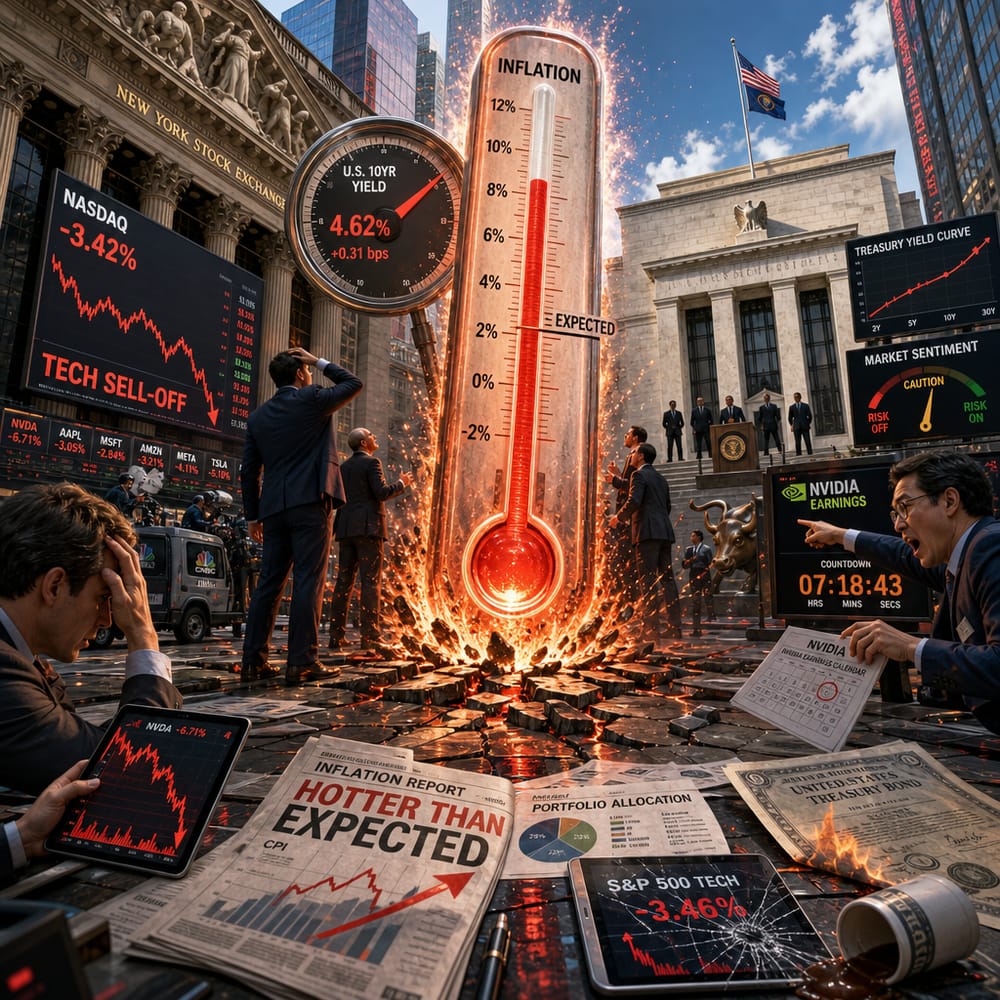
INFLATION SURPRISE: CRANK UP THE HEAT AND WATCH THE MARKETS SWEAT
It seems inflation has gatecrashed the party once again, and this time it’s brought a sizzle that's hotter than a jalapeño on a summer grill. Investors were caught off guard as recent inflation figures rolled in, showing prices climbing faster than expected. Cue the market jitters, just as everyone's getting ready for Nvidia’s earnings report and waiting for the Federal Reserve to drop some hints on what’s next. Let’s dive into how this inflation surprise is making waves and why it could have your portfolio sweating bullets.
INFLATION UPS THE ANTE
Inflation is like that annoying guest who just won’t leave, and it’s making everyone nervous about what the Federal Reserve might do next. In layman’s terms, when inflation heats up, the cost of borrowing money often climbs along with it. This is where bond yields come into play. Higher inflation typically pushes bond yields up, as investors demand more return for lending their money. And just like that, your fixed-income portfolio might be looking a little less appealing.
But bonds aren’t the only ones feeling the burn. Inflation affects stock markets too. Here’s the thing: higher bond yields often make stocks less attractive as investments, especially when it comes to the tech sector, which is heavily reliant on future growth. When money gets more expensive to borrow, tech companies with sky-high valuations based on expected future earnings start to look riskier.
FEDERAL RESERVE: TO HIKE OR NOT TO HIKE?
With inflation numbers sizzling, everyone’s eyes are on the Federal Reserve to see if they're going to hit the brakes or let the economy ride. Recently, Fed Chairman Kevin Warsh kept his cards close to the chest, remaining tight-lipped about any interest rate tweaks. He did call inflation “concerning” though, which might just be one of the more quintessential understatements of the year.
If the Fed decides to raise rates to tackle inflation, borrowing costs for businesses and consumers alike could rise, potentially slowing economic growth. But a more dovish approach, keeping rates steady to support growth, could let inflation run its course for a while longer. Basically, it’s a high-stakes game of chess with the economy as the board.
TECH, MEET TREPIDATION
So which sectors are most vulnerable to the heatwave of inflation? Tech stocks, for sure, are in the firing line. Companies like Nvidia have been riding high on the AI and semiconductor wave, but inflation can cause these high-flying stocks to lose some altitude. Nvidia’s recent earnings report was stellar, doubling its sales from the previous year, and it has investors hoping for even more future growth. But with inflation stirring the pot, even the most optimistic outlooks can come under scrutiny.
For tech companies, which often have high valuations based on future earnings, rising interest rates can be like a bucket of cold water. Suddenly, those future earnings are worth less today, and investors may start looking elsewhere for returns.
THE RIPPLE EFFECT
Beyond bonds and tech, inflation’s ripples reach other sectors too. Real estate, for instance, often feels the pinch as rising rates can dampen housing market enthusiasm. Meanwhile, consumer goods companies may see costs rise for everything from raw materials to wages, squeezing profit margins.
As inflation tightens its grip, the broader market sentiment could shift. Investors might become more risk-averse, steering towards safer havens like treasury bonds or gold, or even cash under the mattress if they’re feeling particularly old-school.
THE WAITING GAME
As we tiptoe through this inflation minefield, investors are left with more questions than answers. Will the Fed take action, or will they let inflation run its course? Will Nvidia and other tech giants be able to weather the storm? How will other sectors adapt?
For now, we’re all in a bit of a wait-and-see mode, with the Fed’s next moves and corporate earnings reports as our guides. One thing’s certain: as inflation continues to surprise, market dynamics and investor sentiment are bound to keep shifting. So keep your eyes peeled and your portfolios flexible — this is one rollercoaster where you’ll want to be strapped in tight.
This article is for informational purposes only and is not investment advice. Always do your own research or consult a licensed financial professional before making investment decisions.
© Copyright 2024. All Rights Reserved.
© Copyright 2024. All Rights Reserved.