

Inflation Stays Stubborn: PCE Holds at 3.7%
Saturday, August 29, 2026
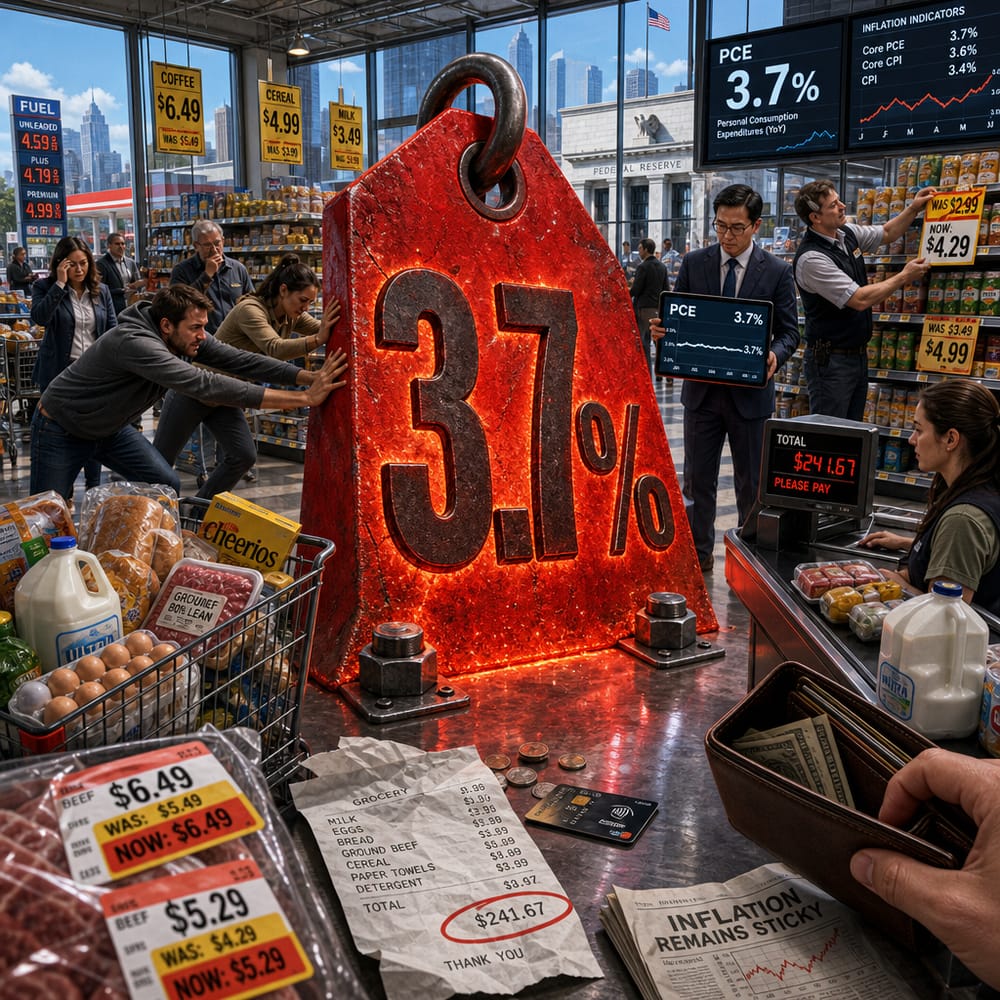
INFLATION'S NOT DEAD, IT'S JUST NAPPING: PCE AT 3.7% AND THE FED'S NEXT MOVE
If you thought inflation was yesterday’s news, think again. The Personal Consumption Expenditures (PCE) Price Index, a favorite thermometer for the Federal Reserve to take the economy's temperature, decided to park itself right at 3.7% year-over-year. That’s a tad too warm for comfort, especially when the Fed's Goldilocks target is a cooler 2%. So, what’s next?
Before you pop the cork on the celebratory bubbly, let’s dive into why this matters. That 3.7% isn’t just a number; it’s an economic cocktail that might have the Fed reaching for its policy toolkit. Persistent inflation above the Fed's target can lead to tighter monetary adventures—think higher interest rates—affecting everything from how much it costs to finance your dream home to the price tag on borrowing for businesses. So, strap in, because where this number goes, the markets may follow.
WHAT'S KEEPING INFLATION ALIVE?
The million-dollar question: Why won’t inflation take a hint and chill out? A motley crew of factors is behind this inflationary hangover. First up, energy prices. When oil and gas decide it's time to flex, everything gets pricier—from the cost of hauling goods to keeping our homes warm. Next, the labor market is tighter than your favorite pair of skinny jeans, with low unemployment pushing wages up, and companies passing those costs onto consumers. And let’s not forget the pesky supply chain issues; they may not grab headlines like they used to, but they're still there, quietly spicing up costs.
HOW WILL THIS AFFECT YOUR WALLET?
If inflation continues to ride high, consumer confidence—a.k.a. our collective comfort in spending money—could take a hit. Imagine trying to save for a vacation while your grocery bill keeps growing; that's the kind of stress that makes consumers think twice before opening their wallets. The longer inflation lingers, the more likely it is people will pump the brakes on spending, affecting everything from retail to real estate.
THE FED'S TOOLKIT: WHAT'S IN THERE?
So, can the Fed ride in like a monetary superhero and save the day? They've certainly got tools in the shed. The classic move is to raise interest rates, making borrowing more expensive to cool off an overheating economy. But like a chef with too much cayenne, add too many rate hikes, and you could end up with a recession stew. The Fed could also play with its bond portfolio through quantitative tightening, which, in plain English, means selling off some of the trillions in government bonds it holds. This can indirectly push up long-term interest rates and cool borrowing.
However, Fed Chairman Kevin Warsh has been coy, skipping the traditional signal sending at this year's Jackson Hole symposium. His new policy of playing it close to the chest has markets on edge, trying to decode the Fed’s next move like it’s the latest Netflix thriller.
THE BROADER IMPACT: WHAT’S THE BIG PICTURE?
If the Fed goes on a rate hike spree, it could throw a wet blanket on economic growth. Higher rates mean higher costs for businesses, potentially slowing down hiring and expansion plans. Consumers might find mortgages and credit cards pricier, which could mean fewer home purchases and less spending. Not exactly what the economy needs if we’re aiming for vibrant growth.
But don’t start panicking just yet. The Fed’s aim is to slow down inflation without slamming the brakes on the economy. It's a high-wire act, and everyone from Wall Street to Main Street is watching.
SO, WHAT SHOULD YOU DO?
Keep an eye on the Fed’s next moves, and if you’re the betting type, consider how rate hikes might affect your financial game plan. It's a good time to revisit those variable-rate debts and consider locking in fixed rates where you can. And if you’re an investor, think strategically about sectors that benefit from higher rates, like financials, which could see wider margins.
In the end, this round of inflation might be like an uninvited guest at a party. It’s here, but not forever. The key is figuring out how to deal with it until it decides to make its exit.
Stay sharp, stay informed, and keep your wallet ready for whatever comes next.
This article is for informational purposes only and is not investment advice. Always do your own research or consult a licensed financial professional before making investment decisions.
© Copyright 2024. All Rights Reserved.
© Copyright 2024. All Rights Reserved.