

Inflation Shock: Hot CPI Stirs Market Volatility and Bond Yields Surge
Wednesday, October 14, 2026
INFLATION SHOCK: HOT CPI STIRS MARKET VOLATILITY AND BOND YIELDS SURGE
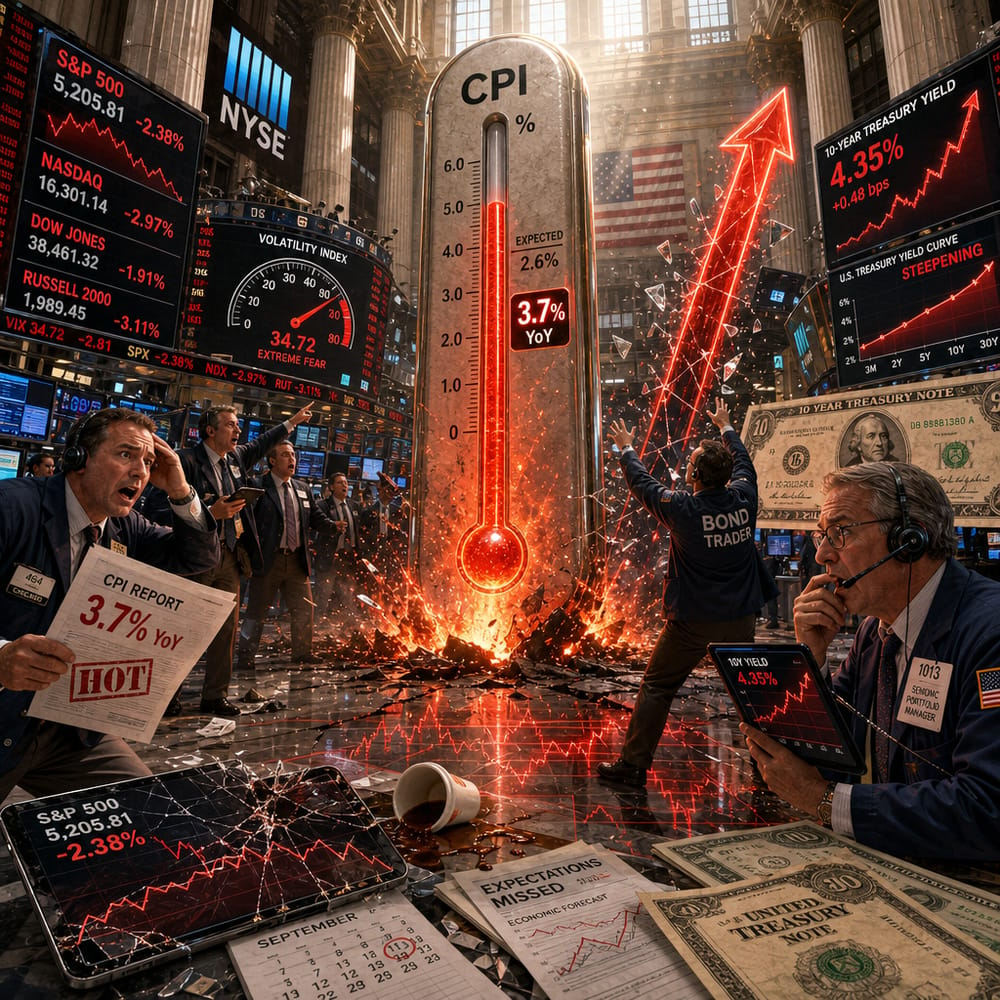
Hold on to your hats, folks, because the latest Consumer Price Index (CPI) numbers just dropped a financial bombshell—again. September’s CPI revealed a spicy 3.7% year-over-year increase, which is hotter than a jalapeño pepper and definitely not what Wall Street wanted to see. If you felt a sudden chill in the stock market, that’s because Treasury yields decided to go for a joyride, soaring to heights that would make Elon Musk jealous, while U.S. stocks dove into the red sea of losses.
For those keeping score, inflation has now overstayed its welcome for over five years, consistently clocking in above that mystical 2% target beloved by central bankers. And guess what? Investors are feeling the heat. Markets reacted like they just saw a ghost, and that ghost's name is ‘Persistent Inflation.’ The S&P 500 took a 1% nosedive, while the Nasdaq and Russell 2000 joined in the weeping, all because inflation is still partying like it’s 1979.
So, what’s the big deal? Well, persistent inflation is like that one friend who doesn't know when to leave the party—it just makes everything awkward. And with the Federal Reserve playing the role of the stern parent, there’s talk of more interest rate hikes. Higher interest rates can put the brakes on economic growth faster than a red light in Times Square. But it’s a tricky dance. Raise rates too aggressively, and the economy could face the dreaded R-word: recession.
Investors are now parsing the tea leaves, hoping to divine the next move by the Fed. Will they give us more rate hikes, or is Jerome Powell going to hit pause and let us catch our collective breath? For the moment, the bond market is pricing in a potential rate hike in December, which means we might be dealing with a few more bumps on this economic rollercoaster.
The Treasury yields are where the real fireworks are, with the 10-year yield pushing up like it’s on a caffeine binge. This has a domino effect, especially in sectors sensitive to interest rates. Picture this: higher yields lead to more expensive borrowing, which can be kryptonite for growth sectors like tech. Companies like CoreWeave, heavily invested in AI development, are feeling the pinch as they rack up debt. Their shares are taking it on the chin, and investors are getting jittery about the sustainability of such borrowing sprees.
But it’s not all doom and gloom. Not yet, anyway. Some sectors are surprisingly resilient. Healthcare stocks, for instance, are enjoying their time in the spotlight, with companies like UnitedHealth and Amgen providing much-needed ballast to the Dow. Defensive sectors, those that provide goods and services that are always in demand like utilities or healthcare, tend to weather these storms better. They’re the market’s comfort food during times of uncertainty.
So, what should Joe Investor do while inflation plays musical chairs with your portfolio? Diversify, my friends. Spread the risk around like butter on toast. Keep an eye on sectors less affected by these interest rate gyrations. And remember, panic-selling is never the answer, unless you enjoy losing money.
There’s also a silver lining, albeit a thin one. The Social Security Administration announced a modest 3.6% cost-of-living adjustment for 2027, which is like finding a twenty in your winter coat pocket—it’s not much, but it’s something. Millions of Americans will see a little extra cash to help keep up with rising prices, which is good news amidst the financial chaos.
In the meantime, investors will be scrutinizing every Fed utterance for clues on the future path of interest rates. The market is on edge, and every hint from the Fed could swing sentiment like a pendulum. So, buckle up, stay informed, and whatever you do, don’t forget to breathe.
This article is for informational purposes only and is not investment advice. Always do your own research or consult a licensed financial professional before making investment decisions.
© Copyright 2024. All Rights Reserved.
© Copyright 2024. All Rights Reserved.