

Inflation Shock and AI Sell-Off Fuel Deep Retreat in Major U.S. Indices
Wednesday, November 25, 2026
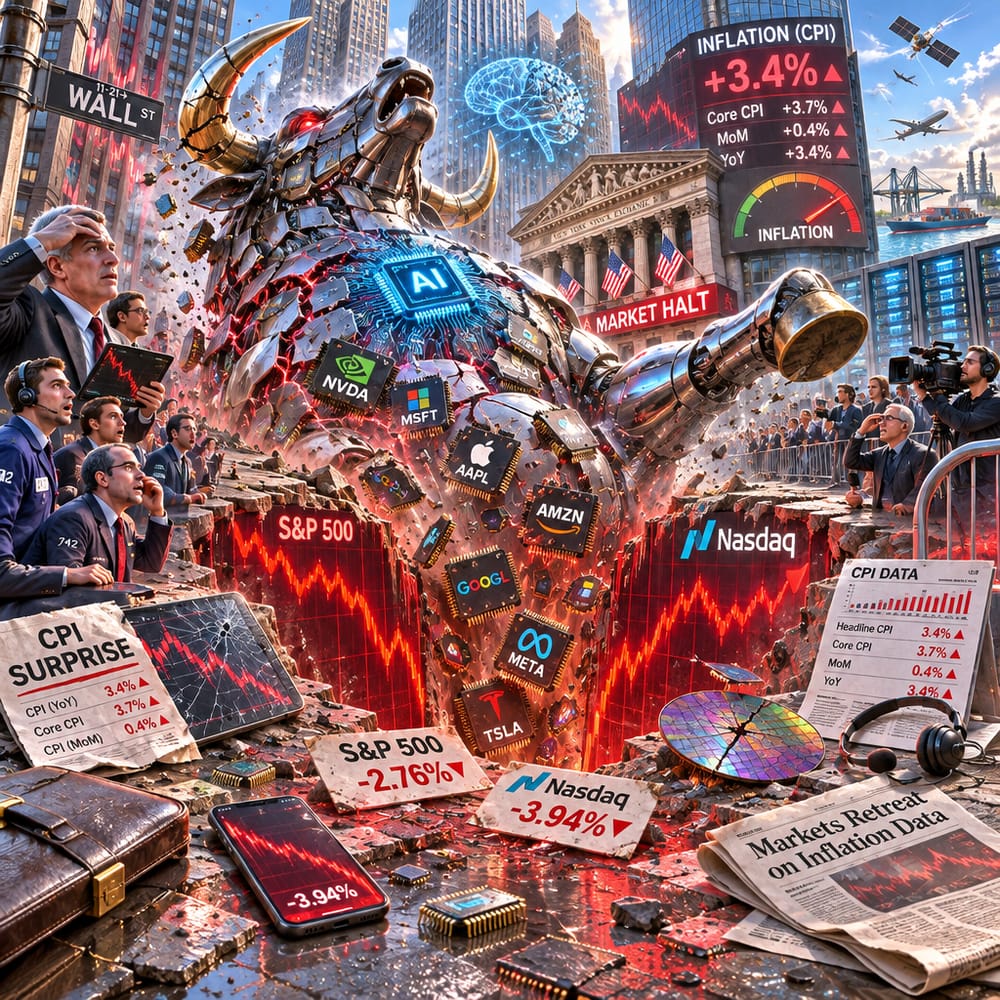
HEADLINE: Inflation Jolts Markets, AI Stocks Tumble: Wall Street's Wild Ride
We live in a world where binge-worthy dramas aren’t just for Netflix—they’ve hit Wall Street, too. In the latest episode, inflation and a high-stakes AI stock sell-off sent the S&P 500 and Nasdaq into a tailspin. Picture this: investors clutching their phones, scrolling through the chaos like it's a juicy new series they just can't pause.
INFLATION: THE NEVER-ENDING STORY
Let’s set the scene: U.S. inflation is the villain we can’t seem to vanquish. The latest numbers reveal prices are still climbing, and they’re not alone—our anxieties about the economy are tagging along. Imagine that extra ice cream topping you didn't really order but still have to pay for. Inflation works similarly. It often means consumers get a little less bang for their buck, and businesses face higher costs. This time around, it’s tech stocks—specifically AI—that felt the sting.
AI STOCKS IN HOT WATER
Here’s where it gets dramatic. The AI sector, a darling of Wall Street with promises of shiny new tech toys and groundbreaking innovations, suddenly hit a bumpy patch. Nvidia, one of the key players in AI, found itself under the microscope. S&P has put Nvidia’s board on downgrade watch, and this warning sent investors into a frenzy. When a big player stumbles, it’s like watching your favorite character in peril—you can’t help but wonder what happens next.
The problem? Rising inflation puts the squeeze on tech companies, especially those promising future growth like AI. High inflation can lead to higher interest rates, which tends to make future profits less valuable today. Investors, apparently skeptical of AI’s lofty promises in a high-interest world, started unloading their tech stocks faster than you can say "bubble burst."
IS THIS A HOLIDAY HORROR SHOW FOR MARKETS?
Markets don’t like uncertainty—the financial equivalent of a creepy clown hiding in the bushes. Rising inflation paired with AI volatility sent the S&P 500 and Nasdaq sliding downwards, with investors nervously adjusting their portfolios. But before you dive into conspiracy theories about the end of days for your retirement fund, let’s take a breather.
Some savvy investors are buying the dip, grabbing stocks at discounted prices, and nudging the indices back from the brink of a bear market. So, while it might look like the sky is falling, seasoned traders see these storms as temporary blips on a long-term horizon.
SEASONAL TWISTS AND MARKET TURNS
The market's mood swings are far from over, especially with the holiday season rolling in—a time when people usually spend like there's no tomorrow. However, the current inflation trend suggests that shoppers might tighten their belts a bit tighter this year. Retailers will be watching consumer behavior closely, hoping that the spirit of giving doesn't succumb to the fear of spending.
The next few weeks are mission-critical for retailers, as they make their last-ditch efforts to sell everything from candy canes to big-ticket electronics. Meanwhile, investors will be closely monitoring inflation numbers and interest rate talk from the Federal Reserve like it's the season finale of their favorite show.
LOOKING AHEAD: MORE PLOT TWISTS?
Goldman Sachs, Morgan Stanley, and other market gurus suggest that while inflation has overstayed its welcome, it might not be here forever. But for now, inflation’s impact on tech stocks and the broader market indices highlights just how sensitive the market really is.
So, what should we, the everyday investors, do amid this financial soap opera? Keep an eye on inflation trends, watch how tech stocks rebound, and remember that market volatility is as much a part of investing as reruns are to television—inevitable and often repetitive.
As we approach the end of another tumultuous market year, prepare for more plot twists. The financial markets may not be a Hollywood blockbuster, but they sure know how to keep us on the edge of our seats.
This article is for informational purposes only and is not investment advice. Always do your own research or consult a licensed financial professional before making investment decisions.
© Copyright 2024. All Rights Reserved.
© Copyright 2024. All Rights Reserved.