

Inflation’s Persistence: Core PCE, CPI Remain Sticky
Saturday, August 29, 2026
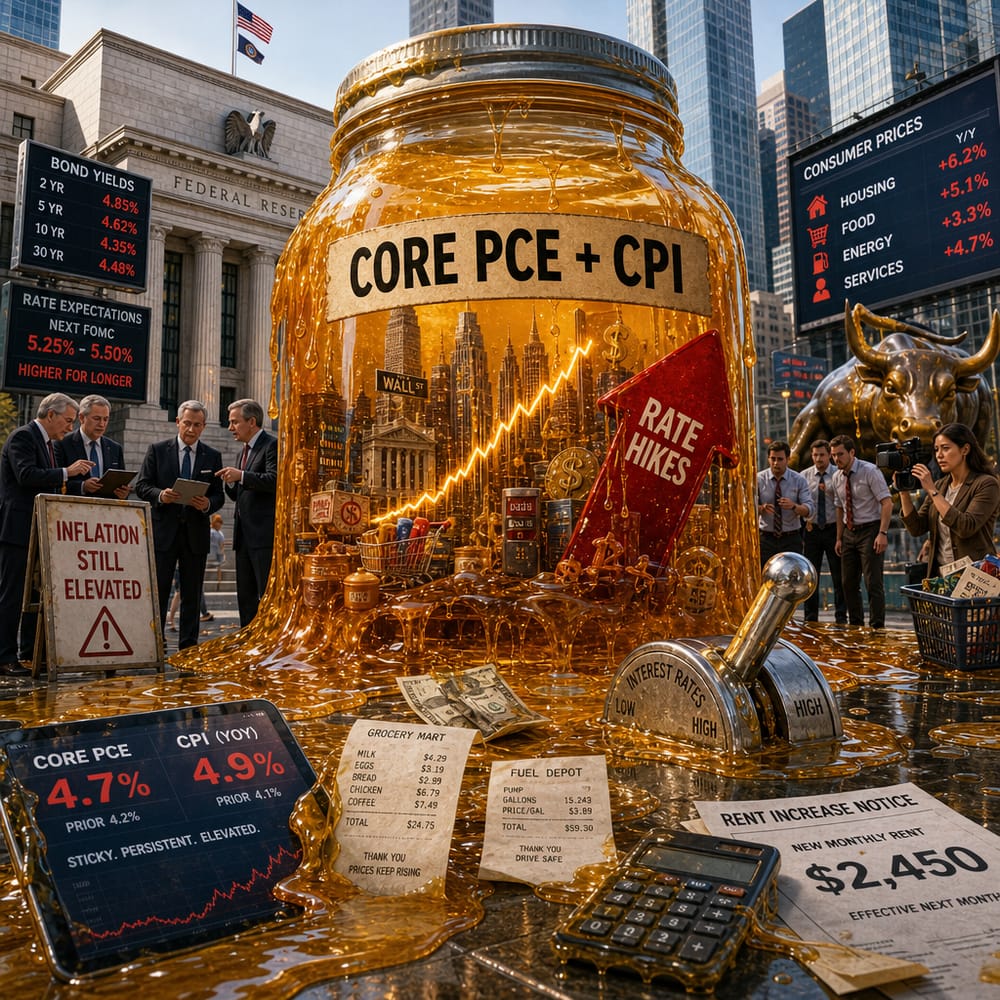
INFLATION'S PERSISTENCE: CORE PCE, CPI REMAIN STICKY
Inflation is like that annoying mosquito that just won’t leave you alone on a summer evening. You thought it was gone, but here it is again, buzzing in your ear and refusing to disappear. Despite hopes for some relief, inflation remains persistent, with key indicators like the Core Personal Consumption Expenditures (PCE) and Consumer Price Index (CPI) refusing to budge. So what do these stubborn numbers mean for your wallet, and what’s the Federal Reserve likely to do next? Let's dive in.
First things first: the inflation figures. The latest data shows that core PCE, the Fed's favorite inflation gauge because it strips out volatile food and energy prices, is not backing down. It remains elevated, stretching the nerves of Fed officials and anyone with a credit card statement to pay off. On the other hand, the Consumer Price Index, which tracks the overall change in consumer prices, might not be waving red flags but is still stubbornly high enough to make cereal boxes shed tears in the supermarket aisle.
Now, why does this matter? Well, persistent inflation is the thorn in the Fed's side as it tries to juggle a dozen spinning plates. The Federal Reserve's job is akin to expertly balancing the economy on a seesaw, ensuring neither inflation nor deflation takes the economy for a wild ride. However, when inflation doesn’t play nice, it complicates their primary task: maintaining stable prices.
With inflation remaining sticky, the Fed’s options aren’t looking too sunny. To cool things down, the Fed might reach for its trusty toolbox, which includes rate hikes. Think of interest rate hikes like turning up the AC in a stuffy room — the goal is to cool down spending and borrowing, thus taming inflation. But here's the catch: crank the AC too high, and you risk freezing the party — in economic terms, that means a potential recession.
Market expectations? They're like a fortune teller’s crystal ball — everyone’s peering in, but predictions vary. Some investors brace for further rate hikes, expecting the Fed to show inflation who’s boss. Others hope the Fed will opt for a steady hand, allowing previous hikes to slowly take effect. It’s a bit like a tense poker game, with traders and economists trying to guess the Fed’s next move.
What does it mean for you, the everyday investor? Higher interest rates can tighten the purse strings on consumer spending. Mortgages, credit cards, loans — they all get pricier, pinching the pennies a little tighter. On Wall Street, higher rates can deflate stock prices, acting like gravity on a bouncy castle. Those high-flying tech stocks? They might just take a tumble, so buckle up.
As we peer into the inflation crystal ball, one thing is for sure: the only predictable thing about inflation is its unpredictability. Geopolitical tensions, supply chain hiccups, even natural disasters — they all have the potential to throw a wrench into the inflation gears.
For the time being, though, everyone is playing watch-and-wait. The Federal Reserve, with its eagle-eyed focus on price stability, will continue to analyze the data, weighing its next decisions with the precision of a surgeon. But in this high-stakes inflation saga, one thing is clear: both investors and the Fed are walking a tightrope, balancing the need for economic stability and growth.
So, while we may not have all the answers, it’s safe to say that inflation, just like that pesky mosquito, isn’t going anywhere soon. Keep those economic bug sprays handy, folks. The Fed’s next move could make all the difference. Until then, it’s anyone’s guess who will win this ongoing round of economic whack-a-mole.
This article is for informational purposes only and is not investment advice. Always do your own research or consult a licensed financial professional before making investment decisions.
© Copyright 2024. All Rights Reserved.
© Copyright 2024. All Rights Reserved.