

Inflation Relief or Temporary Dip? August Outlook
Friday, August 14, 2026
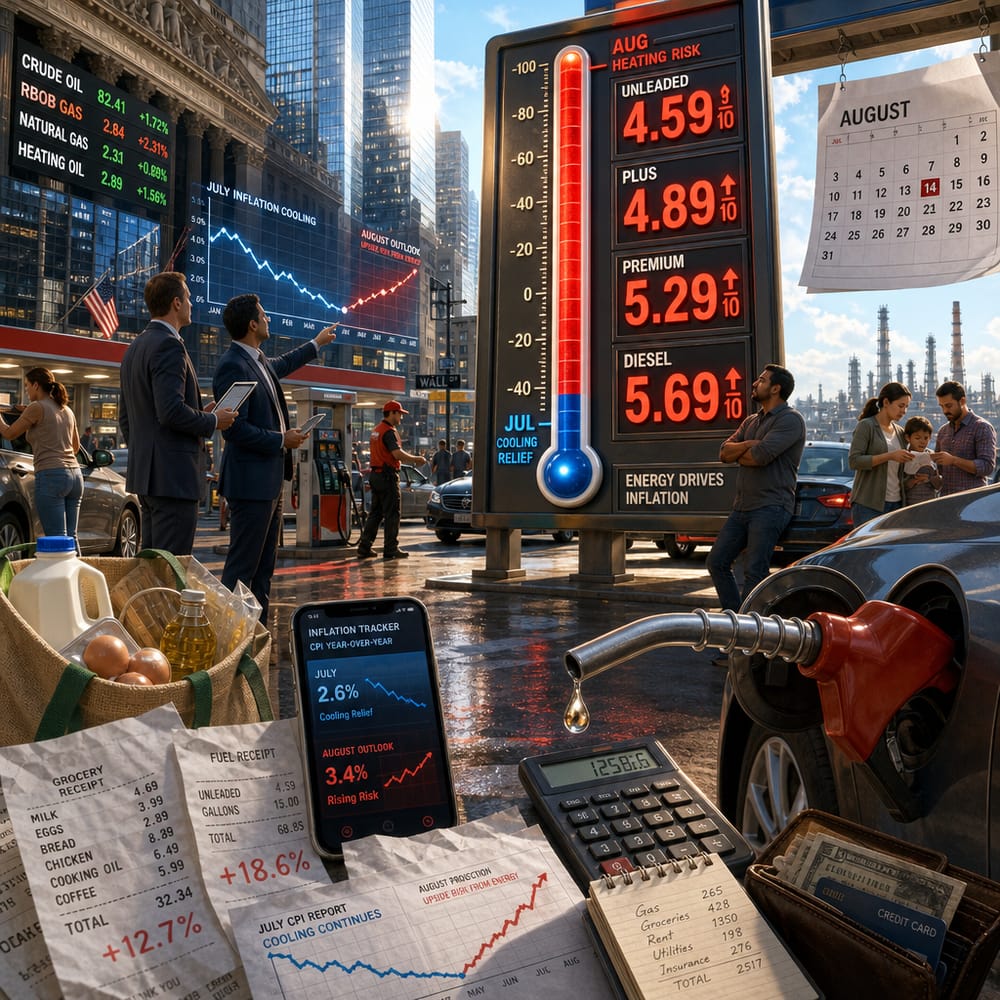
If you thought the inflation dragon was finally returning to its slumber, think again. Just when it looked like we could put our savings accounts back on cruise control, July gave us a glimmer of hope with cooling prices, but August might have other plans thanks to a spike in gasoline prices. Yes, the same sneaky fuel that's been causing you to wince at the pump is now whispering sweet nothings into the ear of inflation, potentially stirring it from its brief nap. Time to buckle up and see what this could mean for your wallet, your investments, and the big wigs at the Federal Reserve.
AUGUST'S INFLATION FLIP-FLOP?
July's consumer price index (CPI) readings had us all doing a cautious little jig. Prices seemed relatively mellow, and investors could almost smell the faint aroma of stability in the air. But hold your horses. Gasoline prices, the wild card in the inflation deck, are pulling a plot twist. They're heading north, and they might just drag inflation rates up with them. If those prices continue their upward march, expect August's inflation numbers to look a bit more like a bungee jump than a gentle slide.
So, what's fueling this gasoline surge? Think supply constraints, geopolitical tensions, and your classic supply-demand tango. The usual suspects of reduced oil production and increased global demand are adding to the pressure cooker that is the energy market.
WATCHING THE FED
The Federal Reserve has been playing it cool, with Chair Jerome Powell likely sipping his chamomile tea, watching the data roll in. But don't be fooled. The Fed is hypersensitive to these inflation ripples. While it's committed to a "data-dependent" approach to interest rates, any resurgence in inflation could force its hand into hiking rates sooner than expected. This is the kind of drama that keeps Powell and his cohorts up at night, pondering whether to hit the brakes or the accelerator.
SHORT-TERM WIGGLES WITH LONG-TERM CONSEQUENCES
Sure, a short-term spike in gasoline prices might seem like a temporary nuisance. But if the ripple effects start showing up across the broader economy, from grocery stores to gadget shops, it could rock the Fed’s boat. Imagine a scenario where rising prices erode consumer spending power. Not fun. The Fed might then have to tighten monetary policy, leading to a domino effect that could slow down economic growth.
MARKET REACTIONS: BUCKLE UP
What do you do when the market is holding onto its bull run by a thread named 'hope'? You pay extra attention to its reactions. If August's inflation numbers start to climb, expect jitters across the stock market. Sectors like technology and consumer goods, which have been enjoying a relatively smooth ride, might face turbulence. Meanwhile, the energy sector could just have its moment in the sun, as investors flock to stocks poised to benefit from rising energy prices.
This isn't just about gas prices, though. It's about how the market interprets them. If investors believe the Fed might intervene with rate hikes, expect volatility. And if you're playing the long game, maybe now's the time to revisit your portfolio, balance those high-growth tech stocks with some resilient, dependable energy-sector plays.
FINAL THOUGHTS
August’s inflation story is still being written, and gasoline prices are proving to be an unwelcome ghostwriter. While the hope is that this is just a blip on the economic radar, it’s crucial to stay informed and nimble. After all, the only thing predictable about markets is their unpredictability.
The takeaway? Keep your eyes peeled for those August CPI numbers, and consider how a potential surge in inflation might affect your financial decisions. Stay sharp, stay informed, and remember—this isn't just a numbers game; it's about understanding the ebbs and flows that could steer your financial future.
This article is for informational purposes only and is not investment advice. Always do your own research or consult a licensed financial professional before making investment decisions.
© Copyright 2024. All Rights Reserved.
© Copyright 2024. All Rights Reserved.