

Inflation Persistence and Fed's Response
Friday, November 13, 2026
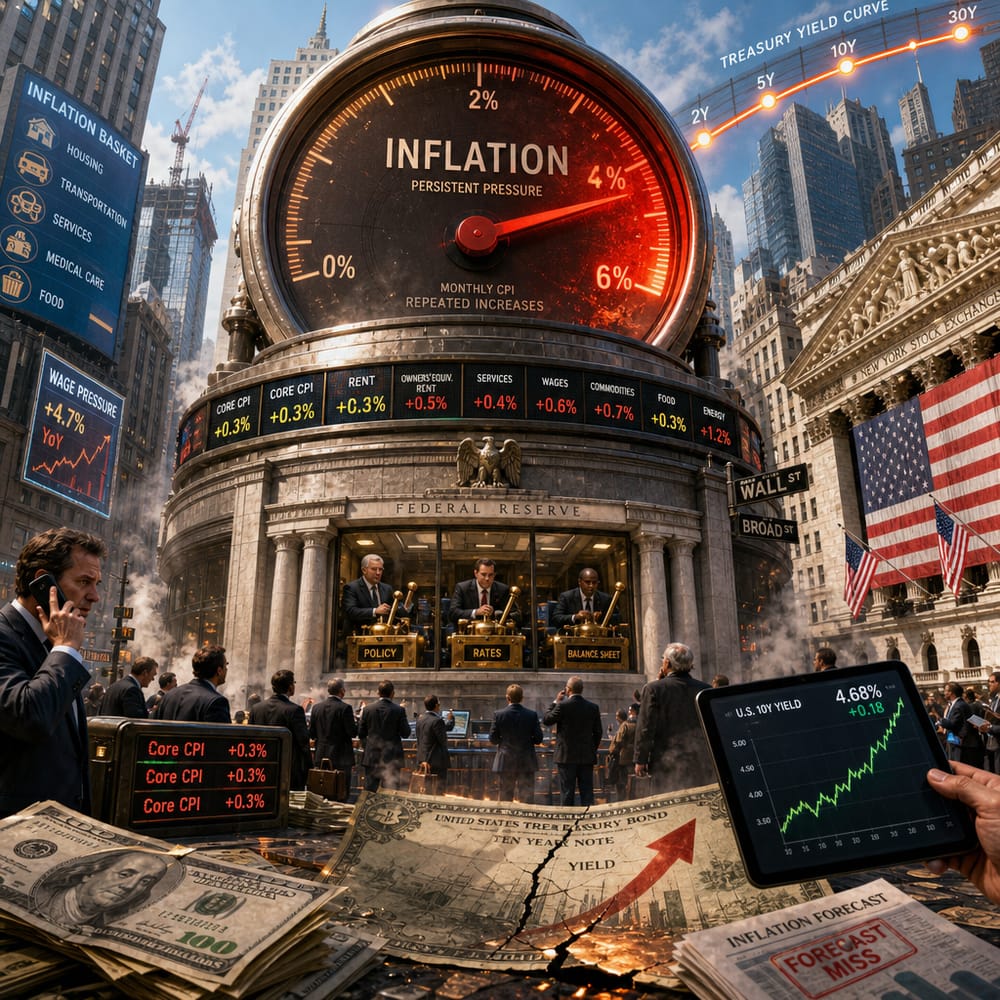
FED UP WITH INFLATION: WHY THE FED MIGHT NEED A PLAN B
Is your wallet still sore from the last grocery run? Surprise, surprise—October's core inflation has risen again, clocking in at a hefty 0.3% month-on-month for the third straight month. If you're wondering what this means for your wallet, hang tight because the Federal Reserve might have to crank up the heat even further, and that’s going to ripple through everything from your savings account to your favorite stock picks.
THE FED'S DILEMMA: TO HIKE OR NOT TO HIKE
Persistent inflation is like that uninvited guest who just won’t leave. For every retail investor, it’s the financial equivalent of realizing that avocado toast is no longer in the budget. The Fed, tasked with the Herculean job of keeping inflation in check, has its work cut out. Normally, they counter rising prices by increasing interest rates, making borrowing money more expensive. This ideally cools off spending and brings price levels back down to earth.
But here’s the kicker: inflation's stubborn rise is forcing the Fed to consider more aggressive rate hikes. While they've been doing their best to manage the situation, the latest figures suggest they may have to bring out the big guns—a steeper hike in interest rates. This isn’t just a theoretical exercise; it directly impacts our savings, mortgages, and investments.
YOUR TREASURY YIELDS ARE TALKING
And what about Treasury yields, you ask? Think of them as the heart rate monitor of the financial world. When inflation refuses to simmer down and the Fed raises rates, Treasury yields tend to spike. A higher yield means investors can get more bang for their buck in bonds, which becomes an attractive safe haven when the stock market looks as unpredictable as your friend’s weekend plans.
But here’s where things get spicy—higher yields can spell trouble for stocks. Why risk your dollars in volatile markets when you can earn a tidy sum from the relative safety of government bonds? This behavior often leads to a shake-up in the broader market, affecting everything from tech giants to your local mom-and-pop stocks.
MARKET REACTIONS: A BIT OF A ROLLER COASTER
So, what should you expect in the weeks to come? With the Fed potentially opting for further rate hikes, it could be a bumpy ride for the stock market. Investors might continue to shift their preference towards bonds, causing volatility in stock prices. Remember, the market hates uncertainty as much as you hate Mondays. The ongoing discussions and decisions from the Fed will likely keep investors on their toes.
On the flip side, a cooling-off period in the stock market isn't all doom and gloom. For astute investors, this could present opportunities to buy solid stocks at discounted prices. The key is to keep your ear to the ground and eyes on the prize, honing in on those assets that have strong fundamentals and can weather the storm.
WHAT SHOULD YOU DO?
Here’s a friendly nudge—given the current scenario, consider reassessing your investment strategy. It might be time to evaluate your risk appetite, diversify your portfolio, or even keep a close watch on those Treasury yields. Staying informed with the Fed’s moves can give you a leg-up on when to pivot your strategy.
Remember, every financial decision you make has the power to either safeguard or sour your financial future. The Fed's response to the relentless inflation saga is a critical piece of the puzzle. Keep your strategy adaptable, stay informed, and maybe, just maybe, there’s an opportunity in the chaos. After all, as they say in finance—buy low, sell high, and for heaven’s sake, keep an eye on those market signals.
This article is for informational purposes only and is not investment advice. Always do your own research or consult a licensed financial professional before making investment decisions.
© Copyright 2024. All Rights Reserved.
© Copyright 2024. All Rights Reserved.