

Inflation Nowcasts Indicate Potential August Uptick
Tuesday, August 25, 2026
INFLATION NOWCASTS INDICATE POTENTIAL AUGUST UPTICK
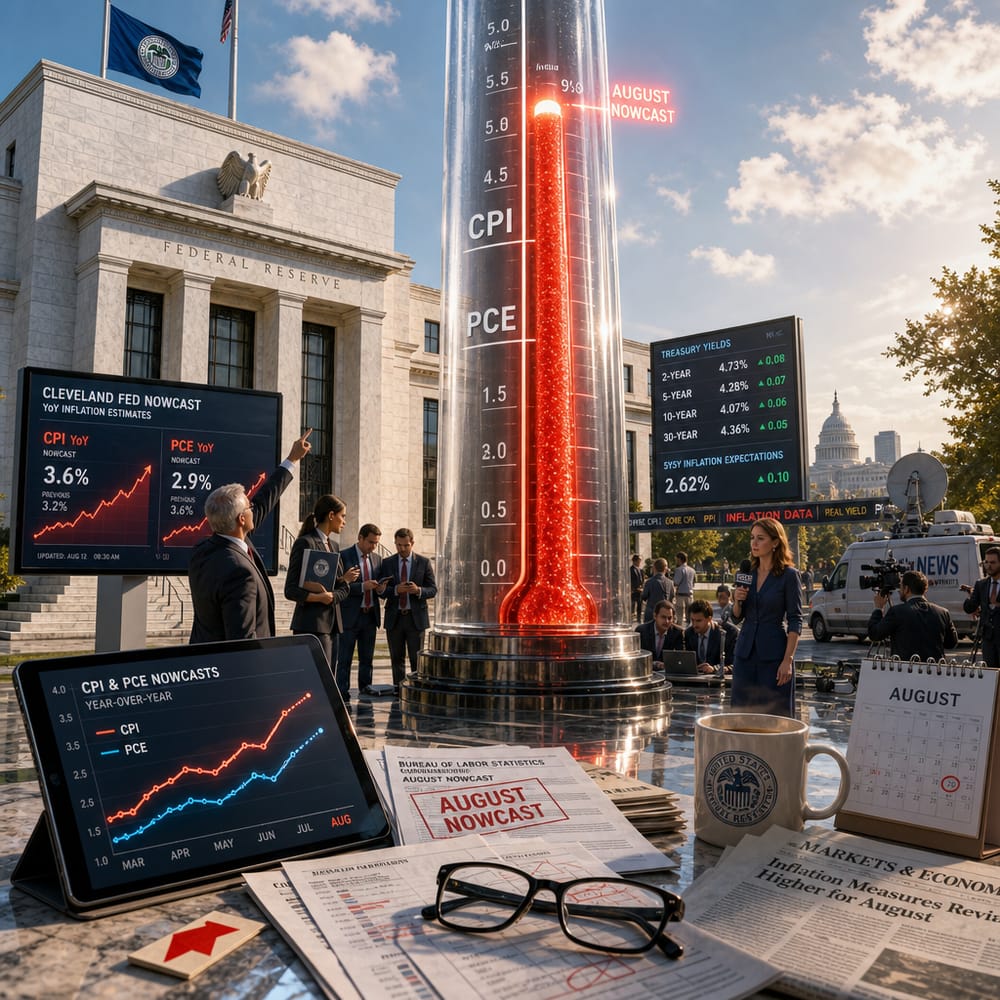
Everyone loves a twist, right? Well, here's one for the economic books: inflation, that pesky villain that won't leave the stage, is possibly gearing up for another encore this August. According to the Cleveland Fed's nowcasts—which are like those fortune cookies with a bit more science behind them—we could see inflation picking up speed once again. Now, if you're wondering why this matters or just how fat your wallet might get squeezed, grab your popcorn. Let's dive into this rollercoaster.
WHAT'S DRIVING THIS POSSIBLE INFLATION TWIST?
First up, let's break down the potential triggers. The usual suspects are lurking: rising costs for energy, food, and shelter—basics you can't exactly skip. Plus, let's not forget the good old supply chain gremlins that occasionally pop up to wreak havoc. But here's the kicker: even if these are the usual factors, their comeback could hint at a deeper, underlying issue that inflation just can't shake off. It's like that sequel movie that brings back all the old villains.
How does this play out in real life? Think higher grocery bills, steeper gas prices, and a more expensive trip to the college dorms. And let's not sugarcoat it—these aren't exactly the kind of surprises consumers are dying to unwrap.
HOW MIGHT CONSUMERS REACT?
When prices start doing their sky-high jig, consumers often do a little dance of their own. This typically involves tightening those purse strings. If August inflation ticks up, you might notice your neighbors cutting back on dining out or delaying that swanky new gadget purchase. Not exactly a recipe for a thriving economy, right? But it's the reality check many households do when faced with climbing expenses.
If inflation continues to act up, consumer confidence could take a hit. And like a domino effect, this could potentially slow down overall economic growth. Remember, every dollar saved is a dollar not spent pumping up the economy.
WHAT'S THE FED TO DO?
Now, let's turn the spotlight on the big players in this economic drama: the Federal Reserve. If inflation starts to act like it's had one too many espressos, the Fed might have to step in with its own intervention. Cue the discussion about interest rates—yes, those numbers that impact everything from your mortgage to your car loan.
The Fed has a tricky balance to maintain. It needs to manage inflation without putting the brakes on the economy too hard. If they crank up interest rates to cool inflation, borrowing becomes more expensive, potentially slowing down business investments and consumer spending. It’s like trying to slow dance to EDM—possible, but very challenging.
IMPLICATIONS FOR MARKETS
For investors, an inflation uptick can be a mixed bag. Rising inflation expectations could push bond yields higher, making the stock market a bit jumpy. Not to mention, the "debasement trade" is making a comeback, with gold and cryptocurrencies gaining favor as hedges against a potential weaker dollar. It's basically the financial markets equivalent of stocking up on canned goods before a storm.
Sectors like tech, which tend to rely heavily on borrowed money for growth, might feel the squeeze if interest rates rise. On the other hand, companies that can pass costs on to consumers could fare better. It’s a stock-picker’s market out there, folks.
THE ROAD AHEAD
Here's the bottom line: the Cleveland Fed's nowcasts suggest we might not be out of the inflation woods just yet. For consumers and investors alike, it means staying alert and being ready to pivot as necessary. Whether it's adjusting personal budgets or rebalancing investment portfolios, a little proactive planning can go a long way.
So, as we wait to see if these nowcasts hit the mark, keep an eye on your wallet, your investments, and maybe pop a few extra coins in that rainy day jar. Because when it comes to inflation, it never hurts to be prepared for a potential plot twist.
This article is for informational purposes only and is not investment advice. Always do your own research or consult a licensed financial professional before making investment decisions.
© Copyright 2024. All Rights Reserved.
© Copyright 2024. All Rights Reserved.