

Inflation Nowcasting Signals Slowing—but Not Enough for Fed Easing Yet
Monday, November 23, 2026
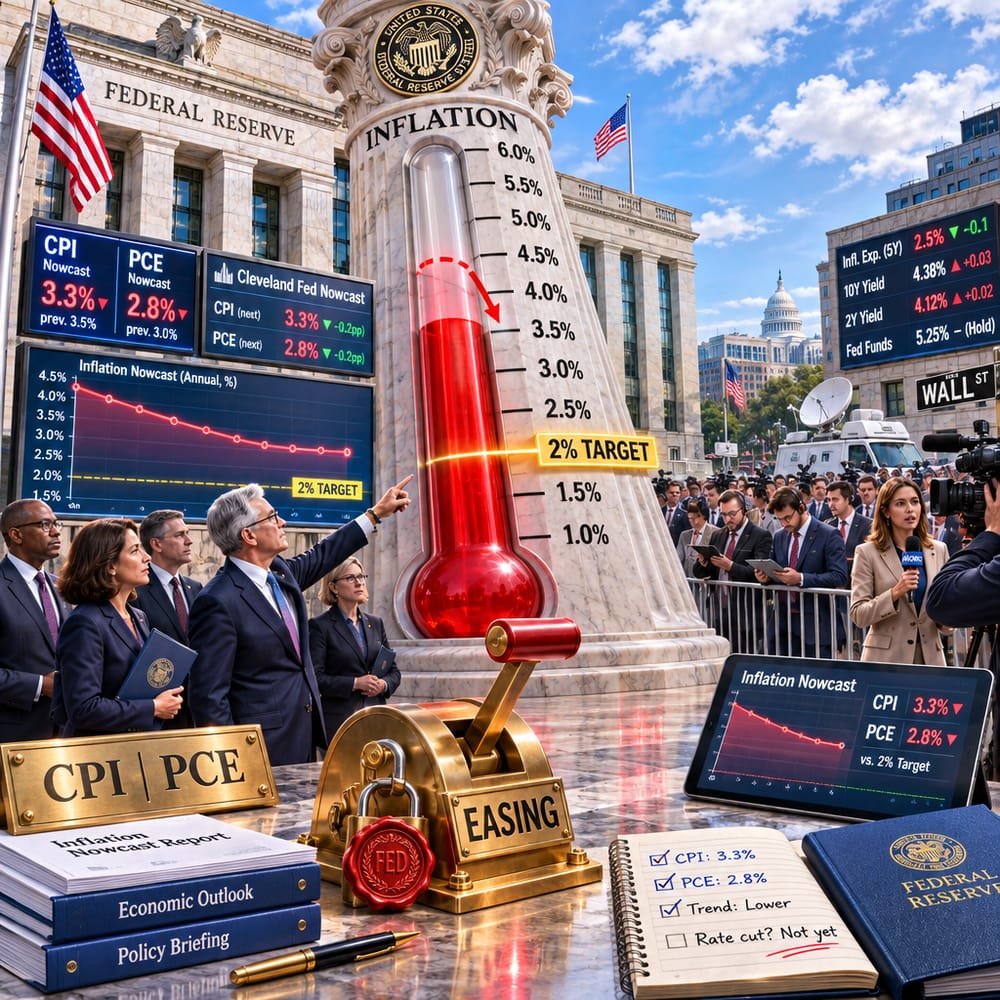
INFLATION NOWCASTING SIGNALS SLOWING—BUT NOT ENOUGH FOR FED EASING YET
Just when you thought it was safe to use your credit card again, here comes inflation, refusing to exit through the back door like a polite houseguest. The latest data from the Cleveland Fed suggests inflation is slowing. But don’t pop the champagne just yet. It’s moving down about as fast as a sloth crossing a road, and it’s still stubbornly above the Federal Reserve’s target. So, what does this mean for your wallet and the wider economy? Buckle up; it’s time to break it down.
UNDERSTANDING THE NOWCASTS
First off, let’s decode what these “nowcasts” are. Imagine a crystal ball, but make it about numbers. The Cleveland Fed crunches a ton of recent data—like consumer prices and spending patterns—to provide a near-instant snapshot of inflationary trends, without those pesky lags that haunt traditional reports. Think of it as a weather forecast for your finances.
And the latest nowcasts indicate inflation is easing, which sounds great on paper. But here’s the rub: it’s still above the Federal Reserve’s comfort zone of a 2% inflation rate. That’s like being told the floodwaters are receding but still needing a boat to get to the grocery store.
THE FED’S NEXT MOVE
Why does this matter so much? Because the Federal Reserve has been playing a delicate game of Jenga with interest rates. Higher inflation generally means the Fed might keep interest rates high to slow down spending and borrowing. This is because if everyone spends less, prices stop rising so fast. But if inflation stays sticky—think a toddler with a lollipop—those rate cuts you’ve been hoping for might remain a distant dream.
Imagine the Fed as your fiscally strict parent, holding onto the car keys (i.e., lower interest rates) until you clean your room (i.e., inflation goes down). They're unlikely to hand over the keys until the job’s done. So, for now, we’re stuck with borrowing costs that are higher than a kite on a breezy day.
MARKET SENTIMENT AND INTEREST RATES
The big question here is whether markets are bracing for more rate hikes. In short, yes, but with a nervous tic. Investors have been hoping the Fed will ease up on the rate hikes, but the persistent inflation refuses to cooperate. Hence, the anticipation of lower rates might be more wishful thinking than reality at this point.
Let’s think of the stock market as a teenager with a mood swing, reacting dramatically to every hint of what the Fed might do next. Recent market rallies, like that seen when Nvidia CEO Jensen Huang was reinstated, show investors are still sensitive to high drama—whether it’s inflation numbers or surprise executive comebacks.
IMPACT ON YOUR WALLET
So, what does this mean for the everyday investor or consumer? Well, unless you’re sitting on a pile of cash and laughing in the face of interest rates, this probably isn’t the news you wanted. As long as rates remain high, borrowing becomes more expensive. This means your mortgage, student loans, or that shiny new car might cost more in interest payments.
Meanwhile, as we wait for inflation to get back in line, economic growth might slow down, too. Businesses facing higher borrowing costs might hold off on expansions or hiring. It’s like everyone’s waiting for the green light, but the traffic signal is stuck on yellow, leading to a lot of cautious tapping on the brakes.
WHAT TO WATCH NEXT
Keep an eye on those economic indicators, particularly the Consumer Price Index (CPI) and the Personal Consumption Expenditures (PCE)—the latter being the Fed’s favorite inflation gauge. For us mere mortals, these are the charts that will tell us if we’re finally getting off this inflation rollercoaster.
In the meantime, it’s all about patience and strategy. Tighten those belts, make wise financial decisions, and maybe hold off on those big-ticket items if you can. After all, we’re all in this economic merry-go-round together, hoping for a smoother ride ahead.
So as you sip your morning coffee—perhaps a little more expensive than last year—remember that these numbers, while not directly changing your day-to-day, are the invisible hands nudging the economic landscape. Stay informed, stay alert, and as always, keep that wry smile ready. It's going to be a wild ride.
This article is for informational purposes only and is not investment advice. Always do your own research or consult a licensed financial professional before making investment decisions.
© Copyright 2024. All Rights Reserved.
© Copyright 2024. All Rights Reserved.