

Inflation Nowcasting Signals Persistently Elevated Prices Heading into August
Monday, August 31, 2026
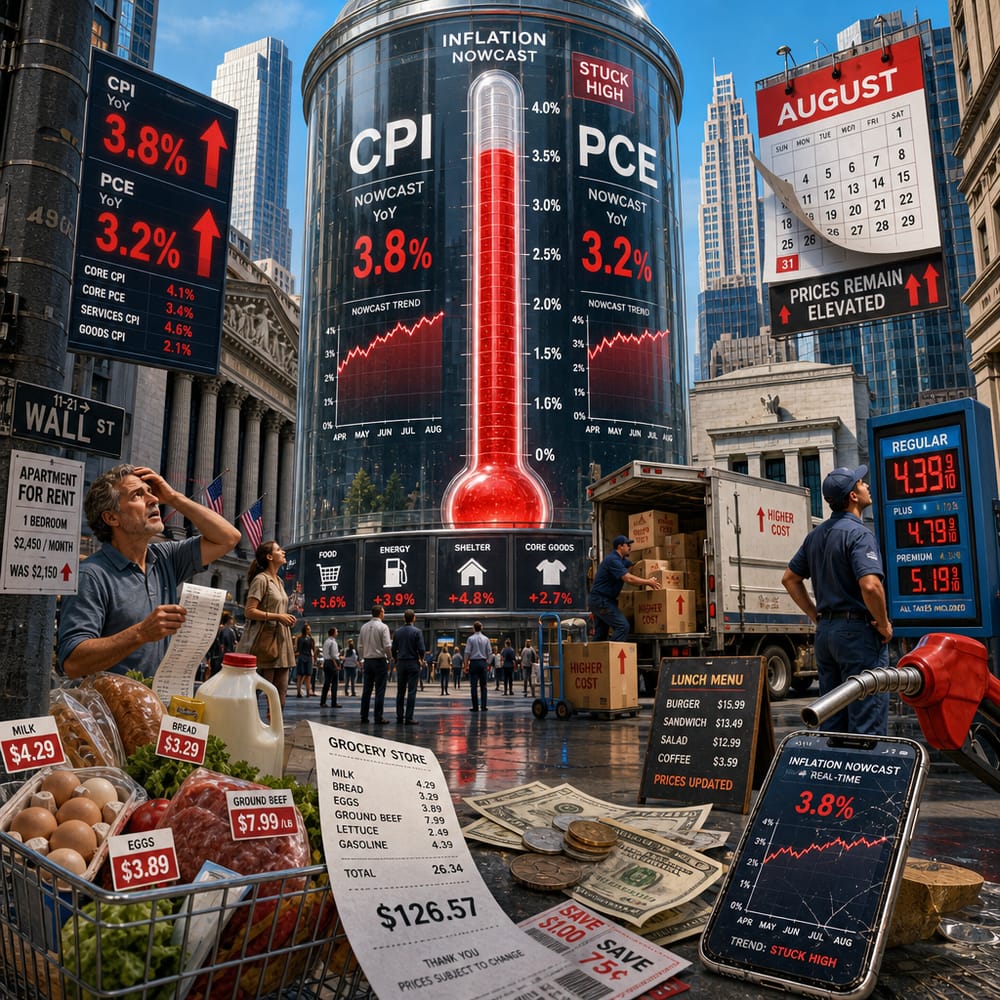
IS INFLATION HERE TO STAY? WHY YOUR DOLLAR MIGHT KEEP SHRINKING
Inflation is like that pesky houseguest who, instead of packing up and leaving, just put down their bags for the long haul. As we head into August, real-time estimates, known as nowcasts, are throwing up red flags of persistently high inflation. It’s like the financial equivalent of your weather app warning you about a storm that just won't quit. Grab your umbrellas, folks.
Now, why should you care about this inflation talk? Well, when prices keep climbing, it’s not just an abstract number on a graph. It’s the extra dollars you’re shelling out each time you hit the grocery store or gas station. Sure, your paycheck might look the same, but your purchasing power? That’s taking a hit like a boxer in the final rounds.
THE DRIVERS OF PERSISTENT INFLATION
So, what's fueling this constant inflation fire? Picture a pot of soup that just keeps boiling over. Supply chain snarls are one ingredient — the world is still untangling the mess made by pandemic disruptions. Add in robust consumer demand, spiced with geopolitical tensions putting pressure on energy prices, and you have a recipe for inflationary stew.
And let’s not forget the indirect ingredients: wage increases. With the job market as hot as it is, employers are offering more to lure talent — which, in turn, contributes to higher prices as companies try to offset rising labor costs. If you're working, this might be good news for your paycheck — but hold that thought when you see what happens in the checkout line.
THE FED'S NEXT MOVE
Naturally, this is where the Federal Reserve steps in, the bouncer at the inflation nightclub. The Fed's playbook usually involves tweaking interest rates to cool things down. You raise rates, borrowing costs go up, people spend less, demand cools down, and prices follow suit — in theory. But in reality, it’s more like trying to herd cats. The effects are unpredictable and can take time to show up.
So, will the Fed hike rates again? It's like a game of economic poker, with the central bank holding its cards close. More interest rate hikes could be on the horizon if inflation refuses to budge, although the Fed doesn’t want to tip the economic scales into recession territory. It’s a delicate game of balance, and the stakes are high.
THE CONSUMER CRUNCH
For your average Joe and Jane, persistent inflation is like a slow leak in a balloon — the purchasing power of their dollars is quietly deflating. When everyday essentials gobble up more of your paycheck, it leaves less room for savings or discretionary spending. Suddenly, that dream vacation or new car might feel a bit further out of reach.
Investors, keep your eyes peeled on how this inflation scenario unfolds. Companies with strong pricing power, those that can pass costs on to consumers without losing sales, might fare well. But businesses relying heavily on squeezed consumers could feel the pinch.
WHAT TO WATCH
As we move into August, all eyes will be on the Consumer Price Index (CPI) and Personal Consumption Expenditures (PCE) — these are the barometers of inflation. Think of them as the economic equivalent of checking your pulse and blood pressure.
The CPI measures changes in the price level of a basket of consumer goods and services, while the PCE looks at how much actual money was spent by consumers. These numbers give clues on how entrenched inflation really is and what the Fed’s next step might be.
In summary, persistent inflation could mean more rate hikes, less purchasing power, and a rollercoaster ride for investors. So, gear up and stay informed. Remember, in the world of finance, knowledge isn't just power; it’s your best defense against the relentless tide of inflation.
This article is for informational purposes only and is not investment advice. Always do your own research or consult a licensed financial professional before making investment decisions.
© Copyright 2024. All Rights Reserved.
© Copyright 2024. All Rights Reserved.