

Inflation Edges Higher than Expected, Pressuring Bond Yields
Wednesday, August 26, 2026
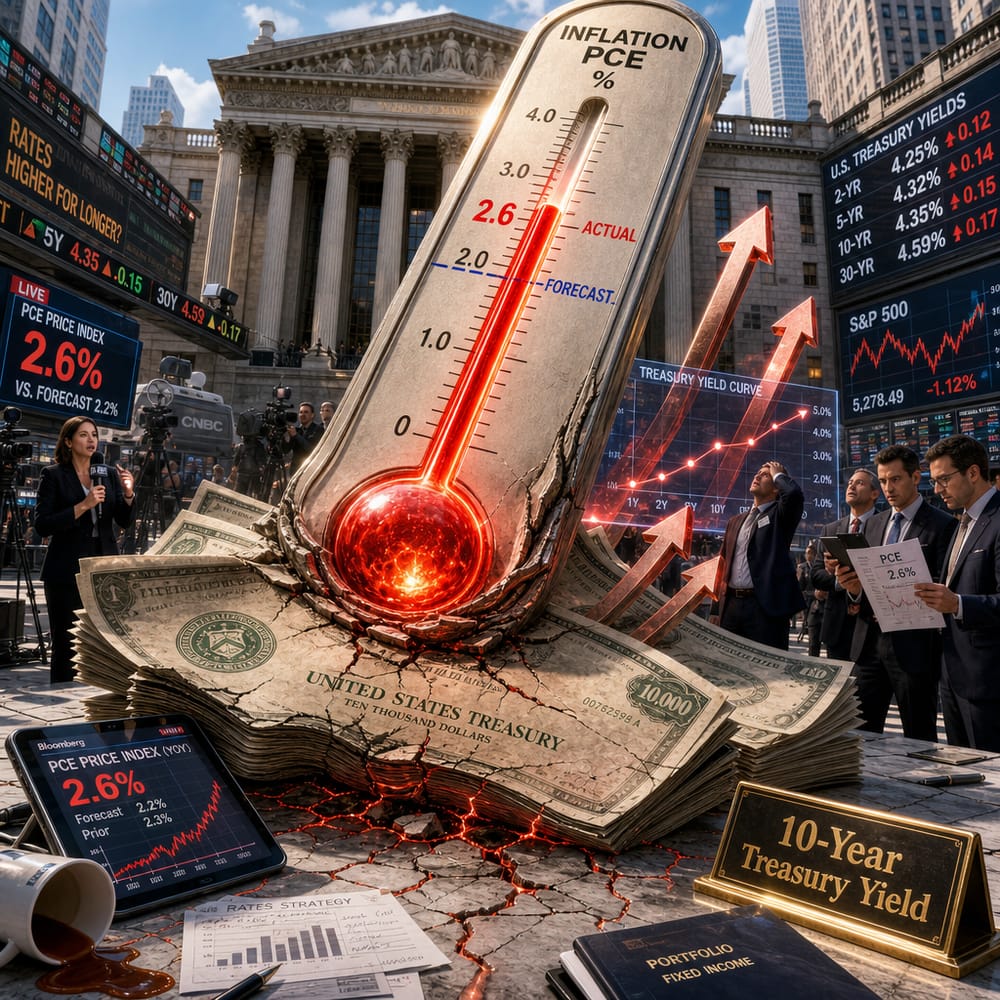
INFLATION'S BURNING FLAME: HOW JULY'S HOT REPORT IS SIZZLING BOND YIELDS
Just when you thought it was safe to stop obsessing over inflation, July rolls in with a surprise left hook. The latest personal consumption expenditures (PCE) report – think of it as the Federal Reserve’s favorite thermometer for measuring the economy's fever – hinted that inflation is more persistent than the leftover potato salad at your last summer BBQ. As a result, the U.S. Treasury bond market is feeling the heat, and if you're wondering what this means for your wallet and the economy, pull up a chair.
BONDS ON THE GRILL
When inflation goes up, it's like someone turned up the thermostat on those steady, predictable bonds. Bond yields, which are the interest rates that the government pays you to lend it your money, start to rise. Why? Because investors want more bang for their buck when their returns are getting eaten away by inflation. It's kind of like demanding extra marshmallows in your s'mores after a long hike – you deserve more for the extra effort you put in.
This is where things get interesting for consumers. As bond yields rise, it signals that borrowing costs could climb all around. Homebuyers might face higher mortgage rates, credit card users could see interest rates inch upward, and businesses might find loans a touch pricier. If you're looking to fund that dream kitchen renovation, think twice; it might be time to tighten the purse strings.
CONSUMERS AND THE COST OF LIVING
Let's talk about how this inflation tango affects us regular folks. Higher borrowing costs can put a damper on consumer spending, and in an economy like ours, that’s as important as making sure you don’t run out of gas on a road trip. Low spending can become a headwind for economic growth. Imagine trying to paddle upstream without a proper kayak – that’s what a slow consumer spending environment can do to the economy.
Moreover, when borrowing becomes expensive, consumers might cut back on non-essential purchases. That means fewer new gadgets, fewer vacations perhaps, and maybe reconsidering that subscription to the “Cheese of the Month” club. It’s a balancing act between what you want and what your budget will allow.
THE BIGGER PICTURE
Peering into the crystal ball, the ripple effects of today's inflation challenge could stretch into the longer term. If inflation remains sticky, the Federal Reserve might feel the need to keep interest rates high for an extended period. This sustained pressure could potentially slow down the economy, leading to a less aggressive job market and, ironically, helping to cool inflation over time. It's a bit like bringing out the fire extinguisher to prevent a future blaze.
And we can't forget the stock market in this saga. U.S. Treasury yields going up often puts pressure on stock prices. When bonds start offering better returns, risk-averse investors may shift their dollars into these safer waters, pulling them out of stocks. That’s likely part of the reason why the S&P 500 saw a slight dip.
SO, WHAT’S THE PLAN?
While we all wish for a straightforward answer or a magic wand to make inflation behave, it’s a waiting game. Businesses and consumers alike will need to navigate this tricky terrain carefully. Watch for how the Fed reacts – they’re like the seasoned coach on the sidelines, strategizing on when to make a play.
In the meantime, staying informed and agile is key. Keep an eye on your financial goals and perhaps consult a financial advisor if you’re feeling like a deer caught in headlights. Remember, the financial world is a rollercoaster, and staying buckled in and aware of the turns can help you enjoy the ride, even when it gets a bit bumpy.
As the saga of inflation unfolds, the story of bond yields and their dance with consumer spending will surely keep markets and Main Street buzzing. So, stay tuned and keep your financial binoculars handy – the view ahead could be as scenic as it is unexpected.
This article is for informational purposes only and is not investment advice. Always do your own research or consult a licensed financial professional before making investment decisions.
© Copyright 2024. All Rights Reserved.
© Copyright 2024. All Rights Reserved.