

Inflation Data Sparks Cautious Market Response
Saturday, August 29, 2026
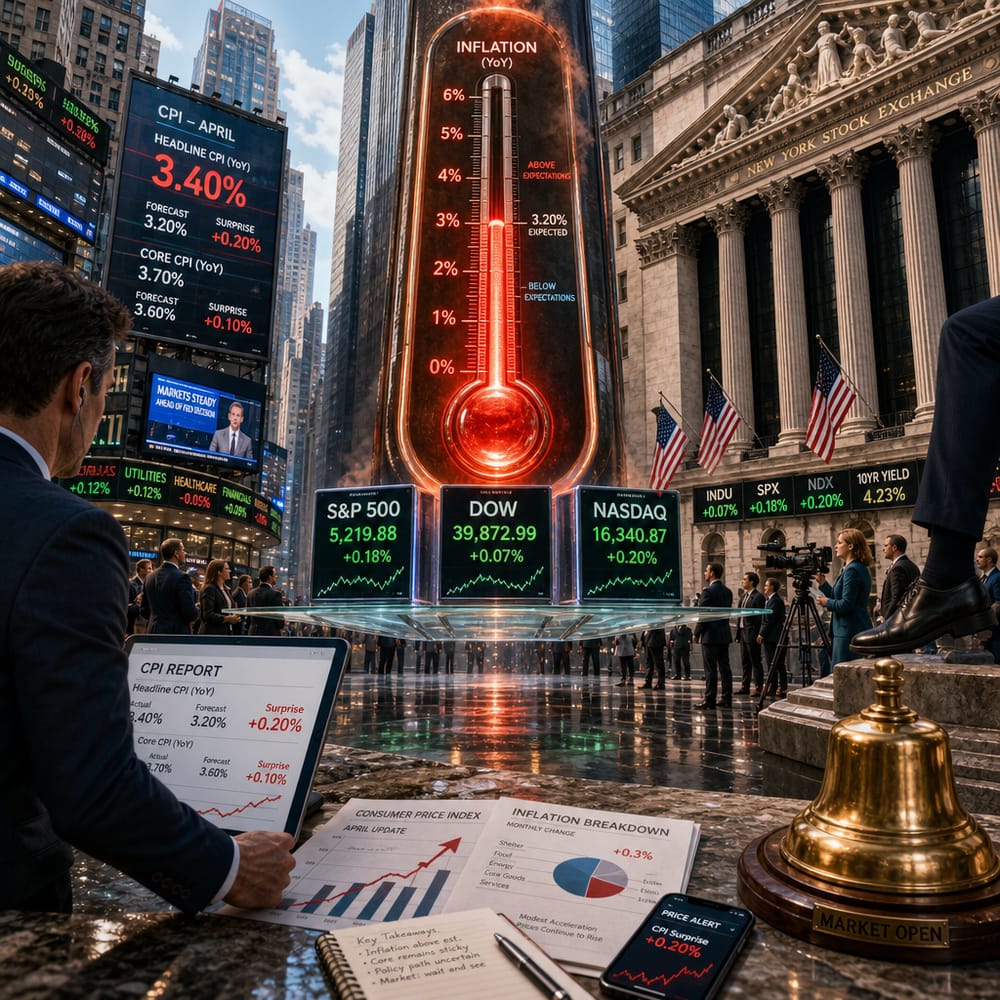
INFLATION DATA SPARKS CAUTIOUS MARKET RESPONSE
Hold onto your hats, folks, because inflation just threw a curveball, and Wall Street's feeling the breeze. The latest inflation figures came in hotter than a jalapeño, but instead of setting the stock market aflame, it merely coaxed out a cautious smolder. Major indices like the S&P 500, Dow Jones, and Nasdaq took a long, hard look at the data and decided to play it cool.
So, what's the lowdown? Inflation ticked up a bit more than what those brainy analysts had penciled in their Excel sheets. The Consumer Price Index (CPI), a barometer for measuring everyday expenses like housing, food, and energy, showed prices rising at a pace that made some investors sweat more than the summer heat. But here's the kicker: we didn’t see the stocks dive dramatically. Instead, they stayed fairly steady — like a tightrope walker coolly balancing a bit more weight.
The calm reaction wasn't about indifference but more about cautious optimism, and maybe a healthy dose of “let’s wait and see.” Investors are now playing the guessing game with the Federal Reserve, trying to predict their next move like it’s a high-stakes poker tournament.
Fed Chairman Kevin Warsh is keeping his cards close to his chest, and honestly, who can blame him? Warsh recently broke tradition by opting for the silent treatment instead of his usual hints about future interest rates. That’s right, folks, the Fed is leaving the market to figure it out. It’s like playing charades, but instead of miming “movie” or “book,” you’re trying to guess if the cost of borrowing cash is about to jump!
Now, why does this inflation data matter? In the world of finance, inflation is like that nagging spoon tapping the side of a pot when your soup is about to boil over. Too much inflation, and the Fed might crank up interest rates to cool things down — making loans pricier and causing economic ripples. On the flip side, too little inflation, and we’re looking at stagnation, which is about as fun as a flat soda.
As of now, the Fed’s been threading the needle between these extremes, trying to achieve what they call “price stability.” But with inflation data throwing a wrench in the works, the question is, will the Fed tighten the screws with a rate hike soon? The market seems to think they might, but it’s like predicting your next tax refund — tricky and often a surprise.
What does this mean for you and your portfolio? If interest rates go up, borrowing costs for companies increase, potentially cooling off those red-hot tech stocks. It could also mean a stronger dollar, which is great if you're planning that European vacation but not so swell for U.S. companies selling goods overseas.
Yet, despite the inflation jitters, the market has been surprisingly resilient. Maybe it’s the confidence in a robust economy, or maybe investors are banking on the Fed’s steady hand. Either way, the slight uptick hasn’t derailed the momentum.
So here’s the scoop: Keep your eye on the Fed’s next moves. They might decide this inflation data warrants raising rates sooner rather than later. Or, they might decide to ride this one out, like calmly waiting for a storm to pass. Either way, a close watch on market signals and adjusting your investments accordingly might just help you stay financially afloat.
In the grand scheme of things, inflation data is like that friend who keeps “subtly” reminding you of that time you forgot their birthday. You can’t ignore it, and it always has the potential to throw a wrench in your plans. But with the right moves, you can navigate the reaction and come out the other side with your portfolio unscathed.
Stay tuned, stay sharp, and keep questioning what this resilient, yet cautious market response means for your financial future.
This article is for informational purposes only and is not investment advice. Always do your own research or consult a licensed financial professional before making investment decisions.
© Copyright 2024. All Rights Reserved.
© Copyright 2024. All Rights Reserved.