

Inflation Cooling Moderately—but Still Too Hot for Comfort
Sunday, November 22, 2026
INFLATION COOLING MODERATELY—BUT STILL TOO HOT FOR COMFORT
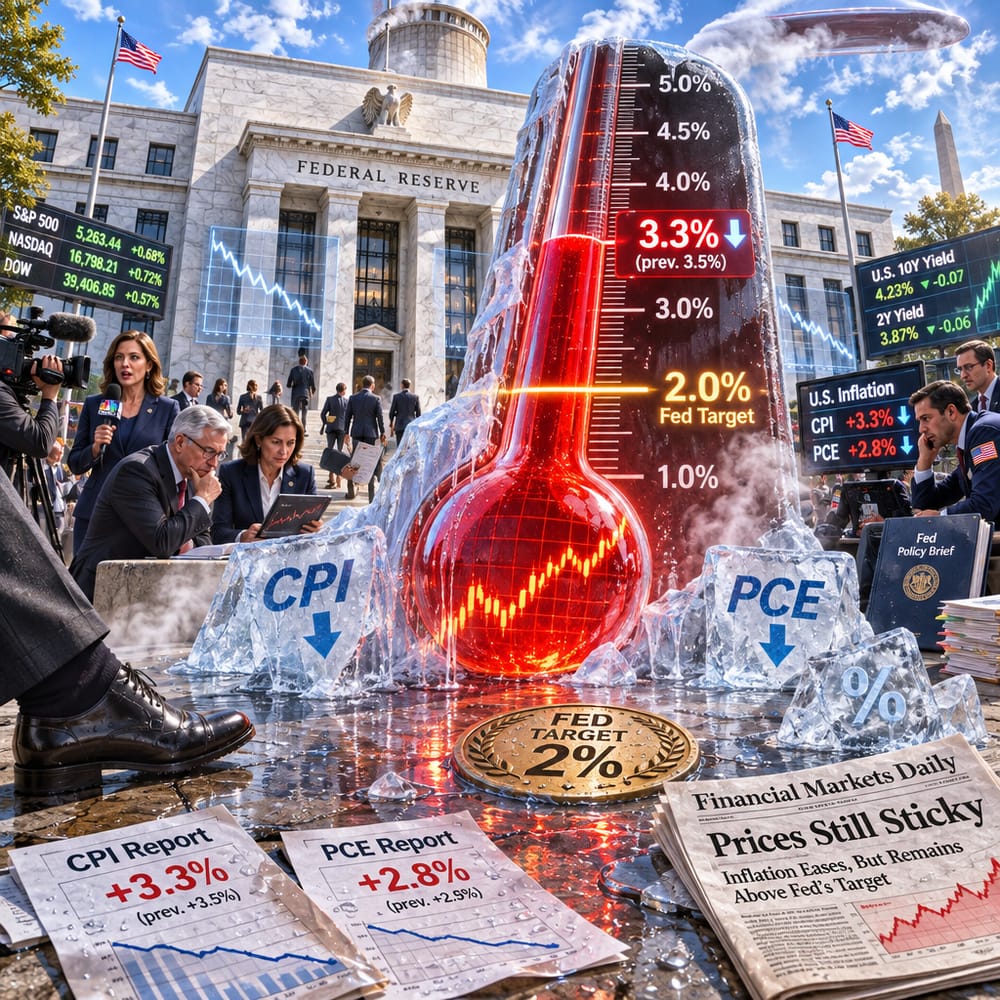
Ah, inflation. The economic bogeyman that just won't quit. Sure, it's cooling off a bit, like a summer breeze that graciously turns down the heat, but don’t put away those fans just yet. Recent data shows inflation has taken a breather, catching its breath somewhere between “scorching” and “toasty.” But the Federal Reserve (or "the Fed," as we chummily call it) isn't lighting any victory cigars. Why? Because while the heat's turned down, it's still uncomfortably above their target, and that’s where the plot thickens.
WHAT'S THE DEAL WITH THESE NUMBERS?
Let's break it down. We’re talking about the Consumer Price Index (CPI) and the Personal Consumption Expenditures (PCE) — two of the Fed's favorite thermometers for measuring inflation fever. Historically, these metrics have bounced around like a toddler on a sugar high. In the good ol' days, annual inflation rates hovered around 2%, the Fed's sweet spot. Fast forward to today, and while we're not quite in crisis mode, we're still sitting at a rate that makes central bankers sweat.
Okay, now let's add some historical context. If we roll the tape back to the 1970s, we’d see inflation rates that made today's figures look like a leisurely stroll through a sunflower field. Back then, double-digit inflation was as common as disco balls. Today’s inflation is a moderate jog by comparison. Yet, when compared to the relatively stable rates of the past decade, it's enough to cause concern.
THE GAP AND ITS IMPLICATIONS
So what happens if this gap between current inflation and the Fed’s target sticks around? Well, that’s when things get juicy. If inflation remains stubbornly high, the Fed might continue its dance of raising interest rates. That, my friend, is like giving the economy a strong cup of black coffee to shake off any slumber. Higher rates mean borrowing costs more, which can cool spending and investment. It also means your credit card interest might give you a small heart attack every month. Fun times.
But the real kicker? If inflation continues to ignore the Fed's friendly nudges back to 2%, it could start affecting everything from stock markets to what you’re paying for milk and eggs. It's like the butterfly effect for your wallet. Investors, who’ve already had a rollercoaster year, might find more uncertainty in the market, leading to volatility that could shake up your 401(k).
WHAT DOES THIS MEAN FOR YOU?
Alright, enough with the theoretical. What does this all mean for you, the everyday retail investor? Here’s the skinny: Keep an eye on the Fed’s mood rings, AKA their policy decisions. If they keep hiking rates to corral this wild inflation beast, sectors like tech and housing—which have enjoyed a party of cheap money—might get a reality check. Not to mention, if you're in the market for a big purchase like a house or a car, you might want to consider the increasing cost of borrowing.
But it’s not all dire. Some sectors could get a boost if inflation trends stabilize. Think consumer staples or utilities—those trusty old friends that always seem to weather the storms. And while inflation may gnaw at your pocket, a well-diversified portfolio can act as a buffer.
WHERE DO WE GO FROM HERE?
As with any good story, we're left with a few cliffhangers. Will the Fed get inflation back to its cozy 2% nook? Or will we have a longer engagement with higher prices and interest rates? Investors need to stay alert and not let the current cooling trend lull them into complacency.
So, keep your financial binoculars at the ready and your ears to the ground. Watch for the Fed’s next moves and listen for the financial heartbeat of the economy. Riding the waves of inflation requires a steady hand and a vigilant eye. It’s a dance, albeit one with a few more complex steps than your average waltz.
In the end, understanding inflation trends is like knowing the rules of a game. It won’t guarantee you win, but at least you’ll know why you’re losing—or winning—your hard-earned cash. And in today’s economy, that’s half the battle. So here’s to hoping inflation cools down to a comfortable chill, one that lets both investors and the Fed breathe a little easier.
This article is for informational purposes only and is not investment advice. Always do your own research or consult a licensed financial professional before making investment decisions.
© Copyright 2024. All Rights Reserved.
© Copyright 2024. All Rights Reserved.