

Inflation Concerns Trigger Market Pullback
Wednesday, October 14, 2026
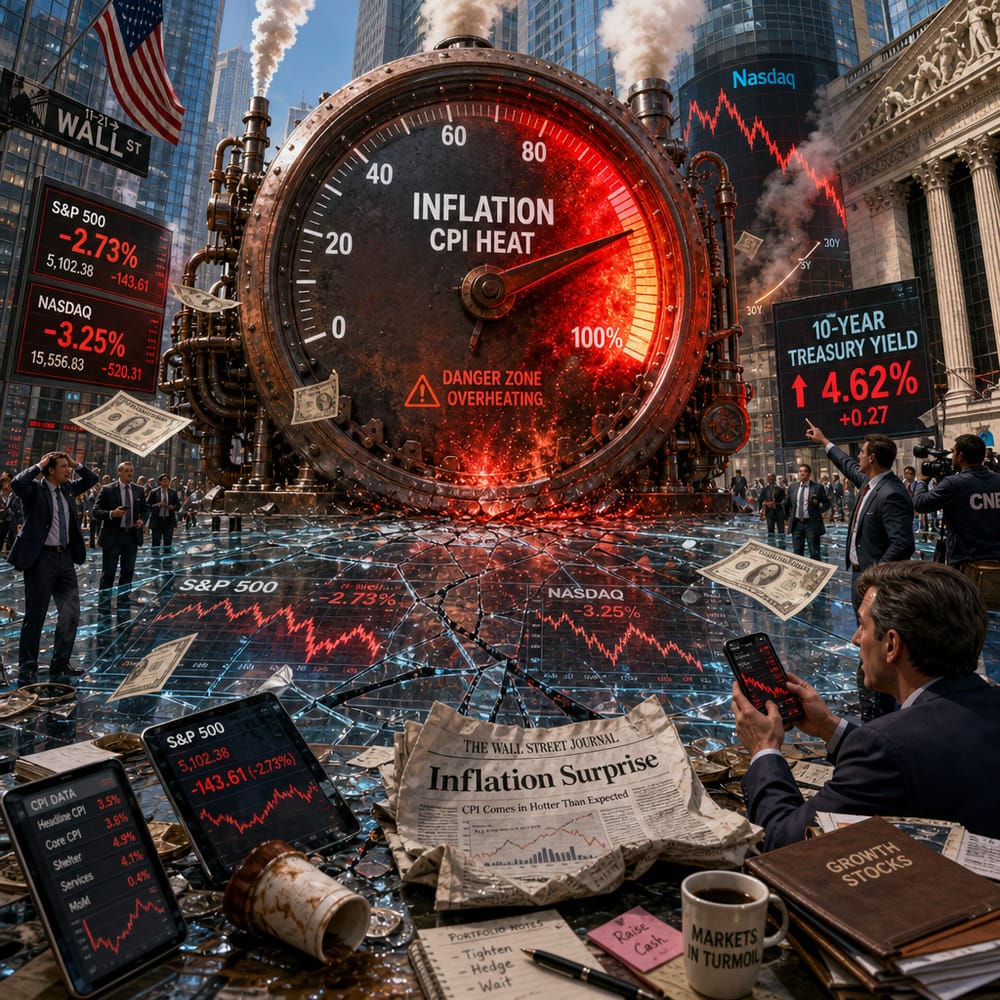
INFLATION JITTERS: WALL STREET'S NOT-SO-SWEET SURPRISE
Inflation, the sneaky villain of your financial fantasies, just gatecrashed Wall Street’s party, and the aftermath isn’t pretty. The latest consumer price index figures ended the market’s honeymoon phase, yanking the S&P 500 and Nasdaq down by over 1% each. Investors are now left nursing their wounds and recalibrating their strategies in response to this unwelcome plot twist.
So, what’s the big deal with a few numbers, you ask? Inflation data isn’t just a footnote—it’s a map that guides the Federal Reserve’s rate-hiking journey. Higher inflation often means interest rates could climb, making money more expensive to borrow. This could slow down consumer spending and corporate investment, and—surprise, surprise—stock prices could take a tumble.
THE INTEREST RATE RIPPLE EFFECT
When inflation rises faster than a chef whisking egg whites, the Fed starts eyeing those interest rates. Investors, in turn, start to fret about their cost of financing going up. Thirty-year fixed mortgages, auto loans, and even your favorite credit card APRs are all affected. The 10-year Treasury yield, a key marker for interest rates, dipped slightly after a morning spike, showing how jittery the markets are about these inflation data points.
Why does this matter for investors? Well, higher rates mean bonds become more enticing relative to riskier stocks. That’s why, with inflation knocking, some investors start cozying up to Treasury bonds as a safer alternative to the roller coaster that is the equities market.
SECTOR SHAKE-UP: WHO’S LAUGHING, WHO’S CRYING?
Let’s not sugarcoat it: rising inflation doesn’t affect everyone equally. The tech sector, with its penchant for growth and reliance on cheap funding, usually takes a hit as costs rise. Case in point: Dell, once the belle of the AI ball, plunged 11% as doubts about the timing and scale of AI enterprise spending surfaced. Other data center darlings like Hewlett-Packard and Oracle felt the burn, too.
On the flip side, sectors like healthcare often fare better in inflationary times. Companies such as UnitedHealth and Amgen provided a buffer for the Dow Jones, preventing it from plunging deeper into the red. Why? Demand for healthcare services remains relatively stable regardless of economic conditions, making these companies a safer bet during financial storms.
SHIFTING PORTFOLIOS: WHAT’S AN INVESTOR TO DO?
So, how are investors playing this roulette table of uncertainty? For starters, many are rebalancing portfolios, swapping out volatile tech stocks for more stable sectors like consumer staples and utilities. These sectors tend to offer consistent returns and dividends, a comforting pillow in the rocky world of high inflation.
Then, there’s the allure of international markets. With the U.S. dollar fluctuating alongside interest rates, some investors are looking overseas for investment opportunities. While not without risks, foreign markets can offer diversification benefits and a hedge against domestic volatility.
It’s not just about stocks and bonds. Commodities, too, enter the spotlight. Gold, often seen as an inflation hedge, could attract more attention as investors look for ways to ride out the inflation storm. Real estate, another favorite, offers tangible assets that typically appreciate in value over the long term.
THE BIGGER PICTURE
In the grand scheme of things, this inflation-induced market pullback is a reminder of just how sensitive investor sentiment is to economic indicators. It’s a wake-up call that the financial landscape could shift on the back of a few percentage points.
For now, savvy investors are watching the economic tea leaves—every indicator, every Fed speech, every Treasury yield move—for signs of what’s next. The key is to stay informed, remain adaptable, and never underestimate the whims of the market.
As you scroll through your feed, remember: the market is a living, breathing entity, as temperamental as your old toaster. It rewards those who respect the risks and think beyond the next clickbait headline. So equip yourself with knowledge, keep a firm hand on the wheel, and don’t forget to breathe. Money never sleeps, but you should.
This article is for informational purposes only and is not investment advice. Always do your own research or consult a licensed financial professional before making investment decisions.
© Copyright 2024. All Rights Reserved.
© Copyright 2024. All Rights Reserved.