

Inflation Concerns Keep Markets Subdued
Sunday, August 30, 2026
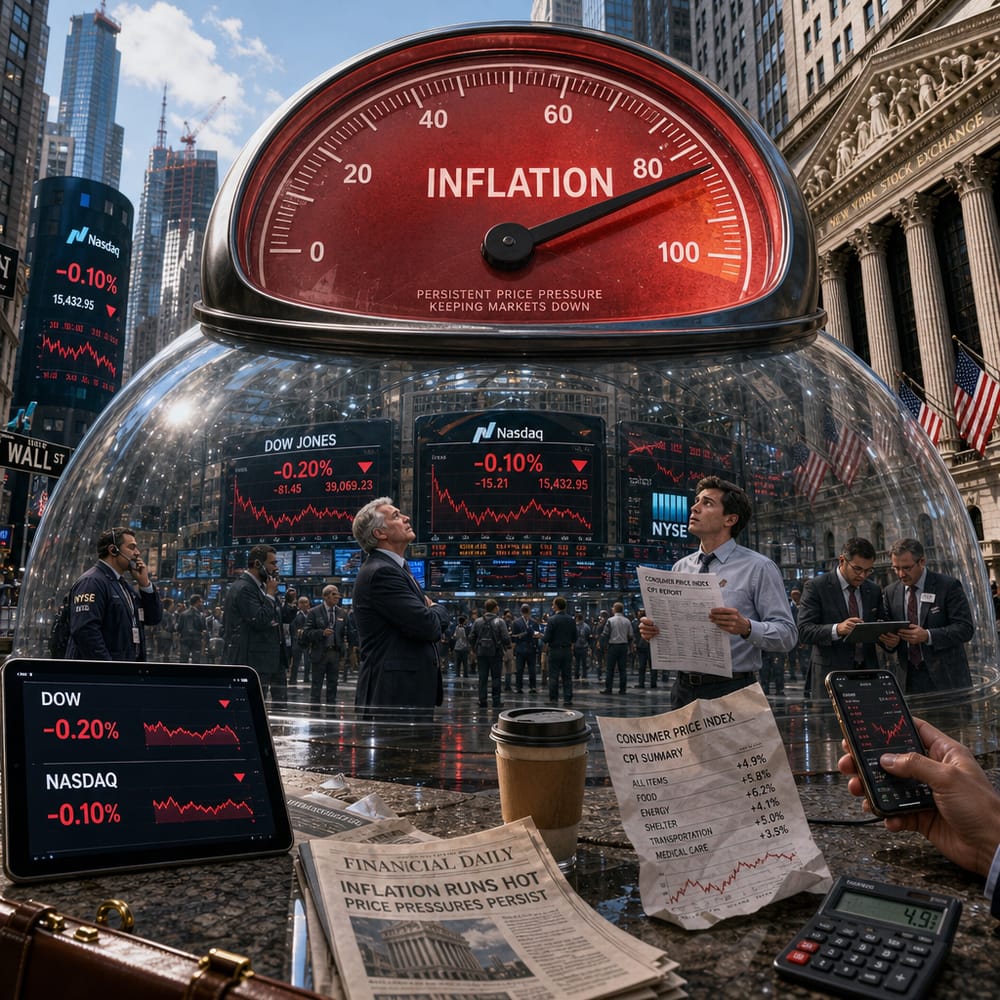
WHEN THE INFLATION BOOGEYMAN STRIKES, MARKETS GET THE HEEBIE-JEEBIES
Just when we thought everything was peachy keen in the land of stocks and bonds, along comes inflation like the uninvited guest at a wedding, throwing rice that’s actually bits of broken glass. For those of you who have been avoiding the financial headlines in favor of more uplifting news—like the ongoing drama of billionaires building rockets—here's a quick catch-up. On Wednesday, August 26th, inflation data came in slightly higher than the experts expected, and guess what? The markets were as thrilled as a cat in a room full of rocking chairs.
The Dow dipped 0.2%, the Nasdaq took a 0.1% dive, and for many investors, it felt like the beginning of an unsettling trend. But why does a little uptick in inflation send markets into a tizzy? Let’s break it down without too many charts or jargon.
The specter of rising prices affects investor sentiment like garlic affects vampires. It’s not just about the increased cost of your morning latte or the fact that a gallon of gas now costs an arm and a leg. Inflation is a sneaky beast that can eat into the economy’s buying power, squeeze corporate profits, and drive central bankers to do things that make investors jittery.
In this case, the Federal Reserve, led by Chairman Kevin Warsh, is the wizard behind the curtain. Warsh has been about as forthcoming with his plans as a poker player at the final table of the World Series of Poker. He's acknowledged that inflation is "concerning," but he’s kept his cards close to the chest, leaving investors to play monetary policy guesswork.
Here’s why it matters: if inflation continues to climb, the Fed may have to hike interest rates to cool things down. Higher rates make borrowing more expensive, which can slow both consumer spending and corporate investment. In other words, the economy could go from a sprint to a crawl, and markets don’t like slow.
But let’s not get too doomsday just yet. The inflation data wasn't catastrophic, just a little worse than expected. Yet, markets are like that one friend who gets a tiny zit and fears it’s the onset of something much worse. They overreact because they have a habit of pricing in not just what’s happening, but what they fear might happen.
Different sectors are reacting to the inflation spook in their own varied ways. Tech stocks, those darlings of the Nasdaq, are especially sensitive to interest rate changes. Companies in this sector rely heavily on cheap borrowing to fund their innovation factories. When interest rates go up, their operating costs do too, making investors less giddy about their future prospects.
On the flip side, some sectors might actually welcome a bit of inflation. Energy companies, for one, often see increased revenues as commodity prices rise. So, while tech stocks may be sweating bullets, oil and gas companies could be high-fiving over in their corner of the market.
And don’t forget about the banks. Higher interest rates can be a boon for them. When they borrow money cheap and lend it out at higher rates, they pocket the difference. A little inflation-driven rate hike could be just the thing to boost their bottom lines.
To add a sprinkle of irony, around the same time inflation data was released, President Trump announced a plan to let in 300,000 tons of beef duty-free to lower prices at the grocery store. Unfortunately, more affordable hamburgers aren’t going to soften the blow of rising overall consumer prices, though they do make for a delicious distraction.
So, what’s next? All eyes are on the Fed, waiting to see if they’ll pull the trigger on an interest rate hike. Investors are split—some are banking on a hike by the end of the year, while others think Warsh might keep playing the strong, silent type a little longer.
In the meantime, keep your financial seatbelts fastened. The market might be subdued, but the roller coaster isn't over yet. Whether inflation will prove to be a passing cloud or a persistent storm is anyone's guess. But for now, it’s safe to say that inflation has the markets on edge, and investors are watching Fed moves like a hawk. Keep your eyes peeled and your fingers crossed; we’re all in for quite a ride.
This article is for informational purposes only and is not investment advice. Always do your own research or consult a licensed financial professional before making investment decisions.
© Copyright 2024. All Rights Reserved.
© Copyright 2024. All Rights Reserved.