

Inflation Awaits: Midweek Drift Lower
Sunday, August 30, 2026
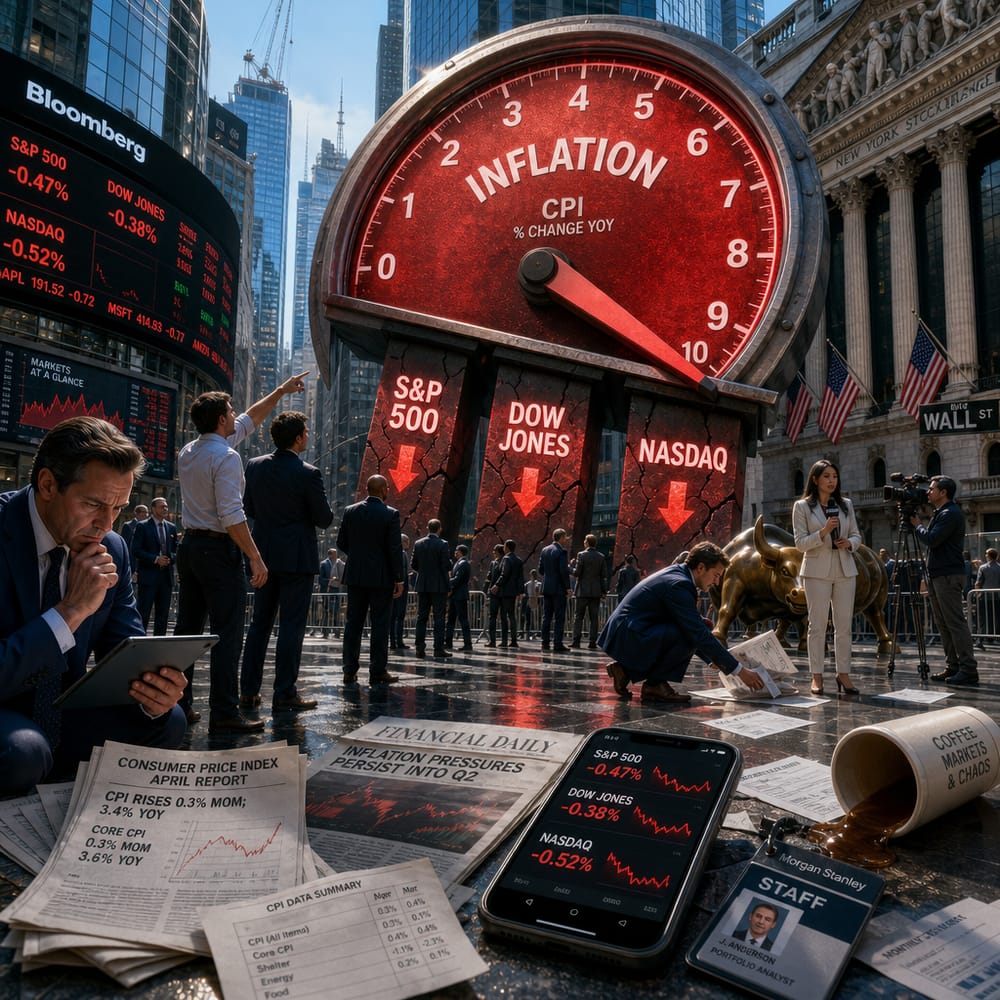
INFLATION AWAITS: MIDWEEK DRIFT LOWER
Hold onto your hats, folks, because the stock market rollercoaster just did a loop-de-loop. The U.S. stock indexes, those trusty barometers of economic confidence, decided to take a midweek nap, slipping downward after the latest inflation report came in a tad hotter than expected. That's right, inflation — the sneaky specter that haunts economists’ dreams and impacts everything from your morning coffee price to Federal Reserve policy decisions — is back in the spotlight.
Picture this: you're at a party, and inflation is that one guest who shows up uninvited and just won't leave. It's loud, it's disruptive, and frankly, everyone wishes it would just go home. But alas, here we are, dealing with the aftermath of an inflation report that was slightly worse than anticipated. The Dow Jones, the S&P 500, and the Nasdaq all displayed their collective discomfort with a synchronized slide.
Why does this matter, you ask? Well, inflation isn't just about feeling the pinch at the grocery store. It's about the Federal Reserve — the financial equivalent of the teacher monitoring recess — keeping an eye on the playground of the economy. When inflation rises, the Fed starts contemplating upping interest rates to cool things down, which can make borrowing more expensive. This, in turn, can throw a wet blanket on economic growth and market enthusiasm. It's a domino effect — and not the fun kind where you get to knock things over on purpose.
So, what sectors are most vulnerable in this inflation tango? Think of sectors dependent on raw materials like manufacturing, construction, and energy. When prices for these essentials start to climb, it hurts their bottom line. And let's not forget consumer goods — any sector that directly touches your pocketbook will feel inflation's icy grip. It's not just about paying more for a cup of latte; it's about companies grappling with higher input costs across the board.
But fear not, dear investors, for there are paths to navigate these treacherous waters. Diversification remains your stalwart companion in turbulent times. Consider hedging your bets with sectors that historically weather inflation storms better—think commodities, real estate, or Treasury Inflation-Protected Securities (TIPS). These act as buffers, absorbing some of the inflationary shockwaves.
Now, let's talk investor sentiment, which right now is as jittery as a cat in a room full of rocking chairs. When inflation reports come in above forecast, it's like the market collectively raises its eyebrows and says, "Uh oh, what now?" This uncertainty can breed caution, causing investors to take a step back, reassess their holdings, and maybe even look for safer harbors until the inflation winds calm.
And if you're pondering how to hedge against inflation risks, the answer isn't as elusive as you might think. It comes down to strategy and timing. For instance, shifting part of your portfolio into inflation-friendly assets could be a smart move. Gold, often touted as a safe haven, tends to shine brighter in inflationary periods. Additionally, sectors like utilities and consumer staples — items you buy regardless of price — tend to hold their ground when inflation rears its head.
In the grand scheme, how does the Federal Reserve factor into this inflationary equation? They're the maestros conducting this economic symphony. Their decisions on interest rates can either fan inflation's flames or douse them with a steady hand. So every inflation report becomes a critical piece in the larger puzzle they're trying to solve — always balancing growth with stability.
As we digest these latest numbers and watch the market's knee-jerk reactions, remember, the stock market isn't a sprint; it's a marathon. Sure, short-term skittishness can lead to market dips, but seasoned investors know that keeping an eye on the long-term horizon is key. Inflation, like that pesky party crasher, might make you uncomfortable now, but a well-prepared portfolio can weather the storm and maybe even thrive in it.
So, keep your chin up, your portfolio diversified, and your eye on the ball, because in the world of investing, adaptation is everything. Let's see what dance inflation has in store for us next.
This article is for informational purposes only and is not investment advice. Always do your own research or consult a licensed financial professional before making investment decisions.
© Copyright 2024. All Rights Reserved.
© Copyright 2024. All Rights Reserved.