

Industrial Sector ETF Surge: Spotlight on XLI and Transportation ETFs
Sunday, October 11, 2026
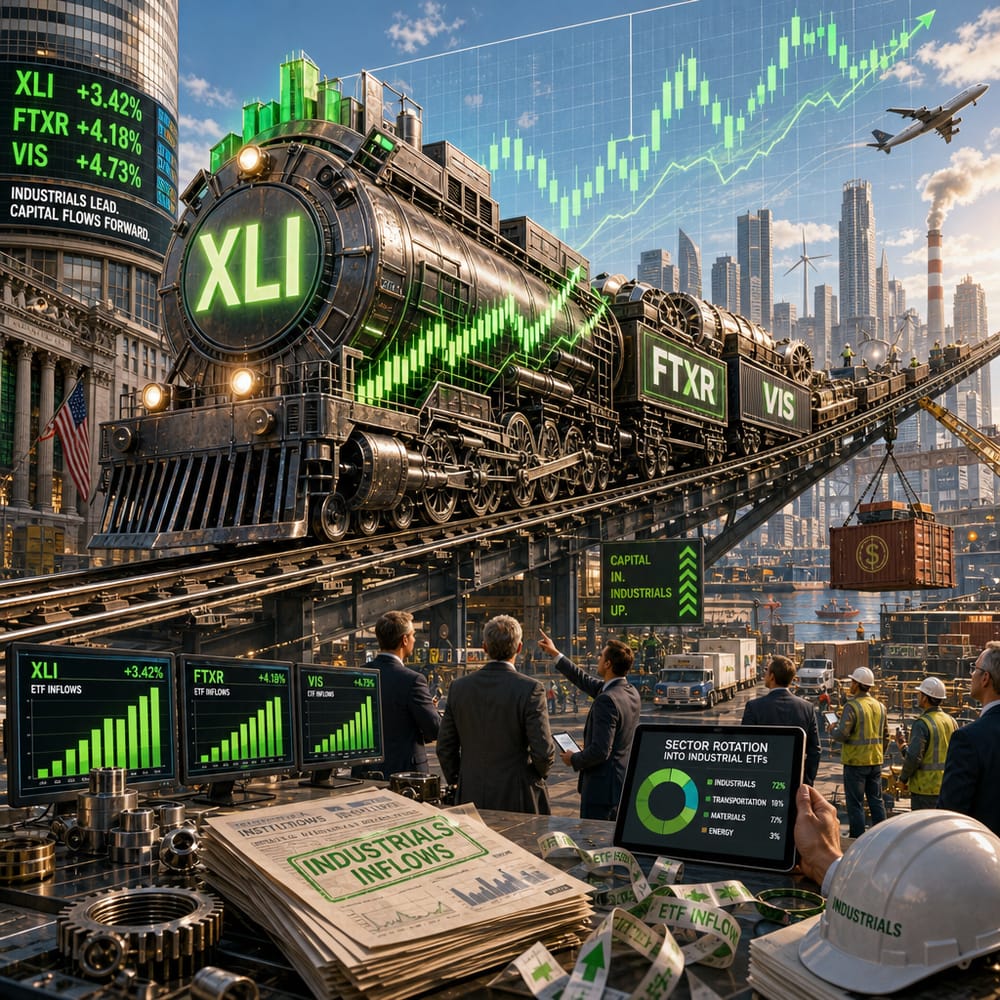
INDUSTRIAL SECTOR ETF SURGE: SPOTLIGHT ON XLI AND TRANSPORTATION ETFS
If you're not watching the industrial sector right now, you might want to take off those blinders. We're seeing an industrial-sized party happening in the investment world, with ETFs like XLI and FTXR leading a conga line of cash inflows. So, what's behind this industrial revolution, and should you be strapping on your hard hat and jumping on board?
First, let's talk about XLI, the SPDR S&P 500 Industrial ETF, and its partner in crime, the First Trust Nasdaq Transportation ETF (FTXR). These ETFs are like the power duo of the industrial sector, attracting enough investor cash to make Scrooge McDuck's money bin look like pocket change. In recent weeks, both have seen significant inflows, indicating a renewed institutional interest that's as clear as a factory whistle at quitting time.
So, what's got Wall Street so enamored with industries they long considered yesterday's news? Some say it's the macroeconomic winds of change. With infrastructure spending getting a major push, thanks to government initiatives, the industrials sector is looking like the belle of the economic ball. After all, someone has to build the roads, bridges, and broadband networks of tomorrow. And with Uncle Sam opening his wallet, these companies are poised to rake in contracts like leaves in the fall.
Historically, industrials have been the grizzled veterans of economic booms and busts, but this recent surge feels different. It's not just a cyclical bounce. It's more like the market is rocking out to a new tune on the industrial radio station. Compared to the past, the inflows we're seeing now are like the encore performance of a comeback tour. Institutional investors aren't just dipping their toes in; they're cannonballing into the deep end of the pool.
But let's get down to brass tacks. Which companies within these ETFs are getting the love notes from investors? Industrial giants like Boeing and Caterpillar are the usual suspects. Boeing, despite its turbulent past, is experiencing a renaissance with rising demand for aircraft as travel rebounds. And Caterpillar, the big cat of construction machinery, is purring along nicely with those infrastructure projects. These titans are not just sitting pretty; they're set to benefit directly from the rising tide of government spending.
FTXR, on the other hand, is all about transportation — think delivery trucks, airplanes, and logistics. With the rise of e-commerce, logistics companies are cashing in on the need to move goods faster than ever. Plus, with Delta and other airlines reporting strong demand despite high fuel prices, the transportation sector is revving up for lucrative times ahead.
But before you sprint to your brokerage account with a fistful of dollars, remember that investing in industrials isn't all sunshine and assembly lines. The sector can be susceptible to economic downturns, fluctuating commodity prices, and let's not forget, the old bugaboo of regulatory changes. Yet, the current landscape suggests a favorable environment for growth, at least for the time being.
So, what does this mean for you, the retail investor looking to punch up your portfolio? If you're pondering a move into industrial ETFs, it's worth considering both the short-term gains from current market enthusiasm and the long-term play of sustained infrastructure growth. Whether you're a risk-taker or a steady Eddie, the industrials offer a buffet of potential opportunities.
In conclusion, if you can handle a little volatility in exchange for a seat on the industrial rocket ship, you might find the journey worthwhile. Just remember to keep your eyes on the economic horizon and stay informed. After all, even the savviest investors know that today's hot sector can be tomorrow's history lesson. But right now, industrials are the life of the party. Will you join the dance?
This article is for informational purposes only and is not investment advice. Always do your own research or consult a licensed financial professional before making investment decisions.
© Copyright 2024. All Rights Reserved.
© Copyright 2024. All Rights Reserved.