

Indian Rupee Holds Steady as RBI Buys Dollars, Oil Pressures Linger
Wednesday, August 19, 2026
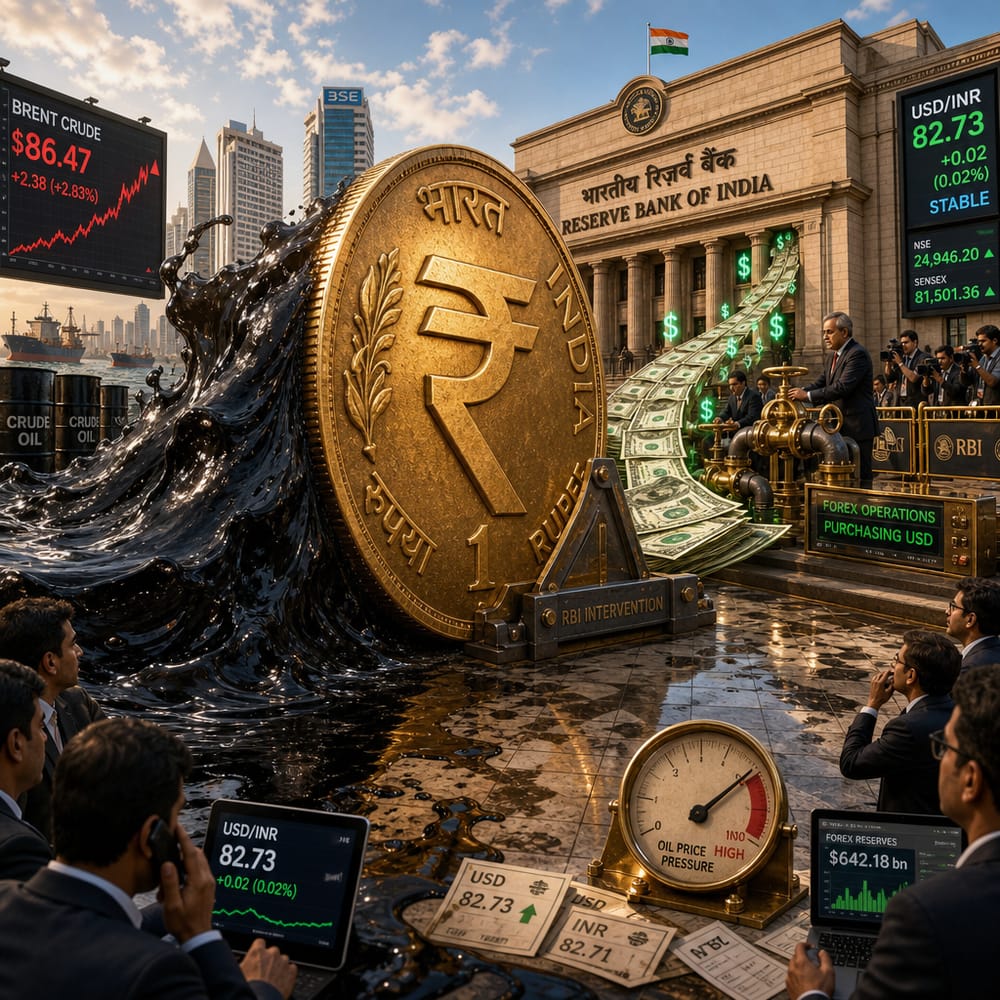
NOTHING RUPEE ABOUT IT: INDIA'S CENTRAL BANK FLEXES ITS MUSCLE
Picture this: The Indian rupee, surrounded by the chaos of rising oil prices, stands its ground like a stoic yoga master, unperturbed and unwavering. If you’re wondering how this currency zen is possible, look no further than the Reserve Bank of India (RBI), which is working behind the scenes like a stealthy ninja, buying up U.S. dollars to keep the rupee steady. It’s a classic tale of central bank intervention—cautious but decisive, and all about balance.
Let’s dig into the nitty-gritty of how the RBI is pulling off this currency stabilizing stunt. When oil prices jump, countries like India that import vast amounts of crude face a double whammy: a spike in cost and an inevitable hit to their currency. Oil prices climbing are like a bad horror movie sequel—predictable but still unnerving. But rather than being cast as the helpless victim, the RBI decided it would be the hero of this fiscal drama.
The RBI’s secret weapon? Buying U.S. dollars and selling rupees in the forex market. This not only supports the rupee but also helps maintain the currency's value against the almighty dollar. It’s a bit like launching a counter-attack in a chess game just when your opponent thinks they have you cornered. By bolstering its forex reserves, the RBI creates a buffer that can absorb external shocks, allowing the rupee to do a bit of Tai Chi in the face of global volatility.
But here’s the rub: Currency stabilization is no walk in the park. It’s a delicate dance that requires the RBI to keep one eye on the foreign exchange market and the other on inflationary pressures at home. After all, flooding the market with rupees can stoke inflation, turning a nimble shuffle into a dangerous tango.
So, what’s the RBI’s game plan? Essentially, it’s playing a long game of “watch and adjust.” By keeping tabs on oil prices and global economic conditions, the RBI can decide when to intervene and when to step back. Think of it as the economic equivalent of knowing when to leave the party—early enough to avoid the drama but late enough to have had a good time.
All of this begs the question: Why does it matter if the rupee holds steady? For starters, a stable rupee ensures that imports, like oil, don’t suddenly become more expensive for Indian consumers, leading to inflationary pressure. It also gives investors confidence that the RBI has a steady hand on the financial tiller. It’s like seeing a pilot calmly navigating through turbulence—you relax and let the professionals do their job.
Challenges, however, loom large. Rising oil prices aren’t just a temporary blip; they’re a persistent headache that can throw off India’s import-export balance. The RBI has to be nimble, light-footed, and ready to change course if global economic conditions take an unexpected turn. It’s a bit like trying to juggle flaming swords while riding a unicycle—tricky, but not impossible with enough skill and practice.
But hold on a second, what’s happening on the other side of the globe can ripple over to India like a financial tsunami. The Federal Reserve’s stance on interest rates, for instance, can heavily influence emerging markets like India. If the Fed decides to hike rates, it could draw capital away from India, making the RBI’s job even tougher. It’s like trying to keep a kite aloft during a storm when the wind is suddenly blowing in the opposite direction.
So what’s the takeaway for everyday investors scrolling through their phones, sipping on their morning lattes? It’s all about the balancing act. Central banks, like the RBI, wield immense power to stabilize currencies and keep economies humming along smoothly—even amid external pressures like rising oil prices. This means a stable currency, more predictable import costs, and, ideally, a steadier economic environment.
In the world of finance, not every story can be neatly wrapped up with a happy ending. But, for now, the RBI’s intervention is a reassuring tale of proactive governance and strategic flexibility. It’s a reminder that while global markets may be unpredictable, there are skilled hands at the helm, ready to navigate the choppy waters.
So, as you go about your day, perhaps give a silent nod of thanks to the unsung heroes at the RBI who ensure the rupee remains resilient, even when the world around it is anything but calm.
This article is for informational purposes only and is not investment advice. Always do your own research or consult a licensed financial professional before making investment decisions.
© Copyright 2024. All Rights Reserved.
© Copyright 2024. All Rights Reserved.