

Indian Rupee Faces Pressure Despite Broad Dollar Weakness
Tuesday, August 18, 2026
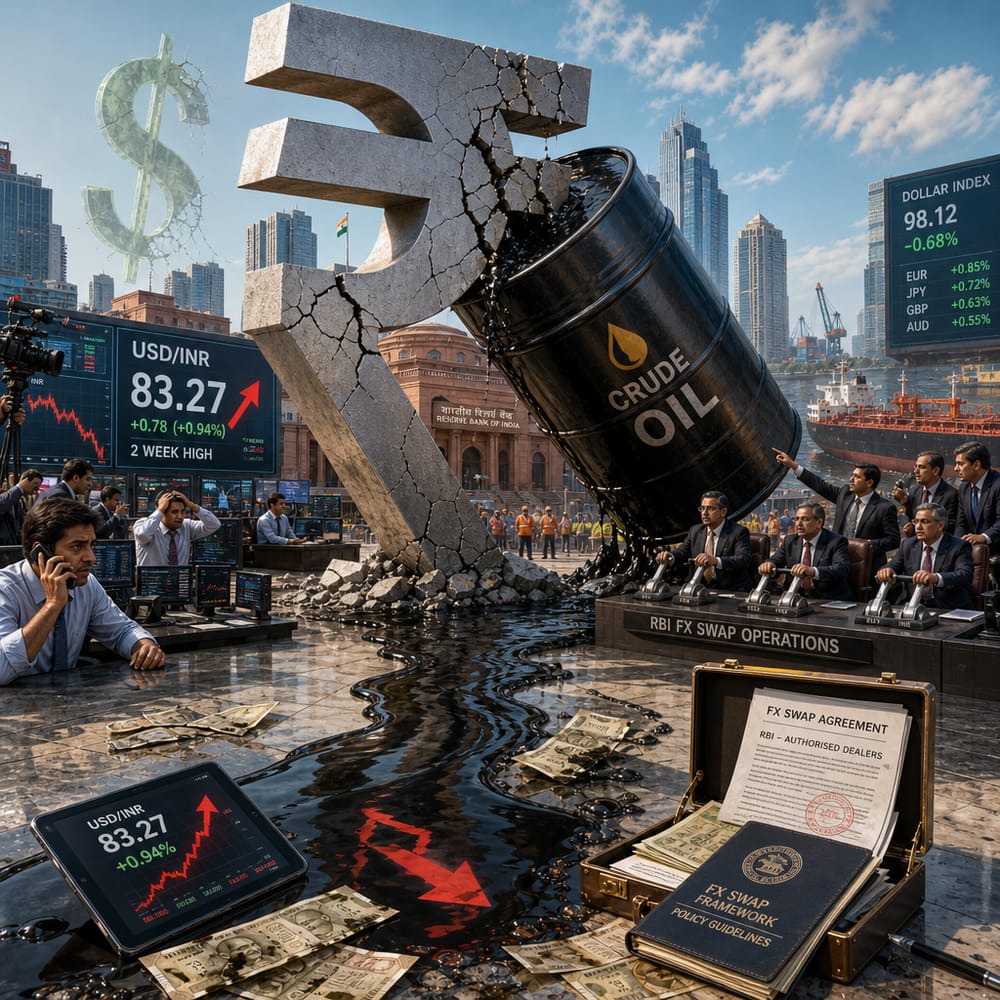
Amidst the global economic symphony, or perhaps cacophony, the Indian rupee has hit a sour note, sliding to a two-week low against the dollar. And it's not because the dollar's been pumping iron lately. Quite the opposite — the greenback's been feeling a bit under the weather. So what's dragging the rupee down? Think of it as a perfect storm: a cocktail of rising oil prices and a shake-up in the Reserve Bank of India's foreign exchange (FX) swap arrangements. Let's dive deep into the rupee's woes and what the RBI might whip up to save the day.
THE OIL PRICE PUZZLE
First things first, oil prices. You see, India isn't exactly sitting on an ocean of oil. It's got to import most of it, which means when oil prices go up, so does India's import bill. And when you're shelling out more bucks for crude, it puts pressure on the rupee. It's like trying to hold onto a wet bar of soap — slippery and hard to control.
The global situation isn't helping either. The Middle East, particularly the Strait of Hormuz, is a hotbed of tension. Ships dodging projectiles tends to make investors jittery, and they've been buying up oil futures faster than you can say "geopolitical tension." Result? Oil prices climb, and the rupee slides. It's a vicious cycle.
RBI'S RESPONSE: A GAME OF SWAPS
Now, enter the Reserve Bank of India (RBI), the financial wizard in charge of stabilizing the rupee. They’ve got a few tricks up their sleeve, and FX swaps are one of them. What’s an FX swap, you ask? Think of it as the RBI swapping rupees for dollars with banks, promising to trade them back later. It's a way of injecting liquidity into the system and smoothing out currency fluctuations.
But here's the kicker: the RBI recently tweaked these swaps. The changes might seem like small beans, but in currency markets, even a butterfly flapping its wings can create a storm. The market's reaction suggests that these tweaks have added to the rupee's downward pressure rather than alleviating it.
WHAT'S NEXT FOR THE RUPEE?
So, is the rupee doomed to tumble down the currency charts? Not necessarily. The RBI has a couple more arrows in its quiver. One option is intervening directly in the forex market — essentially buying rupees and selling dollars to prop up the currency. Another route could be tightening monetary policy, though that’s a bit like playing with fire; it could help the currency short-term but might dampen economic growth.
And let’s not forget about fiscal policy. If the government can manage its budget without too much borrowing, it would help ease the pressure on the rupee. But as any economist will tell you, relying on politicians to tighten the purse strings is a bit like expecting your dog to guard your bacon sandwich.
THE BIGGER PICTURE
The rupee’s journey isn’t just about oil or new RBI policies. It's a reflection of how emerging markets often get caught in global economic crosswinds. While the U.S. wrestles with a ballooning fiscal deficit and inflation, emerging markets like India are left to navigate the ripples in the currency pool.
For retail investors in the U.S., this is a reminder: global economics isn't just a backdrop; it’s the whole stage. The rupee’s plight serves as a cautionary tale about the interconnectedness of markets. While your stock portfolio might seem miles away from a small currency slide halfway across the world, in reality, they’re all threads in the same global tapestry.
So, what's the takeaway? Keep an eye on currencies like the rupee. They can tell you more about the global economy's health than you might think. And who knows? The next time you sip your morning coffee, you might ponder how a ship in the Strait of Hormuz can influence the dollar in your pocket.
This article is for informational purposes only and is not investment advice. Always do your own research or consult a licensed financial professional before making investment decisions.
© Copyright 2024. All Rights Reserved.
© Copyright 2024. All Rights Reserved.