

Impact of Treasury Yield Movements on Equity Sectors
Wednesday, August 19, 2026
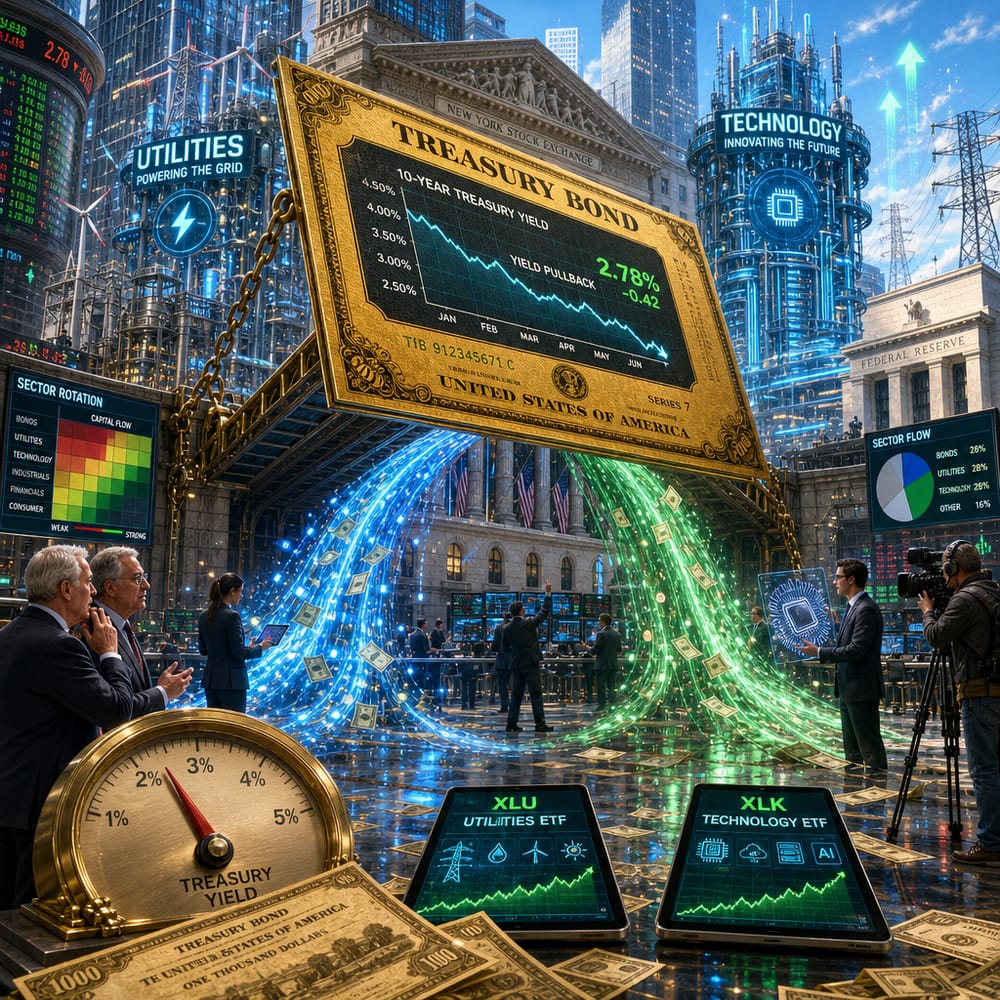
THE TREASURY YIELD ROLLERCOASTER: WHAT'S AHEAD FOR STOCKS?
If the financial market is a wild rollercoaster, then Treasury yields are that spine-tingling drop that makes your stomach leap. These seemingly innocuous numbers have an outsized influence on everything from mortgages to your investment portfolio. And right now, they're making headlines by dipping from sky-high levels. So, what does this mean for the stock market? Buckle up; we’re about to dive in.
WHY SHOULD YOU CARE ABOUT TREASURY YIELDS?
Let's get one thing straight: Treasury yields are like the heartbeat of the financial world. When they rise or fall, they send ripples across the globe. A Treasury bond is essentially a loan to the U.S. government, and the yield is the interest you earn on that loan. Changes in these yields often signal shifts in investor expectations about economic growth and inflation.
So, why should you care? Because whether you realize it or not, these yields influence how sectors of the stock market perform. Right now, yields are pulling back from the highs they reached this year. And that could be a game-changer for your investments.
WHICH SECTORS GET THE SPOTLIGHT?
In this economic dance, not all sectors are in step. When yields rise, sectors like utilities and real estate, which are sensitive to interest rates, often stumble. Lower yields, however, can be a blessing for these sectors as borrowing costs decrease, making them more attractive to investors.
But don't sleep on technology stocks either. While they're not as directly tied to yields, lower borrowing costs can make it cheaper for tech companies to invest in innovation and growth. This could buoy tech-heavy investment funds like Technology ETFs.
In short, if you're holding Utilities ETFs or Technology ETFs, you might want to keep them close. They're set to shine if yields continue to ease.
THE SECTOR ROTATION GAME
Investor sentiment is like fashion—always changing. And nothing triggers a wardrobe change like a shift in Treasury yields. With yields edging down, the trend might lean toward more defensive sectors like utilities and stable tech companies. This shift is what market geeks call "sector rotation."
Think of it like a relay race: investors hand off money from one sector to another in pursuit of better returns. If yields keep declining, those investing in tech's innovation might find their bets paying off. Meanwhile, utilities could offer a haven with steady returns as people look for safety in lower-yield environments.
WHAT TO WATCH FOR
You don’t need to be an economist to watch some telltale signs. Keep an eye on the 10-year Treasury note—often considered the granddaddy of all yields. As it fluctuates, it gives clues about the broader economy.
For those eyeballing technical charts, watch for resistance and support levels in these equity sectors. In finance lingo, these are the "lines in the sand" where stocks either bounce back or break through to new levels. Knowing where these lines lie can help you time your market moves better than a seasoned DJ drops the beat.
WHAT’S YOUR MOVE?
So, what should you, the savvy retail investor, do amid all this bond yield drama? It's all about staying informed and nimble. Consider reviewing your portfolio's allocation in light of the current yield shift. Maybe it’s time to dust off some of those tech and utility sector investments.
Keep an open line to the news and financial updates. Changes in yield can be as unpredictable as a cat on catnip, but being informed lets you ride the wave instead of being swept away.
Remember, investing isn’t about making the perfect move every time. It’s about making educated decisions more often than not. So, stay sharp, stay informed, and keep your eyes on those Treasury yields—they just might be the key to unlocking your next big investment win.
This article is for informational purposes only and is not investment advice. Always do your own research or consult a licensed financial professional before making investment decisions.
© Copyright 2024. All Rights Reserved.
© Copyright 2024. All Rights Reserved.