

Impact of Duty-Free Beef Imports on U.S. Meat Industry
Sunday, August 30, 2026
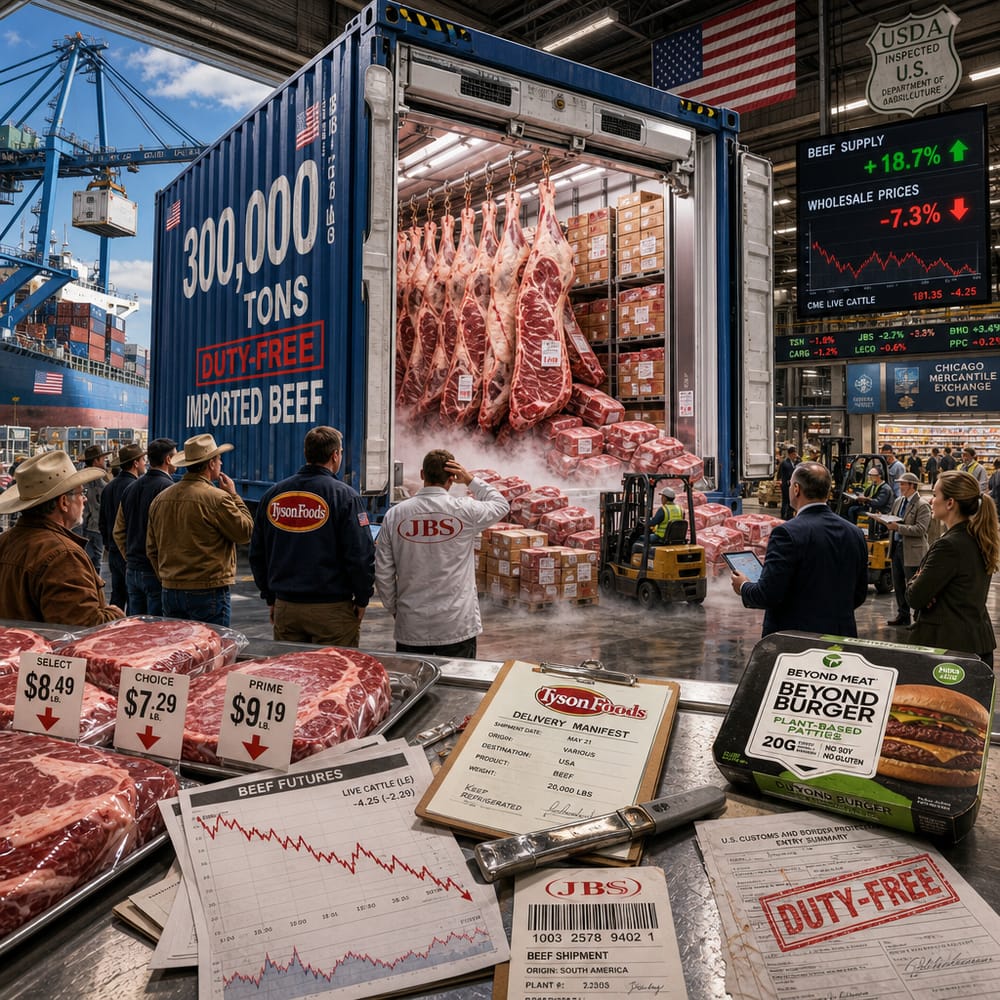
TRUMP’S DUTY-FREE BEEF BONANZA: WILL IT MAKE YOUR BURGERS CHEAPER?
Imagine a world where burger prices plummet, the meaty goodness of steak becomes affordable, and grills everywhere are firing up more often than your neighbor’s old lawnmower. Sounds too good to be true, right? Well, hold that thought because President Trump just lobbed a juicy burger patty into the fiery pit of the U.S. meat industry by allowing 300,000 metric tons of beef to waltz into the country duty-free.
Yup, you heard it right. Three hundred thousand tons. That’s like stacking a massive beefy pyramid over Central Park. Starting September 1st, this meat bonanza kicks off its 90-day campaign, aiming to make your grocery store adventures a tad more exciting. However, before you start revamping your summer barbecue plans, let’s chew over what this really means for consumers and the beef industry.
So, the big question: Will this lead to lower beef prices for you, the hungry consumer? In theory, it should. The imported beef is required to be sold at 25% below the current market price. Goodbye, $6.89 ground beef! Well, at least that’s the narrative we’re being fed. But like any too-good-to-be-true deal, it comes with a side of skepticism. The nitty-gritty details of how these price reductions will actually hit your local grocery store aisle remain as transparent as a murky stock market prediction. The White House has yet to clarify the “how” of it all, and the overseeing agencies haven’t shown their cards on monitoring these discounted prices.
Now, let’s chat about the domestic producers. You know, those hardworking folks who’ve been holding down the fort in the U.S. meat industry. How are they supposed to respond to this beefy wave of foreign competition? It’s like being at a party where an uninvited guest (or 300,000 tons of them) just walked in and took over the dance floor. Domestic producers might have to step up their game, offering competitive prices or boosting their marketing strategies to remind Americans why buying local is still the best choice. But, let’s not kid ourselves—many of these companies are already neck-deep in challenges like rising feed costs and drought impacts. This new competition might just be the straw that tips their already overloaded scale.
And it’s not just the traditional meat producers feeling the heat. Look over at the alternative meat sector. Companies like Beyond Meat, who have been riding the wave of plant-based diets, might find this a beefy thorn in their side. With cheaper meat options flooding the market, those contemplating the switch to plant-based might pause for thought. Should they stick with those signature bean patties when an affordable sirloin is just a grocery trip away?
Now, this move is definitely a shake-up. Tyson Foods, one of the big players in the meat-packing industry, might need to sharpen their knives (figuratively speaking) and brace themselves for the impact. Tyson’s competitors, especially the Brazilian giant JBS, who might find themselves in the exporting mix, could be the wildcards in this beefy saga. If JBS uses this opportunity to expand its U.S. foothold, we could be looking at a whole new level of meat market dynamics.
So, what does this mean for you? Well, while the promise of cheaper burgers might sound like a dream, don’t start planning your backyard luau just yet. The actual impact on prices could be as elusive as finding the perfect avocado—green one minute, gone the next. The real deal will depend on how quickly and effectively these duty-free imports make their way to your supermarket shelves and whether the savings actually trickle down to your wallet.
As you contemplate these beefy developments, remember that the meat industry is a complex beast, with shifting dynamics and influential players. This duty-free beef fiesta may offer a temporary respite for your grocery bills, but the long-term ripples could reshape the meat market as we know it. So, keep your grill hot, your options open, and let’s see how this sizzling story unfolds.
This article is for informational purposes only and is not investment advice. Always do your own research or consult a licensed financial professional before making investment decisions.
© Copyright 2024. All Rights Reserved.
© Copyright 2024. All Rights Reserved.