

Hotter-Than-Expected September CPI Sparks Broad-Based Selloff — Nasdaq & Russell 2000 Lead Declines
Thursday, October 15, 2026
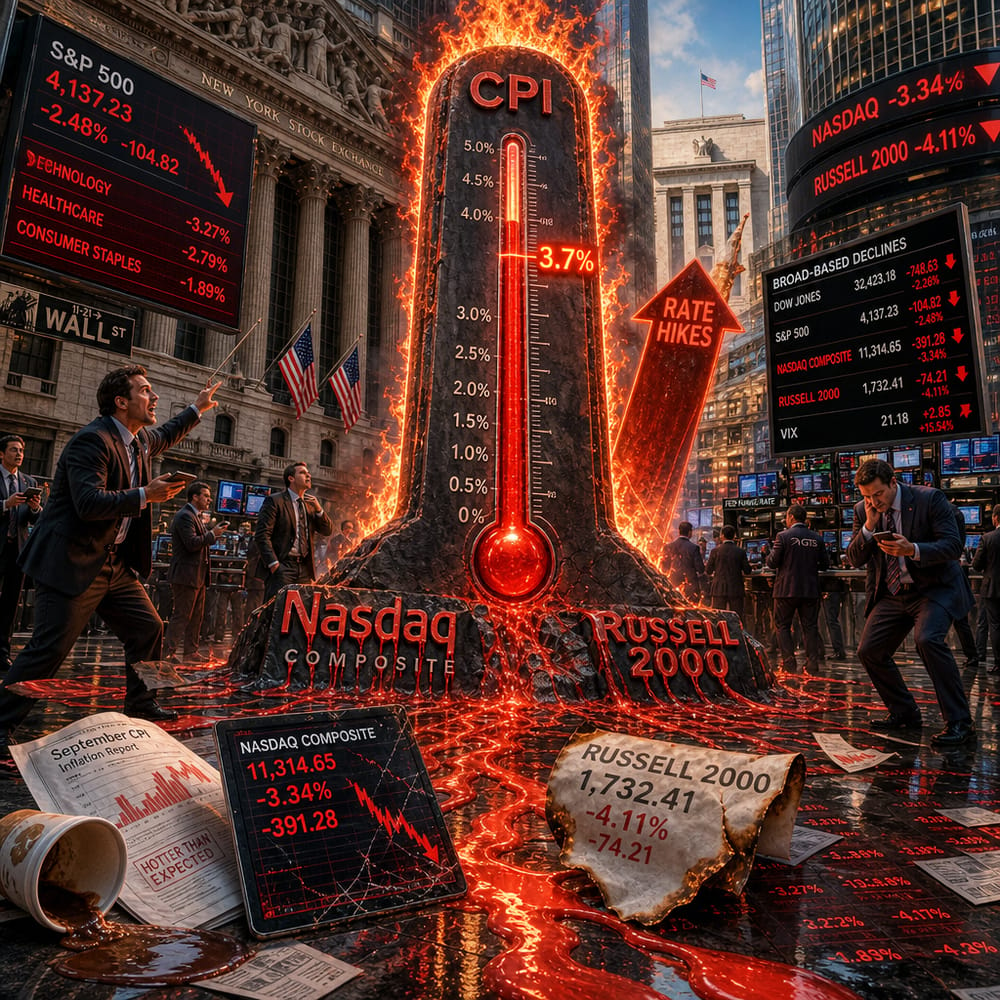
INFLATION IN THE HOT SEAT: HOW SEPTEMBER'S CPI REPORT HAS PUT THE MARKETS IN A TAILSPIN
Only in 2026 could a 3.7% inflation figure cause so much market mayhem. Yes, you heard right: the September Consumer Price Index (CPI) numbers are in, and they're about as welcome as a splinter in a shoe. This hotter-than-expected inflation has sent investors scrambling like cats on a hot tin roof, triggering a broad-based market selloff that’s got Wall Street whispering about the Fed and its notorious interest rate hikes.
So what’s the buzz all about? Basically, inflation is like a stealthy thief, quietly eroding purchasing power. And when it sneaks above expectations, it sends shivers down the spines of investors who fear the Fed might respond with yet another hike in interest rates, making borrowing more expensive and potentially dampening economic growth. In simple terms, the folks at the Federal Reserve might just be reaching for their rate-hiking boots again.
Our good old buddies, the Nasdaq Composite and the Russell 2000, are leading the charge—or should I say the decline—down the slippery slope of investor uncertainty. While the Nasdaq stumbled to near a one-month low, dragging along tech stocks that were once the belle of the ball, the Russell 2000, which tracks smaller companies, took a dive into the deep end too. It's as if small caps and tech got thrown together in a market purgatory party they didn’t RSVP for.
Why the tech and small cap swoon? Well, tech companies are the over-spenders in the AI playground, and when inflation heats up, investors start questioning their pricey bets. They see those 5% yields on Treasury bonds and think, "Hmm, maybe this is a safer bet than the AI roller coaster." On the small cap front, these companies often rely heavily on borrowing. With rates on the rise, the cost of loans balloons, squeezing their profit margins tighter than a pair of skinny jeans.
Meanwhile, the S&P 500 is hanging on like a cat clinging to a curtain, with a slight dip that’s less gut-wrenching than its Nasdaq and Russell counterparts. Why? Because it's more diversified, with a buffet of stocks from different sectors. While tech was out for a jog, healthcare and consumer staples—think toothpaste and toilet paper—were sitting pretty, cushioned by their reputation as reliable, steady options during turbulent times.
So, what's next for the Federal Reserve? If inflation keeps doing its best impersonation of a popcorn kernel in a hot pan, we might see another rate hike. But the Fed has to play its cards right; too many hikes and they risk stopping the economy in its tracks.
Investors now face a pressing question of strategy. Do they stick with the high-octane tech stocks, hoping AI keeps soaring, or do they pivot to more reliable, defensive sectors? When inflation’s high, the cost of being wrong could include a few sleepless nights. We may see a shift toward sectors that have historically weathered inflationary storms with grace—healthcare, consumer staples, and maybe even some utilities. After all, whether the economy's hot or not, people still need to eat, stay healthy, and keep the lights on.
In short, fasten your seatbelts because the road ahead looks as bumpy as a cactus. If inflation continues its fiery ascent, it could be the catalyst for more volatility in an already jittery market. Investors will be watching the Federal Reserve's next move as keenly as a hawk eyeing its prey, knowing that every tick up or down in interest rates has the power to reshape the terrain. But fear not, savvy investors, because in every storm cloud, there's a silver lining—if you know where to look.
This article is for informational purposes only and is not investment advice. Always do your own research or consult a licensed financial professional before making investment decisions.
© Copyright 2024. All Rights Reserved.
© Copyright 2024. All Rights Reserved.