

Hotter-than-expected PCE Inflation in October Fuels Fed December Rate Hike Odds
Wednesday, November 25, 2026
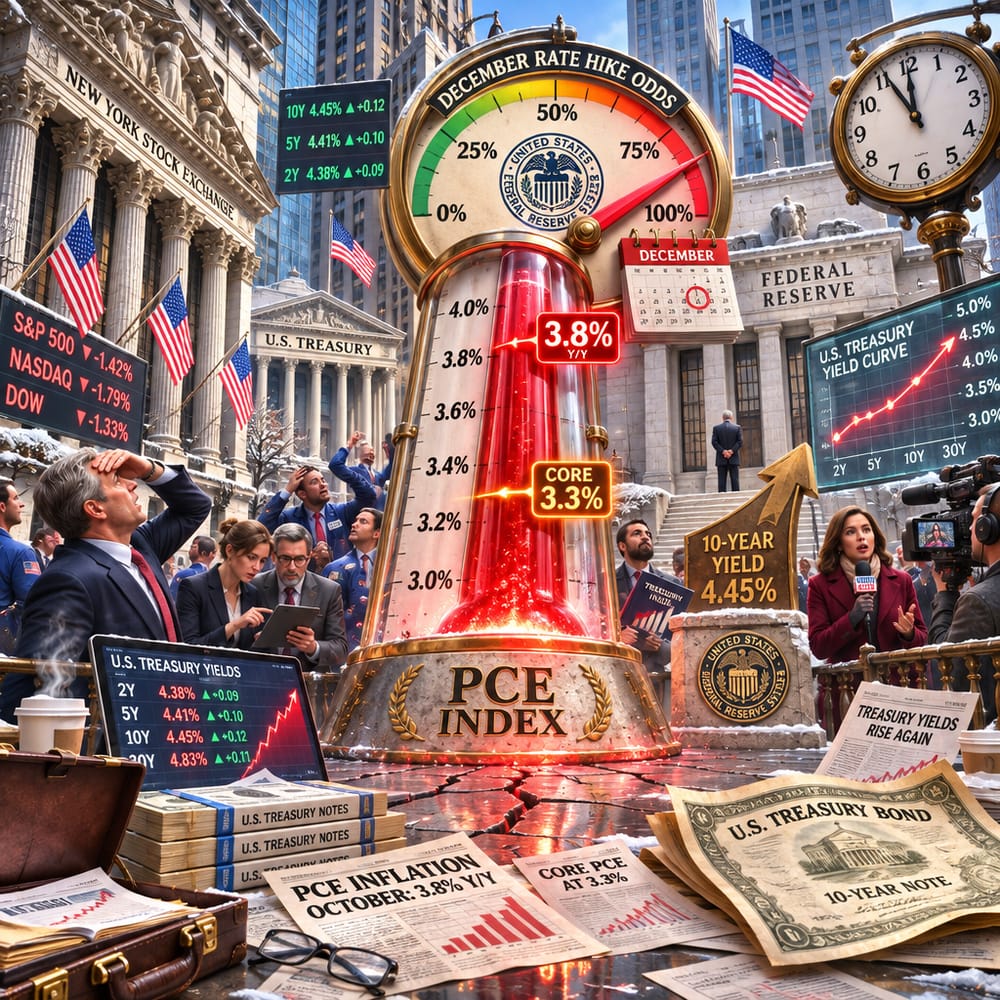
THE FED’S HOLIDAY SURPRISE: WILL DECEMBER BRING MORE THAN JUST MISTLETOE?
Picture this: you're right in the middle of choosing the perfect Thanksgiving pie, when suddenly your phone buzzes to notify you of an unwanted guest — the latest PCE inflation numbers. The news? October's PCE price index, the Federal Reserve's favorite inflation metric, has risen by 3.8% year-over-year, with core inflation puffing up to 3.3%. Now those pie choices seem trivial, as your mind races to the potential consequences for your wallet.
First things first, let’s decode this PCE inflation thing. PCE stands for Personal Consumption Expenditures, and it’s the Fed’s go-to tool for assessing inflation. Unlike the more famous Consumer Price Index (CPI), which tracks the price change of a set basket of goods, PCE looks at a broader range of spending trends. Given this latest uptick, the Fed's December meeting just got a lot more interesting, and not for the cozy eggnog-and-mistletoe reasons.
So, what does this inflation news mean for the Fed’s end-of-year decision-making? The likelihood of a rate hike is increasing — picture the Grinch growing a heart three sizes too small for your mortgage rate. When inflation strays above the Fed's 2% target, they typically respond by bumping up interest rates, which makes borrowing more expensive, with the aim of cooling things down. So, if you were dreaming of a white Christmas with a side of cheap credit, you might just wake up to a hike.
Let’s talk turkey about why this matters beyond the Fed's boardroom. First, the bond markets. U.S. Treasury yields are likely to react faster than you can say “stuffing.” As rates rise, bond prices generally dip — it's the seesaw effect at play. Higher inflation data increases the odds of more rate hikes, which generally leads investors to demand higher returns for loaning Uncle Sam their hard-earned cash. Translation? Your bond portfolio might get a bit of a shock, unless you've hedged like a savvy saver.
And then there’s the ripple effect on consumer borrowing costs. Whether it's a new home, car, or those pesky credit card balances, anything borrowed could become pricier. If you’re considering locking in a mortgage or refinancing, now might be a good time to make your move before Santa slides down the chimney with a new interest rate. This is the Fed’s way of saying, "Hey, slow down on the spending, will ya?" as they try to dampen demand.
But there’s a glimmer of silver lining in the holiday haze. Not all stocks are shivering in their boots. While the tech sector might be reacting to its own set of troubles (hello, Nvidia’s rollercoaster), sectors like energy and materials could benefit from stronger inflation and higher interest rates. If inflation signals robust economic activity, these sectors might keep your portfolio from feeling too frosty.
Keep an eye on financials too. Banks typically relish rate hikes because they can charge more for loans compared to what they pay on deposits. In a world of rising rates, a few financial stocks in your stocking might just keep your portfolio nice and toasty.
So, as you navigate the festive season, keep your eyes on the Fed's December meeting. The recent inflation data might just be the ghost of Christmas rate hikes future, affecting everything from the bond markets to consumer borrowing costs and beyond. Whether you're planning your next big investment move or simply budgeting for holiday gifts, understanding these dynamics could help you avoid financial lumps of coal.
Remember, even if the Fed does raise rates, there are strategies to keep your portfolio jolly. Diversification, understanding sector impacts, and staying informed are your best allies. After all, the Fed's not just playing Scrooge — they're trying to steer the economy away from overheating.
So, grab a slice of pie, savor that extra helping of stuffing, and prepare for what might be a bumpy — but manageable — financial sleigh ride into the new year.
This article is for informational purposes only and is not investment advice. Always do your own research or consult a licensed financial professional before making investment decisions.
© Copyright 2024. All Rights Reserved.
© Copyright 2024. All Rights Reserved.