

Hot September Inflation Sparks Risk-Off Tone—Major Index Divergence
Wednesday, October 14, 2026
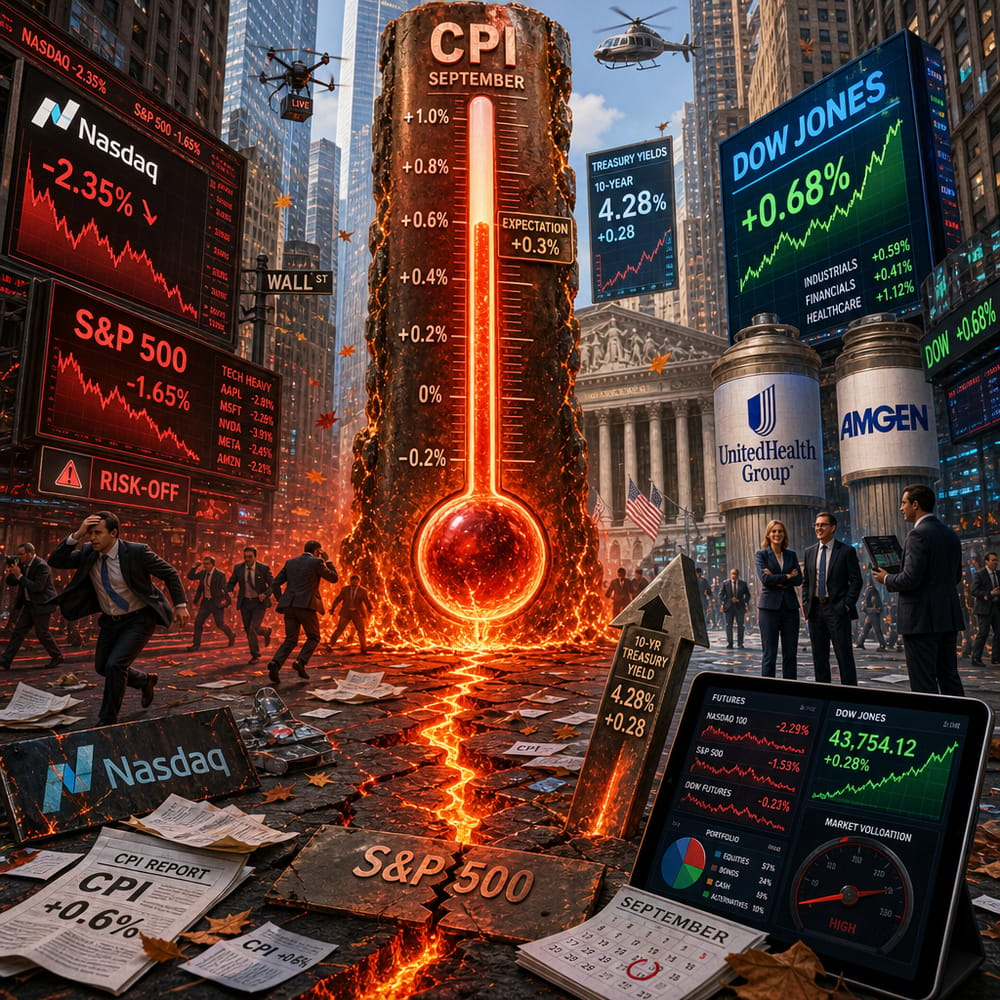
It’s a classic case of good news, bad news: consumer prices are up, and so are your blood pressure readings. In a month that many hoped would bring cooling signs on the inflation front, September decided to turn up the heat. The Consumer Price Index (CPI) clocked in with a sizzle, jumping 0.6% from August and landing a year-over-year increase of 3.7%. That’s a bigger leap than expected and it’s sent Wall Street into a dizzying tailspin of stock market gymnastics.
So what’s the big deal? Well, in market speak, this kind of inflation report rings alarm bells. And when the alarms ring, traders don their gear for a ‘risk-off’ dance—a cautious shuffle that sends everyone scurrying away from riskier assets like tech stocks and toward the shelter of more stable investments like government bonds. This market shuffle isn’t just a polite side step; it’s a full-blown waltz away from the Nasdaq and S&P 500, which both took a gut punch, while the Dow Jones, thanks to its stalwart pals UnitedHealth and Amgen, somehow managed a grin and a small climb.
But what’s driving this inflation frenzy? Well, we’ve got energy prices throwing a tantrum in the corner. Gasoline, in particular, has been doing some heavy lifting, pushing the energy index up a bold 5.2%. This is partly thanks to geopolitical tensions that refuse to simmer down, sucking oil prices along for a wild ride. So if you’re feeling the pinch at the pump, you’re not alone.
However, when you strip away the volatile food and energy components to look at the core CPI—the stuff that’s considered a steadier measure of inflation—it’s up 0.3% for September and sitting at 2.6% annually. It’s still a notch above what the experts penciled in, which means even the less bumpy components of our economy are feeling the inflationary tickle.
With these numbers flashing in red, Treasury yields felt the heat too, with the 10-year note jumping to levels that haven’t been seen in a bit. Higher yields on Treasuries mean bonds look more appealing, especially to those feeling jittery about stocks. So, what's the consensus on Wall Street? Just like a good thriller, bets are up on the Federal Reserve pulling the lever on rate hikes sooner rather than later. It’s a toss-up now whether the Fed’s going to hit us with a quarter-point jab or a more aggressive half-point uppercut come December.
Certain sectors are taking it harder than others. Tech stocks, typically the darlings of a low-interest environment, are feeling the squeeze. Higher interest rates make borrowing more expensive, which can stifle the growth zest tech companies thrive on. Meanwhile, healthcare stocks like those in the Dow Jones are basking in the glow of a risk-off climate, because, let’s face it, people need healthcare regardless of whether inflation decides to throw a party.
As investors adjust their portfolio hats, many are leaning toward safer, income-generating plays. The lure of dividend stocks is calling, while gold—the ever-reliable friend in uncertain times—boosts its appeal as a safeguard against inflation. The glittery metal’s recent dip might just look like a buying opportunity to those with a keen eye on hedging bets.
This whole market tango raises a couple of big questions: which sectors will be the winners and losers if inflation keeps up its hot streak, and how should the everyday investor be thinking about adjusting their portfolio? The truth is, it's a mixed bag. Inflation benefits certain sectors, like energy and materials, which can pass higher prices onto consumers. Meanwhile, consumer discretionary and tech might face headwinds, as higher costs can dampen both consumer spending and company profits.
For the average Joe or Jane investor, this means it's time to stay nimble. It might be wise to mix in some inflation-resistant investments, like Treasury Inflation-Protected Securities (TIPS) or stocks from sectors known for weathering inflationary storms. Keeping a diversified portfolio, with a balance between risk and safety nets like bonds, could be the trick to surviving this inflation-fueled roller coaster.
So, while September’s inflation numbers might have sent some shockwaves through the market, it also serves as a reminder: in the world of finance, the only real constant is change. And if there’s one thing investors are good at, it’s adapting to the tides—whether it’s smooth sailing or riding out a tempest.
This article is for informational purposes only and is not investment advice. Always do your own research or consult a licensed financial professional before making investment decisions.
© Copyright 2024. All Rights Reserved.
© Copyright 2024. All Rights Reserved.