

Home Depot's Q2 Earnings Beat: A Deeper Dive
Tuesday, August 18, 2026
HOME DEPOT'S Q2 EARNINGS BEAT: A DEEPER DIVE
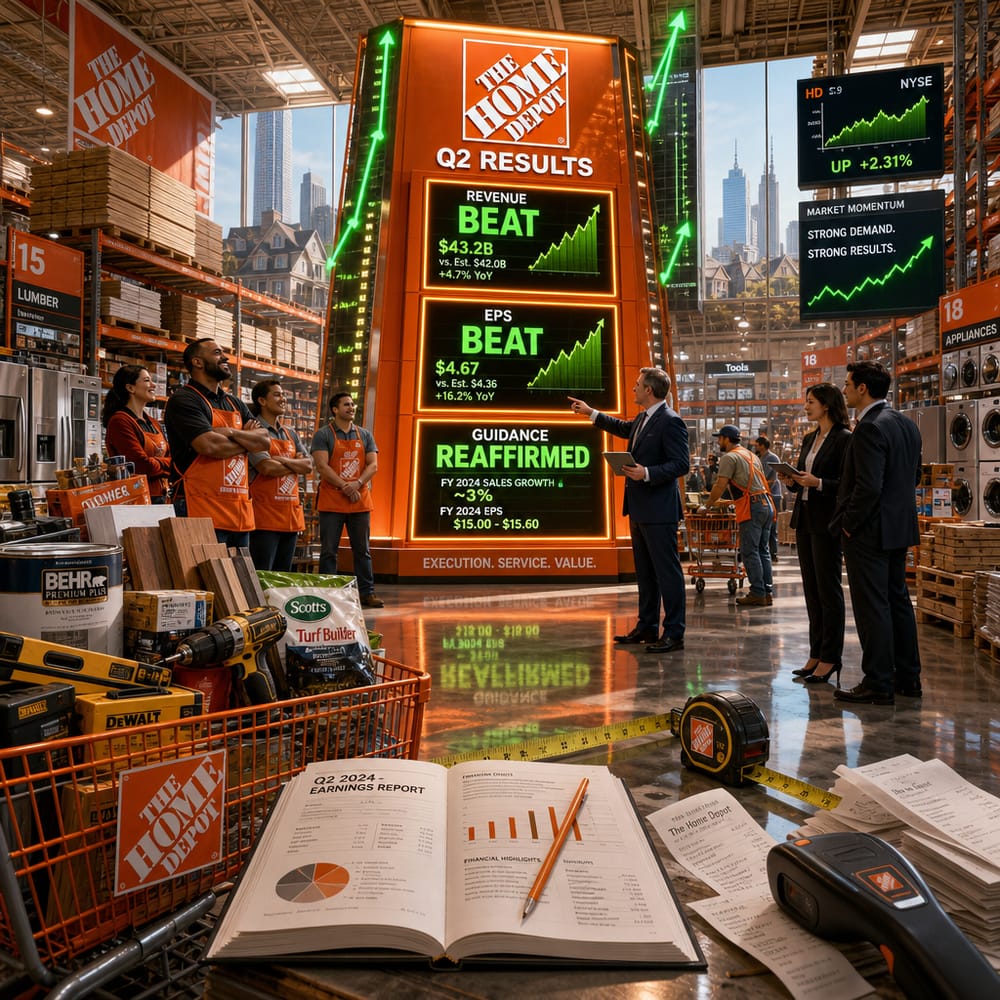
Grab your hard hats, folks, because Home Depot is hammering down the competition with a second-quarter earnings beat that has Wall Street buzzing. Just when you thought the sluggish housing market might nail their sales to the floor, Home Depot has nailed this quarter. Buckle up as we break down how the home improvement giant managed to pull off this magic trick and what it means for your portfolio.
Home Depot didn't just meet expectations; it exceeded them. We're talking about revenue and earnings per share (EPS) both outperforming the estimates. It's the kind of report card that gets a gold star and a sneaky smile from investors. But what, you ask, is behind this stellar showing in a market that feels like a fixer-upper with a sagging economy?
Let's start with the backbone of Home Depot’s earnings surprise: the DIY warriors. Yes, in an era where weekend warriors are doing more than scrolling TikTok, they're taking on small home projects with gusto. The pandemic gave many people a taste for home improvement, and it turns out, that taste is lingering longer than a can of leftover paint.
With the housing market slower than a turtle on a treadmill, folks are turning their attention inward, deciding to spruce up their nests rather than buy new ones. This sustained demand for small projects is helping Home Depot build a sturdy revenue stream. Think new gardens, fresh cabinets, or that long-dreamt-of she-shed—smaller projects that don't break the bank but still need lumber, paint, and a shopping cart full of power tools.
SUSTAINABILITY OF SMALL-PROJECT DEMAND
The million-dollar question: how sustainable is this DIY trend? Well, as long as the housing market keeps crawling, the thirst for small home projects should remain unquenched. But let's not put all our eggs in one toolbelt. The DIY arena can be as fickle as your aunt's ever-changing kitchen wallpaper. If the housing market rebounds and folks start packing moving boxes instead of paint cans, Home Depot might see this revenue river start to dry up.
POTENTIAL RISKS TO HOME DEPOT'S GUIDANCE
While the company has doubled down on its full-year guidance, it’s not all smooth sailing from here. One potential bump in the road could be the broader economy. With inflation tighter than a lug nut on a NASCAR tire and interest rates that would make a mountain goat nervous, consumer spending might start tightening up. And let's not forget about supply chain shenanigans. If getting goods from A to B becomes as convoluted as assembling IKEA furniture, Home Depot might find its shelves looking sparse and its profits pinched.
The company is also banking on professional contractors, who have historically been steady customers. But with new housing starts pausing for a breather, this sector could become unpredictable. If pros decide to take an extended coffee break rather than break ground on new projects, Home Depot's growth could hit a pothole.
So, what should you, the eager retail investor with a keen eye on Home Depot, take away from all this? For one, keep an eye on the housing market. If it defies gravity and sales start to soar, watch for a potential shift in Home Depot’s fortunes. Also, monitor consumer trends like a hawk. Any signs the DIY appetite is waning could be the canary in the mine for Home Depot's growth prospects.
In the meantime, Home Depot's stock is proving it's not just another tool in the shed. This quarter's earnings beat shows that with the right mix of consumer demand and strategic planning, even a sluggish market can't keep a good stock down. While there are risks on the horizon, for now, Home Depot is proving it's got the right tools for the job. So, whether you're a seasoned investor or just someone who likes to keep a tidy toolbox, Home Depot might just be worth your attention.
This article is for informational purposes only and is not investment advice. Always do your own research or consult a licensed financial professional before making investment decisions.
© Copyright 2024. All Rights Reserved.
© Copyright 2024. All Rights Reserved.