

Heightened Volatility Signals Risk-Off Market Sentiment
Friday, November 20, 2026
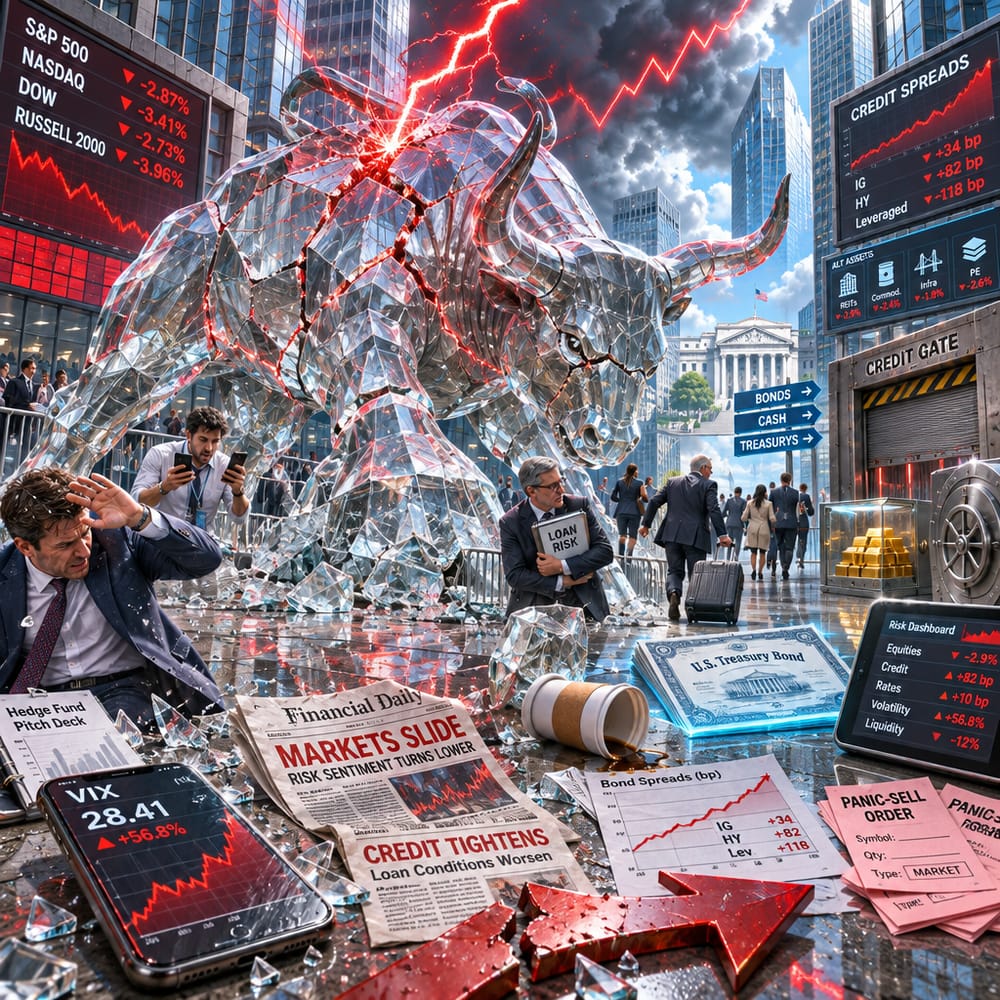
HEIGHTENED VOLATILITY SIGNALS RISK-OFF MARKET SENTIMENT
Picture this: You're sailing on a calm sea, enjoying the serenity, when suddenly, the skies darken, and the waves begin to crash. That's the financial market right now, folks. Volatility is back with a vengeance, and it's as if investors collectively decided to hit the "risk-off" button. But what does this mean for you, the investor trying to navigate these choppy waters without capsizing your portfolio? Let's dive in.
THE CALM BEFORE THE STORM
First, let's decode the cryptic phrase "risk-off sentiment." Essentially, it's when investors get jittery and start pulling money out of riskier investments like stocks, opting instead for the cozy safety of bonds or even cash. It's akin to retreating to your basement during a tornado warning—better safe than sorry.
But how do we know we're in a risk-off environment? Take a peek at the key indicators: heightened market volatility and tightened credit conditions. Recent market data confirms it—the VIX, often dubbed the "fear gauge," has been climbing. It's the financial equivalent of a weather vane pointing towards stormy times. Meanwhile, credit conditions are getting snugger than your favorite pair of jeans after Thanksgiving dinner, as lenders grow cautious about who gets their cash.
ASSET ALLOCATION IN THE EYE OF THE STORM
So, how does one maneuver their investment ship through this tempest? Well, let's talk tactics. Diversifying your asset allocation is the name of the game. When volatility spikes, equities tend to take a hit. Look no further than the recent 2% dip in the S&P 500 and the Nasdaq's similar decline after the much-anticipated Anthropic IPO failed to revive the tech sector enthusiasm. Equities might feel like they're on a rollercoaster right now, so maybe it's time to tighten the seatbelt or consider reallocating some of your portfolio.
Bonds, on the other hand, are the stable friend in your investment circle. In a risk-off climate, U.S. Treasury bonds are the financial equivalent of a warm blanket on a cold night. They offer stability and modest returns. It's no coincidence that investors tend to flock to these when the going gets tough.
And don't forget about alternative assets. Things like real estate or even commodities can add a layer of diversification that might help weather the storm. Just remember, even these aren't a foolproof hedge—nothing ever is.
LEARN FROM THE PAST, PREPARE FOR THE FUTURE
For those thinking, "Haven't we seen this movie before?"—indeed, we have. History is dotted with risk-off periods where jittery investors ducked for cover. Recall the 2008 financial crisis or even the early pandemic days in 2020. In both instances, the market eventually rebounded, but not before handing out a few bruises.
Drawing lessons from history, it's clear that patience and strategic asset allocation can pay off. Panic selling rarely leads to happy endings. Instead, consider this an opportunity to reassess and realign with your long-term goals.
LOOKING AHEAD
What's next on the horizon? While it's impossible to predict exactly when this storm will pass, keeping an eye on global economic indicators is crucial. Inflation rates, like Japan's recent spike to a year-high of 2.2%, might influence central bank decisions on interest rates, which in turn affects market sentiment.
Similarly, geopolitical tensions, such as the backlash from the Nvidia-China scandal, can add more fuel to the volatility fire. And even sector-specific events, like the back-and-forth in the AI industry following Anthropic's IPO, can have ripple effects across the market.
In conclusion, dear investor, while the current market feels more like a wild ride than a leisurely cruise, remember that storms eventually pass. Keep your wits about you, stay informed, and perhaps, embrace the rollercoaster—after all, it's all part of the investment journey. Hold on tight—this too shall pass.
This article is for informational purposes only and is not investment advice. Always do your own research or consult a licensed financial professional before making investment decisions.
© Copyright 2024. All Rights Reserved.
© Copyright 2024. All Rights Reserved.