

Heightened Volatility and Defensive Positioning Dominate U.S. Markets
Friday, November 20, 2026
HEIGHTENED VOLATILITY AND DEFENSIVE POSITIONING DOMINATE U.S. MARKETS
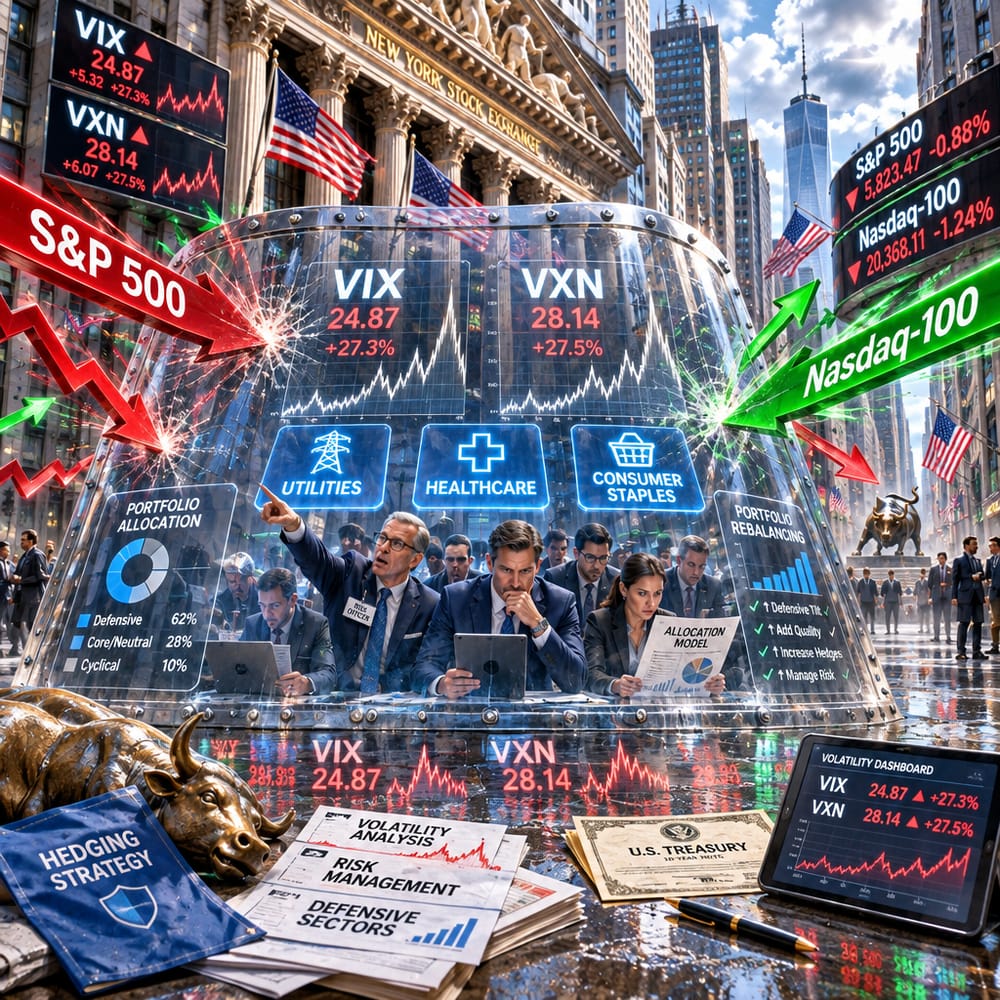
If you’ve been keeping an eye on the stock market lately, you might feel like you’re on a wild rollercoaster with no end in sight. The markets are playing a dangerous game of "will they, won’t they" with volatility, and right now, they’re leaning heavily into the "will they." The VIX and VXN, those trusty barometers of Wall Street jitters, are lighting up like a Christmas tree, spelling out one clear message: anxiety is in the air.
The Volatility Index (VIX) and its nerdy tech cousin, the VXN, are hitting elevated levels that would make even the most seasoned trader sweat. When these indices rise, it’s a surefire sign that investors are feeling a little queasy about the future. And who can blame them? From geopolitical tensions to unpredictable tech market moves, there's a storm of uncertainty brewing.
WHY SHOULD YOU CARE?
Understanding market volatility is like having a financial weather forecast. It tells you whether to pack an umbrella or wear sunglasses when playing the Wall Street game. Elevated volatility means that prices can swing wildly in a short period, and for investors, this means more risk but also potential rewards. It's the financial equivalent of surfing a 50-foot wave—thrilling if you know what you're doing, but also pretty risky if you don’t.
Investors are responding to this uncertainty with a defensive playbook. You see, when the markets seem like a bad stand-up comic—unpredictable and potentially painful—folks tend to gravitate towards safer bets. We're talking about sectors like utilities, consumer staples, and healthcare—essentially the investment world's comfort food. These are areas that tend to hold up even when the economic sky is falling because, well, people still need electricity, toilet paper, and healthcare.
THE HISTORICAL PERSPECTIVE
We've been here before. Historical precedents of heightened volatility tend to follow a familiar script: fear sparks a flight to safety, then opportunists swoop in to buy the dip. Back in the financial crisis of 2008, the VIX soared to unprecedented heights, aptly dubbed the "fear gauge." Investors who had their wits about them didn’t run for the hills—they rebalanced, diversified, and seized opportunities where they found them. And for those who kept their nerve, those dark days eventually turned into sunny skies.
WHAT THIS MEANS FOR DIFFERENT ASSETS
Stocks: High volatility could mean substantial ups and downs, so strap in for a bumpy ride. Tech stocks, especially, seem to be feeling the heat. After all, with Anthropic's wild debut and subsequent nosedive, the tech sector’s drama is anything but contained.
Bonds: Usually the safe harbor in choppy waters, bonds might get more attention as investors seek stability. But remember, with rising interest rates, bond prices can also take a hit.
Cryptocurrency: The wild, wild west of assets. Ethereum, for example, is experiencing quite the drop, contrasting its once sky-high price with a reality check. As volatility spikes, risk-averse investors might steer clear, while the risk-takers see potential gold mines.
Commodities: With oil and gold usually acting as safe havens, increased volatility might push these assets into the spotlight as alternatives to the stock market’s wild ride.
ADJUSTING YOUR STRATEGY
So, how do you navigate this sea of uncertainty? Diversification remains your best friend. Spread your investments across different asset classes to cushion the blow when one sector hits a rough patch. Consider increasing allocations toward defensive sectors without abandoning growth opportunities. And, perhaps most importantly, keep an eye on those volatility indices. They can be your early warning system for incoming storms.
It's crucial to remember that investing isn’t about eliminating risk—it's about managing it. In times of heightened volatility, sticking to a well-thought-out plan, rather than reacting impulsively to market movements, is often the key to long-term success.
As the current market narrative unfolds, remember that volatility, while daunting, is also a natural part of the market cycle. It can open doors to opportunities that weren't visible before. So, sharpen your pencils, review your strategies, and prepare to sail through the storm with prudent investing as your guiding star. The markets may be volatile, but with the right approach, there's no need to fear the ups and downs. After all, every rollercoaster eventually comes back to solid ground.
This article is for informational purposes only and is not investment advice. Always do your own research or consult a licensed financial professional before making investment decisions.
© Copyright 2024. All Rights Reserved.
© Copyright 2024. All Rights Reserved.