

Headline CPI Inflation Cools Slightly in July, Diminishing Near-Term Rate-Hike Pressure
Sunday, August 16, 2026
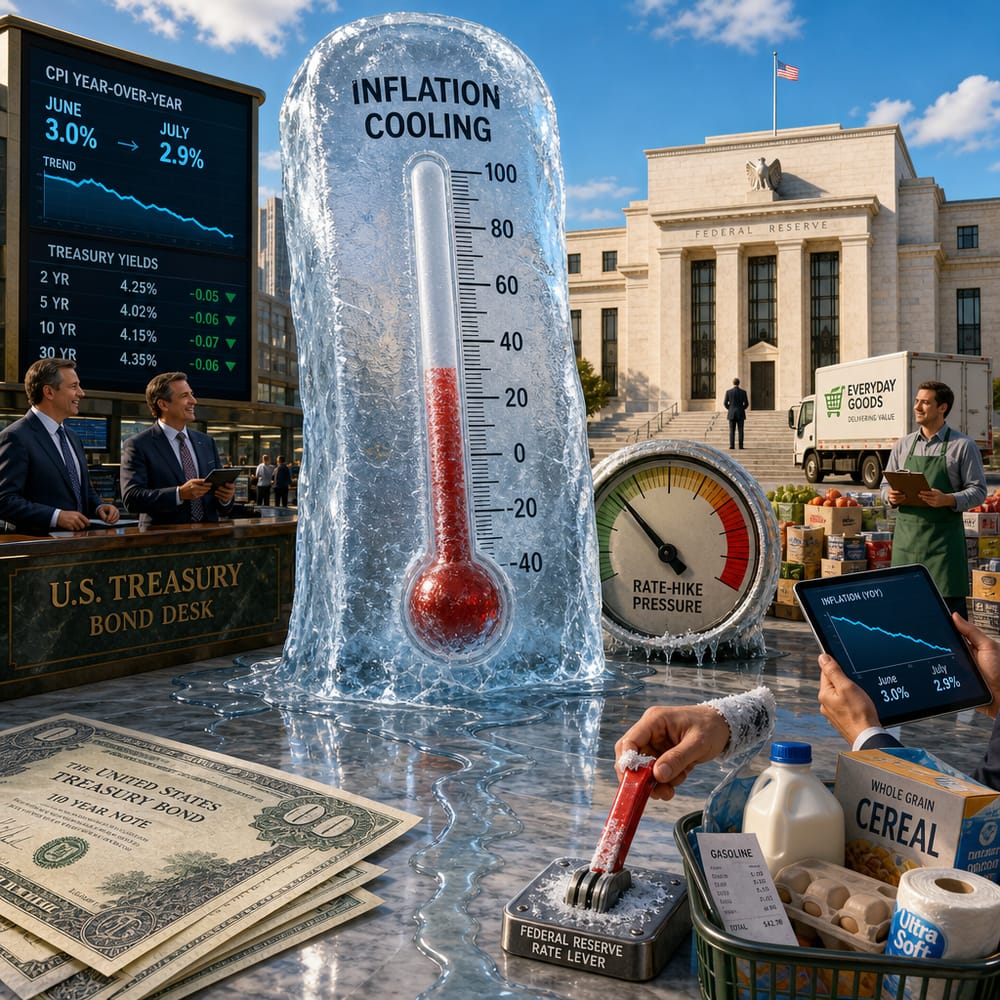
Inflation's going on a diet, and the Federal Reserve just might loosen its belt a notch. The latest headline Consumer Price Index (CPI) data shows a 0.1% month-over-month uptick in July, cooling to a 3.4% year-over-year rise from June's 3.5%. While it's not exactly a polar plunge, it’s enough to turn the Federal Reserve’s hawks into doves. Let's dive into why this matters to your wallet, your investments, and what could be next in line for those Treasury yields.
WHAT'S THE FED THINKING?
First things first: the Fed's main gig is controlling inflation, and it does so with the finesse of a tightrope walker juggling interest rates. Too high can hurt the economy; too low lets inflation run rampant. Now, with inflation cooling, the Fed can afford to take a deep breath. The pressure's easing for them to crank up interest rates at their September meeting, which means, possibly, leaving them where they are for now.
Why’s that a big deal? Higher interest rates make borrowing costlier — think mortgages, car loans, and those eye-watering credit card APRs. So, the Fed’s cautious pause means we might keep paying the same rates, at least for the time being. And that’s got a ripple effect on everything from buying houses to saving money.
A BREATH OF FRESH AIR FOR CONSUMERS
Okay, so inflation’s not quite at a standstill, but it's like switching from a brisk jog to a leisurely walk. And that walk has a payoff: consumer goods might just stay affordable for a bit longer. If you're juggling bills, this means your salary might stretch further, or at least not shrink as fast against rising prices.
With inflation simmering, folks might feel a bit more relaxed about spending, translating to more shoes in shopping carts and maybe a few extra dinners out. But before you go on a shopping spree, remember this: it’s not just about how much we spend today, but how much we save for tomorrow. Lower inflation expectations can lead to lower interest rates on savings accounts — great for borrowers, not so hot for savers.
TREASURY YIELDS IN FOCUS
Now, let's pivot to Treasury bonds — the grown-up version of a piggy bank for many investors. With the CPI cooling off, there's less pressure for the Fed to raise rates, which means Treasury yields — the return you get on government bonds — could stay modest rather than skyrocketing.
Why do you care? If you’re nearing retirement or just love a little low-risk investment, bonds are your best friend. Lower yields might not make your heart race but they generally mean stable returns. Plus, for those who love a good bargain, stable yields keep the borrowing costs down, influencing everything from your mortgage rates to the national debt.
WHAT DOES IT ALL MEAN FOR INVESTORS?
The consumer goods sector might breathe a sigh of relief. More stable inflation means steadier input costs for companies, which could mean less volatile stock prices. Considering investing in consumer goods or retail? Now might be the time to shop around for those stocks, metaphorically speaking.
But if you're sitting with a portfolio that’s heavy on the tech or high-risk fast movers, steady inflation cooling can mean less volatile swings — good news if you hate those 3 a.m. check-ins on your investment app to make sure the sky isn't falling.
THE BOTTOM LINE
The Fed, with its eye on inflation, is like an artist sculpting a masterpiece in marble — every chisel mark matters, and one wrong move can crack the whole thing wide open. The slight cooling in the CPI is just enough for the Fed to wipe the sweat off its brow and rethink its next move. For you, the consumer, it means a little stability in the storm of economic headlines. Fewer rate hikes might just let the winds calm a bit, making it easier for you and the markets to navigate the future.
So, keep an eye on those consumer goods stocks, maybe rethink how you’re saving, and watch those Treasury yields like a hawk. Inflation’s getting tamer, and it might just make your financial life a little easier to manage.
This article is for informational purposes only and is not investment advice. Always do your own research or consult a licensed financial professional before making investment decisions.
© Copyright 2024. All Rights Reserved.
© Copyright 2024. All Rights Reserved.