

Headline and Core Inflation Nowcasts Spike for August
Friday, August 21, 2026
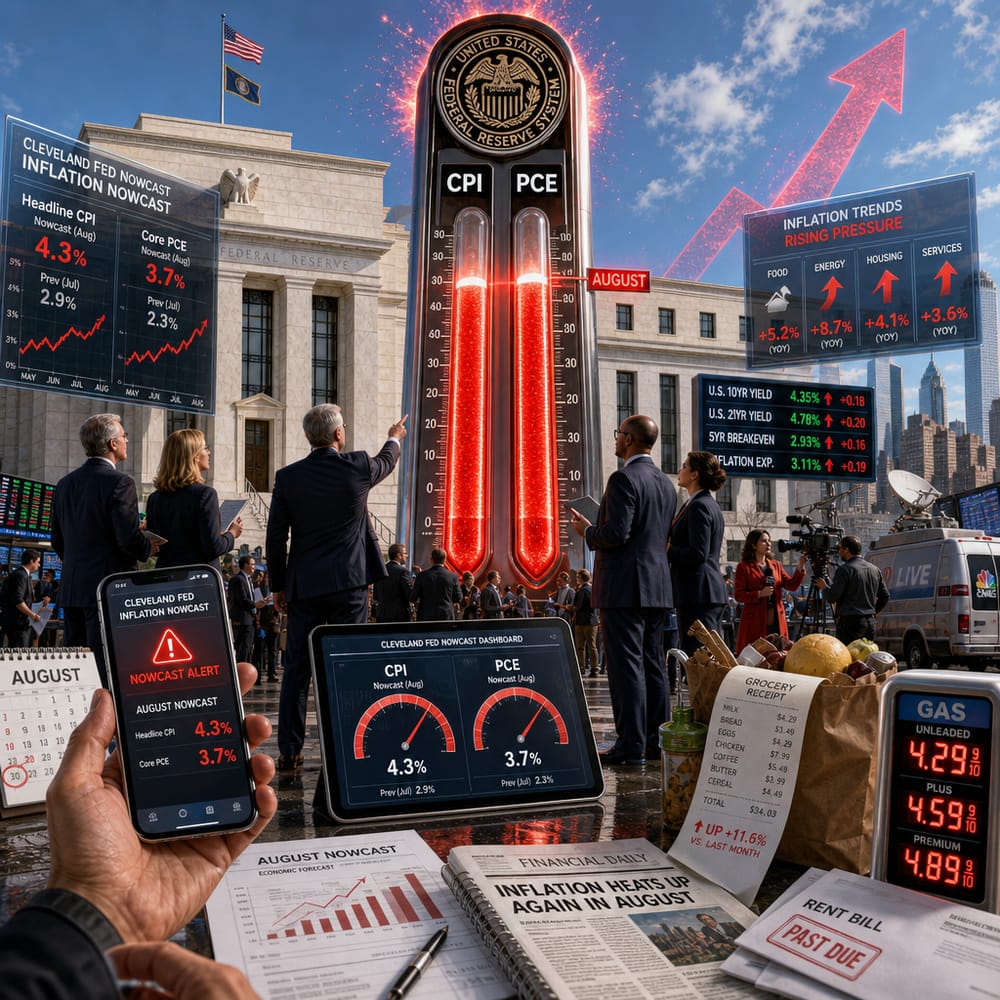
IT'S BACK: INFLATION'S UNWANTED RETURN
Buckle up, folks—your wallet’s about to get a little more cramped in the pocket of those designer jeans. Inflation’s back, and it’s decided to have another go at the economy. The Cleveland Fed's recent nowcasts are in, and spoiler alert: they aren’t pretty. Both headline and core inflation have ticked up for August, signaling that price pressures are once again in vogue, much like bell-bottoms and vinyl records. Here’s the kicker: rising inflation doesn’t just hit where it hurts (your spending power); it could also make the Federal Reserve rethink its game plan.
We’re used to inflation playing the role of that annoying uncle who shows up uninvited to the family barbecue, but what's coaxing it back onto the stage now? A perfect storm of rising oil prices, a jump in Treasury yields, and lingering supply chain woes are all doing their part. Let's break it down.
DRIVERS BEHIND THE INFLATION SURGE
First, the oil price—a constant protagonist in the inflation saga. The U.S. military recently helped move a cool 660 million barrels of crude through the Strait of Hormuz, but even this transcontinental hauling effort hasn’t stopped prices from rising. That's partly because global geopolitical tensions have added a hefty premium to every barrel, and sanctions, especially against oil giants like Iran, have made sure supply stays tight.
The climbing Treasury yields have also had their role in this inflationary drama. Investors are getting jittery, pushing yields up as they foresee a world where borrowing isn't as cheap as it used to be. Higher yields mean higher borrowing costs, translating into pricier loans for businesses and mortgages—a recipe for inflation.
Don’t forget, the ghosts of supply chain disruptions still haunt us like last year’s fruitcake. The factory closures from way back in the pandemic era have shrunk inventories, and demand still far exceeds supply. This imbalance pushes prices skyward, and consumers are left to foot the bill.
WHAT DOES THIS MEAN FOR THE FED?
With inflation on the rise, the Federal Reserve faces a conundrum so tricky it could stump the Riddler. The Fed’s primary toolkit involves tweaking interest rates. Raise them, and you cool the economy—too much heat makes the soufflé collapse, after all. But with inflation already rearing its head, the Fed might get trigger-happy with interest rates to tame the beast.
The question is: will they raise them too high, too fast? If they do, it risks pushing the economy into a slowdown, causing more harm than good to both businesses and consumers. It’s a delicate dance, and the Fed must avoid stepping on anyone’s toes.
IMPLICATIONS FOR CONSUMERS AND BUSINESSES
For the everyday folks, inflation means one thing: your dollar isn’t stretching as far as it used to. Groceries, gas, and the occasional splurge on that fancy latte will eat more of your paycheck. With higher prices, consumers might have to tighten their pursestrings.
Businesses, on the other hand, face a different beast. Rising costs could lead to tighter profit margins unless they pass the costs onto consumers—which they often do. It’s a vicious cycle, and no one’s a winner.
But it’s not all doom and gloom. In times of rising inflation, some sectors could be a safe bet. Think commodities like copper, which, despite a global supply crunch, are holding their own on the price front. As for Bitcoin enthusiasts, it seems the crypto’s rally might flatten out, despite recent spikes.
And while Ross Stores might be celebrating an earnings beat, the broader retail outlook might get tricky as consumers prioritize essentials over indulgences.
THE FINAL WORD
As inflation muscles its way back into the spotlight, it forces both the Federal Reserve and consumers to reconsider their strategies. Rising inflation is a double-edged sword that could either stabilize or upend the current economic recovery, depending on how it’s handled. So whether you’re a savvy investor or someone who still doesn’t get why eggs cost so much, keep an eye on the Fed’s next move. After all, when it comes to inflation, forewarned is forearmed.
This article is for informational purposes only and is not investment advice. Always do your own research or consult a licensed financial professional before making investment decisions.
© Copyright 2024. All Rights Reserved.
© Copyright 2024. All Rights Reserved.