

Hawkish Warsh Speech Reprices September Rate Hike Odds, Pressuring Equities
Saturday, August 29, 2026
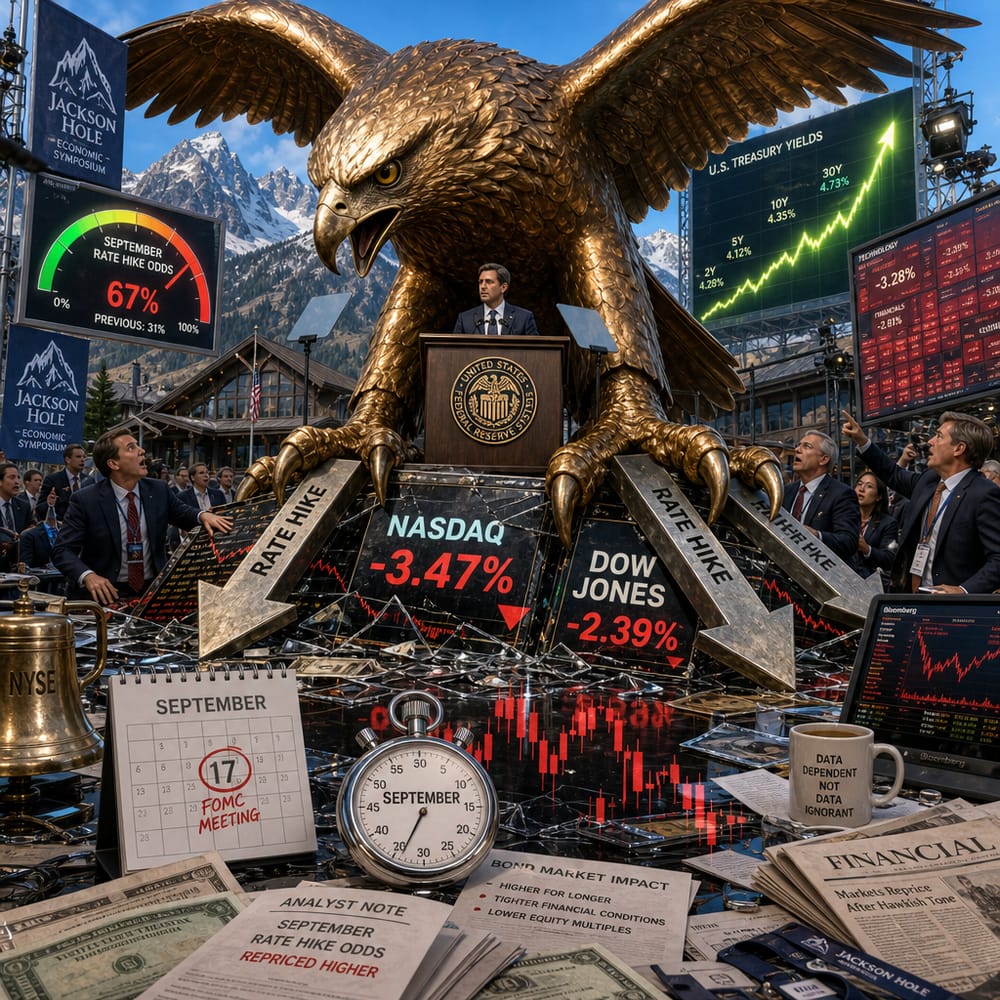
FED CHAIR WARSH'S HAWKISH SIGNAL: WHAT IT MEANS FOR YOUR PORTFOLIO
If your stock portfolio felt a little lighter this week, you might have Fed Chair Kevin Warsh to thank. In a speech that left the markets buzzing like a beehive, Warsh turned up the volume on interest rate hike chatter, and Wall Street is feeling the tremors. Let's break it down.
Despite the picturesque setting of Jackson Hole, there was nothing serene about Warsh's message. The Fed Chair's speech sent a clear signal to investors: inflation is not playing nice, and the Fed is ready to act. With inflation rearing its head like an uninvited guest at a party, Warsh hinted at a potential rate hike in September, and the markets quickly recalibrated their expectations.
WHAT DID WARSH ACTUALLY SAY?
Warsh didn't pull any punches. His speech highlighted the persistent inflationary pressures that have been simmering under the surface. It's like he's saying, "Hey guys, we're not out of the woods yet, and we might need to hike rates to tame this beast."
Market expectations for a rate hike in September shot up faster than a rocket launch. Before Warsh's speech, a rate hike was a 'maybe.' Now, it's more of a 'likely,' and that's not exactly music to the ears of equity investors.
WHAT DOES THIS MEAN FOR YOUR STOCKS?
In short, stocks didn't take the news well. The S&P 500, Dow, and Nasdaq all took a dip, as investors grappling with the potential of higher rates decided to hit the 'sell' button. Equities tend to wobble when interest rates rise because borrowing costs go up, potentially slowing down growth.
Higher rates can also make bonds more attractive compared to stocks. It's like a financial seesaw: when rates go up, the allure of bonds often rises, and money flows out of riskier equities into the perceived safety of fixed income.
IMPLICATIONS FOR BONDS AND TREASURY YIELDS
Ah, bonds. The sensible, steady counterpart to wild and unpredictable equities. With Warsh's hawkish tones echoing through the market, bond yields got a boost. As investors anticipated higher future rates, Treasury yields climbed, and that ripple was felt across the bond market.
Rising yields aren't just an academic exercise; they reflect the market's expectation of higher future rates and imply an increase in borrowing costs. If you're holding bonds, especially longer-term ones, brace yourself for some volatility.
WHAT'S NEXT FOR INVESTORS?
So, what should you do while the Fed keeps investors on tenterhooks? First, take a deep breath. Markets have reacted this way before, and they'll do it again. Historically, after the dust settles, markets find their footing.
If you're in stocks, consider whether your portfolio can handle some bumps. If you've loaded up on high-growth stocks, remember they're often the first to feel the heat from higher rates. Diversifying into sectors less sensitive to interest rates, like consumer staples or healthcare, might be worth considering.
For bond investors, don't panic. Rising yields can initially hurt prices, but they also offer a chance to lock in higher returns in the future. It might be time to reassess your bond duration strategy, focusing on shorter-term bonds to reduce interest rate exposure.
FINAL THOUGHTS
Warsh's speech was the verbal equivalent of a cold shower for a market basking in low rates. But let's not forget, central bank messaging is a dance, and Warsh left the door open for adjustments based on future economic data. The dance isn't over yet, and as always, savvy investors will watch their steps carefully.
In the meantime, keep your eyes peeled for upcoming economic data. Key metrics like employment figures and inflation reports will provide clues on what the Fed's next move might be. Remember, investing is a long game, and temporary market jitters shouldn't throw you off your strategy.
And next time you check your portfolio, remember to take things in stride. After all, even when the Fed's playing hardball, there are investment opportunities for those who look beyond the headlines. Keep calm and invest smart.
This article is for informational purposes only and is not investment advice. Always do your own research or consult a licensed financial professional before making investment decisions.
© Copyright 2024. All Rights Reserved.
© Copyright 2024. All Rights Reserved.