

Hawkish Warsh Sparks Dollar Rally at Jackson Hole
Sunday, August 30, 2026
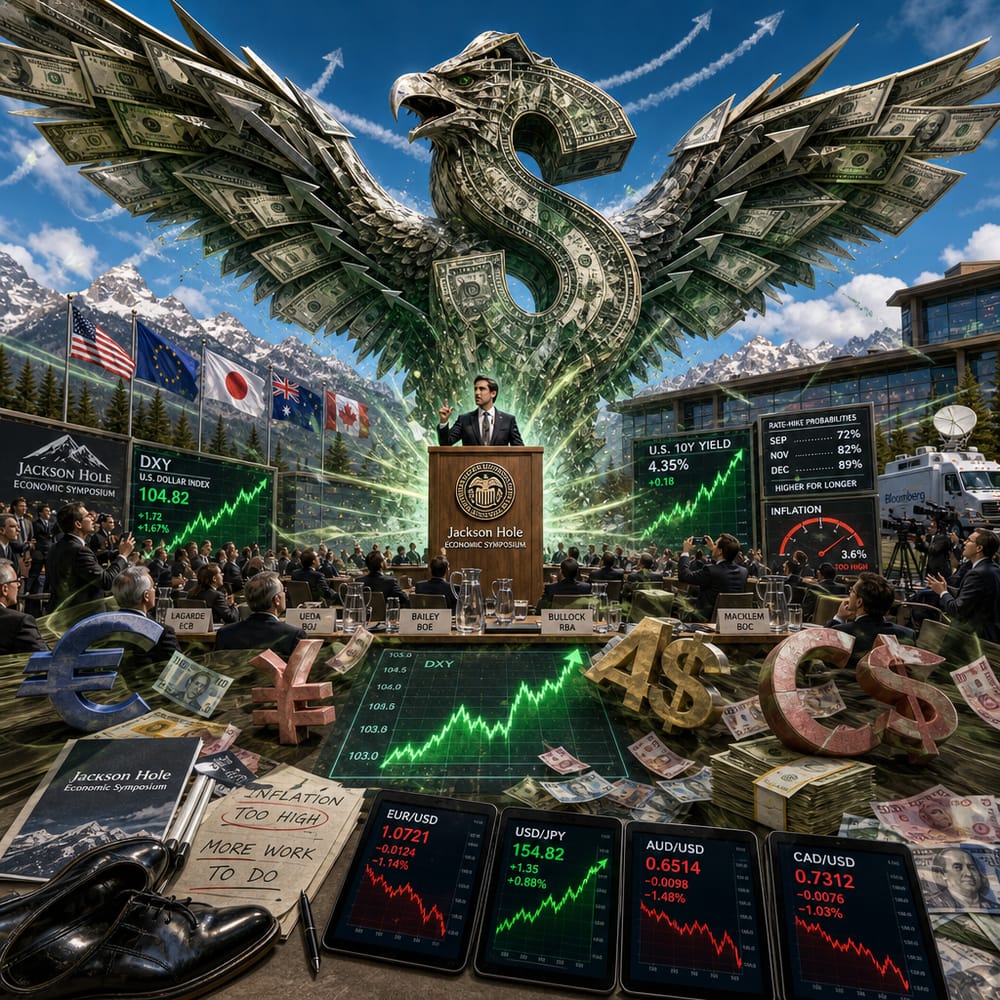
JACKSON HOLE'S DOLLAR DANCE: FED CHAIR WARSH’S HAWKISH TANGO SETS CURRENCY MARKETS ABLAZE
You could hear the dollar bills doing the cha-cha as Federal Reserve Chair Kevin Warsh’s hawkish notes from Jackson Hole set the stage for a dazzling dollar rally. With a stern warning that inflation is still strutting around like it owns the place, Warsh hinted that the Fed “may have work to do.” Translation: more rate hikes could be on the way.
This was enough to electrify the currency markets, sending the U.S. dollar soaring like it’s auditioning for the lead in Swan Lake. The dollar’s meteoric rise left other currencies, from the euro to the yen, scrambling to keep up.
WHAT DOES THIS DOLLAR DOMINANCE MEAN FOR YOU?
A stronger dollar might sound like something to pop champagne over, but it’s a bit like finding out what’s inside a mystery box—exciting, yet unpredictable. For one, it makes U.S. exports pricier for the rest of the world, which might leave U.S. manufacturers feeling like they’re stuck on the “lose” side of a game of Monopoly. Meanwhile, imports become cheaper, which is great for American consumers eyeing those chic European goods. However, it’s a double-edged sword: cheaper imports can also mean more foreign competition for domestic businesses.
And let’s not forget the emerging markets. As the mighty dollar flexes its muscles, these countries could feel the pinch. Their dollar-denominated debt becomes more expensive to service, and local currencies might face devaluation pressure. It's like being caught in a financial riptide.
THE RISK OF RATE HIKES
If the Federal Reserve keeps hiking rates, we might all need to buckle up. Higher interest rates often cool down consumer spending and corporate borrowing. Picture a party where everyone suddenly decides to head home early. If consumer enthusiasm dims, economic growth could slow. And while the Fed’s intentions are to keep inflation in check, there’s the risk of going too far and sparking a recession.
On the inflation front, Warsh’s hawkish tone keeps the spotlight on the cost of living. If higher rates do tame inflation, the purchasing power of your dollars will get a nice boost. But the pathway to lower inflation is strewn with potential roadblocks, like geopolitical tensions or unforeseen supply chain hiccups.
THE GLOBAL FX SPILLOVER
The ripple effects of a robust dollar are sure to cascade through global foreign exchange markets. The EUR/USD, USD/JPY, AUD/USD, and CAD/USD are currency pairs that are feeling the tremor. For the euro and the yen, a stronger dollar often means a weaker local currency, which could stimulate exports from those regions. However, it also raises the specter of imported inflation, as everything priced in dollars gets more expensive.
As U.S. investors, diversifying into foreign markets might sound less appealing now. After all, the currency exchange could erode returns faster than a toddler with a crayon on a new wall. Yet, for the adventurous investor, volatility can also mean opportunity, as currency swings create room for strategic plays.
SO, WHAT’S NEXT?
For now, investors are left sifting through the tea leaves of Warsh's speech, trying to predict the Fed’s next steps. The guessing game could keep markets jittery, like a cat in a room full of rocking chairs. Will the Fed deliver another rate hike punch, or have we seen the last of the increases for a while?
In the short term, all eyes will remain on the Fed and inflation data. For the U.S. dollar, it’s about maintaining its lead role in the global currency drama. But remember, in this financial dance-off, the steps can change quickly, and keeping pace requires both caution and agility.
This article is for informational purposes only and is not investment advice. Always do your own research or consult a licensed financial professional before making investment decisions.
© Copyright 2024. All Rights Reserved.
© Copyright 2024. All Rights Reserved.