

Hawkish Tone of Fed Speeches and Market Implications
Monday, August 24, 2026
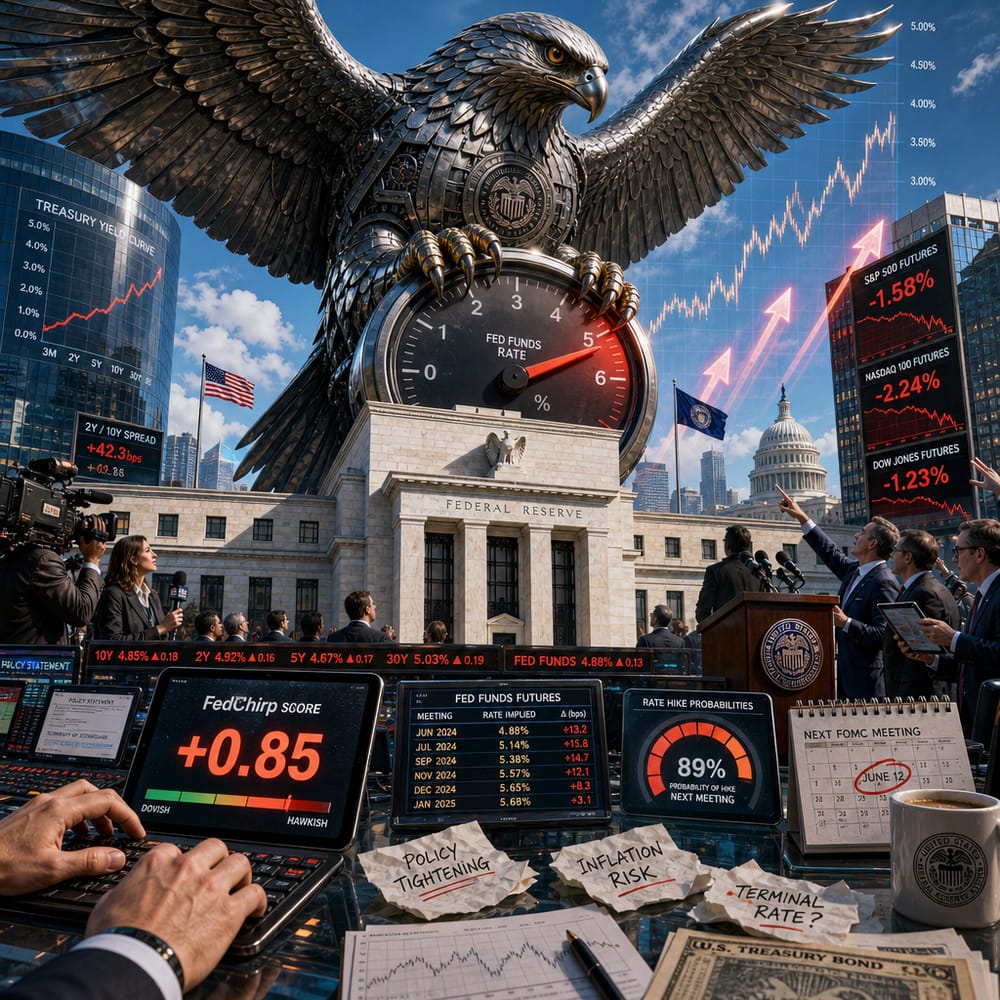
You might want to sit down with a strong cup of coffee for this. The Federal Reserve is back in the headlines, and this time they're bringing a hawkish tone that could wake up the drowsiest of markets. We're talking about a change in the Fed's songbook that suggests the possibility of clamping down on the economy a bit more aggressively. If you're an investor—or simply someone with a few bucks in a 401(k)—it's time to pay attention.
WHAT'S THIS HAWKISH BUSINESS?
Let’s break down "hawkish" for those not fluent in financial birdspeak. When we say the Federal Reserve is getting hawkish, we mean they’re hinting at raising interest rates to keep inflation in check. Imagine a hawk watching over a field, ready to swoop in and tackle any signs of inflation that get out of line. This is a stark contrast to a dovish stance, where the Fed is more inclined to keep rates low to boost economic growth.
So, what's got the Fed chirping like this? The latest FedChirp score—a nifty tool that gauges the Fed’s tone—hit a solid +0.85. Not quite a 10 on the Richter scale, but enough to shake things up. The gist? The Fed is warning it might be time to tighten the financial reins.
MARKET EXPECTATIONS VS. FED REALITY
Now, here’s the fun part: Markets often have their own ideas about what interest rates should be. The challenge arises when the Fed’s plans don’t line up with market expectations. It’s like planning a surprise party for inflation, only to find out inflation got the invite and is planning its own shindig across town. This mismatch can lead to volatility in everything from stock prices to bond yields.
As the Fed hints at potential rate hikes, investors start to see dollar signs—or warnings—in their stock tickers. The expectation of higher rates can make bonds more attractive, prompting a sell-off in stocks as investors seek safer harbors. However, if the Fed raises rates too quickly, it might put a damper on economic growth, squeezing businesses and consumers alike.
THE PLAYBOOK FOR INVESTORS
So, what’s a savvy investor to do? First, keep your ear to the ground. Federal Reserve communications are like watching a soap opera with a plot twist in every episode. Understanding the Fed’s next move can help you anticipate changes in interest rates and adjust your portfolio accordingly.
Consider diversifying your portfolio if you haven’t already. In times of rising rates, having a mix of stocks, bonds, and other assets can cushion the ride. Remember, higher rates generally make bonds more appealing, as they offer better returns in a rising-rate environment.
Don’t forget to keep an eye on the Fed funds futures. These nifty financial instruments act like a crystal ball, offering clues about where investors think rates are headed. They can help you gauge market sentiment and make informed decisions.
WHAT DOES THE FUTURE HOLD?
The Fed’s hawkish tone suggests we might be in for a few interest rate hikes down the line. But the operative word here is “might.” The economy is a living, breathing entity, and the Fed’s approach will depend on how things unfold in the coming months.
If inflation starts to slow, the Fed might ease off the hawkish rhetoric, opting instead for a more balanced approach. However, if prices continue to rise, expect the Fed to continue strutting its hawkish stuff.
In this high-stakes game, being aware of the Fed's moves and market reactions can be the difference between a portfolio that sings and one that sags. Keep your wits about you, stay informed, and remember: in the financial world, even the birds have something to say.
This article is for informational purposes only and is not investment advice. Always do your own research or consult a licensed financial professional before making investment decisions.
© Copyright 2024. All Rights Reserved.
© Copyright 2024. All Rights Reserved.