

Hawkish Semiconductor Tariffs: U.S. to Exempt AI-Critical Chips in New Duties on China, EU, Brazil
Wednesday, November 25, 2026
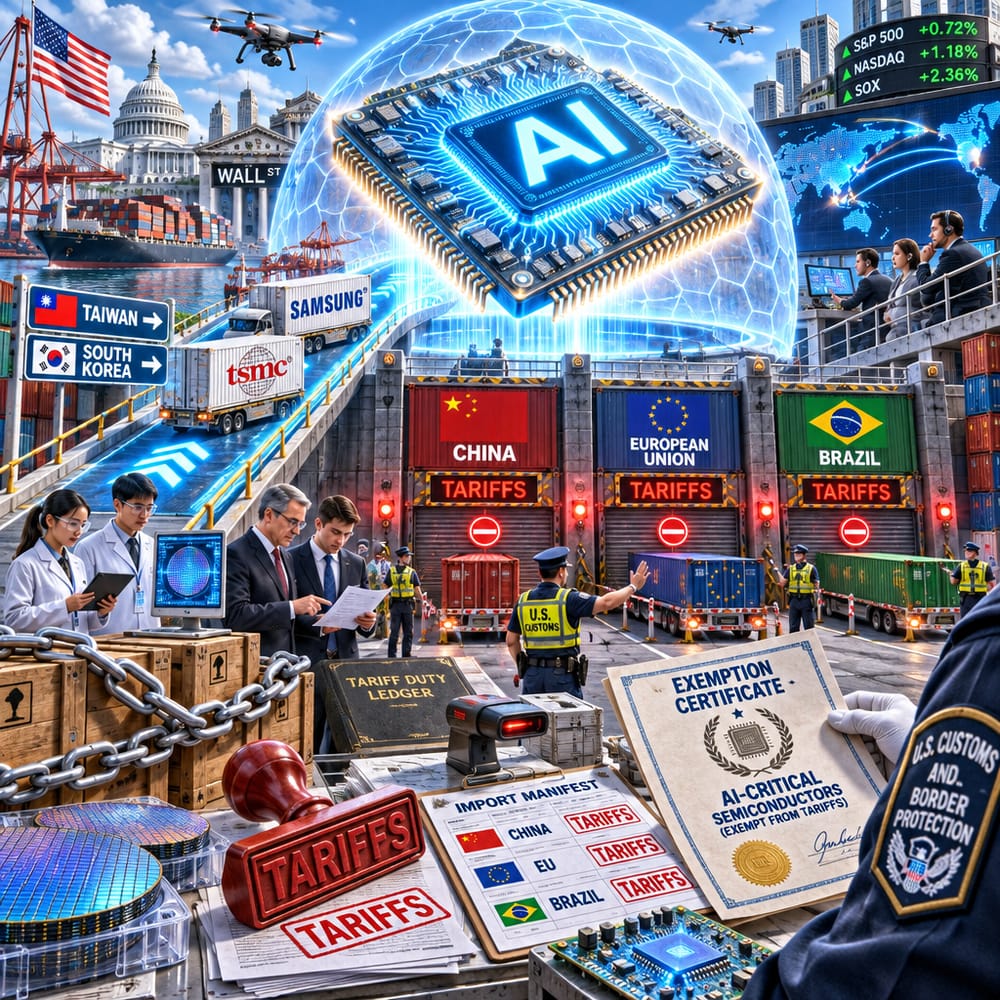
U.S. TARIFFS AND SEMICONDUCTOR EXEMPTIONS: A HIGH-STAKES GAME OF SILICON POKER
If the global trade scene is a high-stakes poker game, then the U.S. just slid a wild card onto the table. With new tariffs raining down on imports from China, the EU, and Brazil, you’d think the tech world might be biting its nails. But here’s the kicker—AI-critical semiconductors from Taiwan and South Korea are getting a golden ticket to bypass these duties. Let’s dive into how this trade gambit might shake up the semiconductor industry and why it's the ultimate geopolitical chess move.
THE TARIFFS: TRUMP'S NEW DECK
In a move that shows he's not deterred by midterm defeats, Trump is once again flexing his tariff muscles. The aim? Address industrial excess from the likes of China and the EU. This time around, Brazil’s also on the hook, and while these tariffs might seem like just another chapter in the trade war saga, there’s a plot twist worth noting. The U.S. is making a very strategic exemption by allowing AI-essential chips from Taiwan and South Korea to glide right past these levies.
A BOOST FOR AI, A BANE FOR MANUFACTURING?
For U.S. tech firms, especially those neck-deep in AI development, this is a lifeline wrapped in a bow. Taiwan Semiconductor Manufacturing Company (TSMC) and Samsung Electronics are big players here—almost like the aces in the tech industry's hand. By dodging the tariff bullet, these companies will keep supplying the crucial silicon that fuels America's AI ambitions without the added cost. Imagine buying a new phone without the hefty import fee—same deal, but we're talking about the brains behind self-driving cars and advanced data centers.
But let’s not ignore the elephant in the room. While AI companies might dance in tariff-free glee, sectors reliant on traditional manufacturing parts from China, the EU, and Brazil could be singing a different tune. Higher costs might spur some awkward boardroom meetings on whether to raise prices or absorb the hit, both choices a bitter pill when inflation’s already a thorn in everyone's side.
GLOBAL SUPPLY CHAINS: THE GREAT SEMICONDUCTOR JUGGLE
The intricate dance of global supply chains just got a new beat. With AI-centric semiconductors exempt from tariffs, supply chains could see a seismic shift. U.S. firms might lean even harder on Taiwan and South Korea, whose chip powerhouses—TSMC and Samsung—are already critical. This maneuver could lure other tech firms to restructure their sourcing strategies, potentially sidelining other chip-producing nations in favor of the tariff-free duo.
Yet, a word of caution hangs in the air. Just because the U.S. has opened its doors wide for certain chips doesn’t mean trade tensions with other regions will simmer down. Countries like China and the EU could retaliate—remember, a poker game is rarely one-sided. This tariff exemption is also a not-so-subtle nudge to Asian allies, reassuring them of their VIP status in Uncle Sam's tech strategy.
THE GEOPOLITICAL RIPPLE EFFECT
Beyond the balance sheets and stock tickers, there’s a broader geopolitical drama unfolding. By exempting Taiwan and South Korean chips, the U.S. isn't just keeping its AI momentum alive—it's reinforcing alliances in a region where China’s influence looms large. This strategy is akin to inviting your favorite players to the big leagues while the others sit on the bench.
However, there’s more at stake than just semiconductors; the move tightens diplomatic bonds at a time when every handshake counts. It’s a Silicon Valley-sized olive branch that conveys, “We’ve got your back,” to some key Asian partners, while subtly signaling to rivals that the U.S. is playing the long game.
THE BOTTOM LINE
In this game of tariff roulette, the stakes have never been higher. U.S. tech firms, particularly those in the AI sector, might find themselves in a sweet spot with cheaper, crucial semiconductors flowing in tariff-free. But as with any good high-stakes game, the flip side means higher costs and supply chain rejigging for others.
As the world keeps a close eye on how these tariffs and exemptions play out, investors should be ready for the ripples—both in stock markets and on the geopolitical stage. For now, the U.S. has made its move, and the rest of the world is left to ponder its next hand.
This article is for informational purposes only and is not investment advice. Always do your own research or consult a licensed financial professional before making investment decisions.
© Copyright 2024. All Rights Reserved.
© Copyright 2024. All Rights Reserved.