

Hawkish Fed Commentary Drives Up Treasury Yields
Monday, November 23, 2026
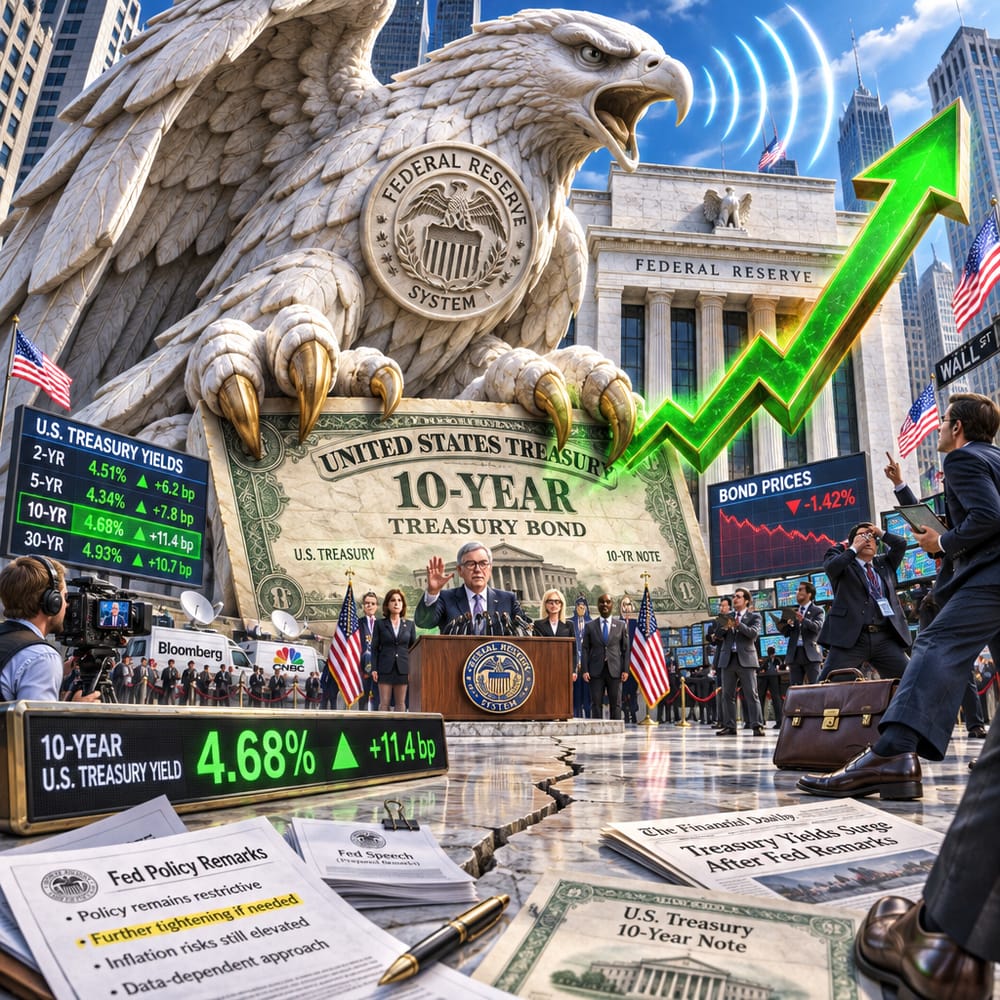
Fed Gives Hawkish Wink; Treasury Yields Shoot Skyward
If the Federal Reserve were dating, this would be that moment when the confident suitor throws a wink so potent that it sends hearts a-flutter. But in this case, it's the financial markets doing the swooning as Fed officials hint at more rate hikes, causing Treasury yields to make like a rocket and soar skyward.
Now, why should you care, dear reader? Because rising Treasury yields, especially those of the 10-year variety, are the lifeblood of your mortgage rates, credit card debt, and any other borrowing dreams you might harbor. When Treasury yields rise, borrowing costs follow suit, and your wallet might just feel a little tighter.
THE FED'S HAWKISH STANCE
Let's break it down. The Federal Reserve, America's ultimate financial puppeteer, has been making noises about hiking interest rates again. "Hawkish," they call it — think less sparrow, more eagle eyeing its prey. These hints have investors bracing themselves for further rate hikes, which, in turn, pushes Treasury yields up, up, and away.
IMPACT ON THE AVERAGE CONSUMER
So, what does this mean for you? If you're in the market for a new home or thinking about refinancing, brace yourself. Mortgage rates often move in step with 10-year Treasury yields. As those yields rise, so do mortgage rates. That dream house? It might now come with a higher monthly payment.
But it's not just about homes. Higher Treasury yields can ripple across the borrowing spectrum. Your credit card interest rates? Likely to climb. Thinking of taking out a personal loan? Be prepared to shell out more in interest.
THE HOUSING MARKET SHAKE-UP
Let's talk real estate. Rising yields mean higher mortgage rates, making it pricier to buy a home. This could cool down the housing market, which has been hotter than a summer in Phoenix. Fewer buyers can afford those inflated prices, potentially leading to a slowdown in home price growth or even price drops, depending on where you're looking.
For sellers, the narrative shifts. Homes might sit on the market longer, forcing price reductions. And potential buyers? They'll need to reassess their budgets and perhaps their dream of that extra bedroom or gourmet kitchen.
THE RISKS OF MORE RATE HIKES
The Fed's strategy, while aiming to curb inflation, doesn't come without risks. If interest rates climb too high, it could slam the brakes on economic growth. Consumers with less disposable income will spend less, businesses might delay expansions, and the economy could slow more than desired.
Plus, keep an eye on the bond market. If yields rise too rapidly, it could spook stocks and create volatility. We've all seen how jittery the tech sector can get when rates shift — just look at last week's tech rout.
THE BROADER PICTURE
Beyond personal budgets and homebuying dreams, this rate hike discussion plays into a larger story. The Fed's decisions impact how the U.S. economy contends with global factors, like geopolitical tensions or the COVID-19 pandemic's aftershocks. Higher rates could make the dollar stronger, impacting U.S. exports by making them costlier abroad.
WHAT YOU CAN DO
Stay informed. Financial landscapes change quicker than a New England fall, but being in the know is your best defense. Consider locking in mortgage rates if you're poised to buy or refinance. Shop around for better rates on loans and credit cards. And, most importantly, keep an eye on your financial health.
In conclusion, while the Fed winks and whispers about more hikes, it's essential for you, the consumer, to stay sharp. As Treasury yields scale new heights, knowing how these shifts impact your finances will help you navigate the storm. So, keep those eyes peeled and your financial strategies nimble.
This article is for informational purposes only and is not investment advice. Always do your own research or consult a licensed financial professional before making investment decisions.
© Copyright 2024. All Rights Reserved.
© Copyright 2024. All Rights Reserved.