

GSA Revises AI Safety Clause for Federal Acquisitions
Monday, August 10, 2026
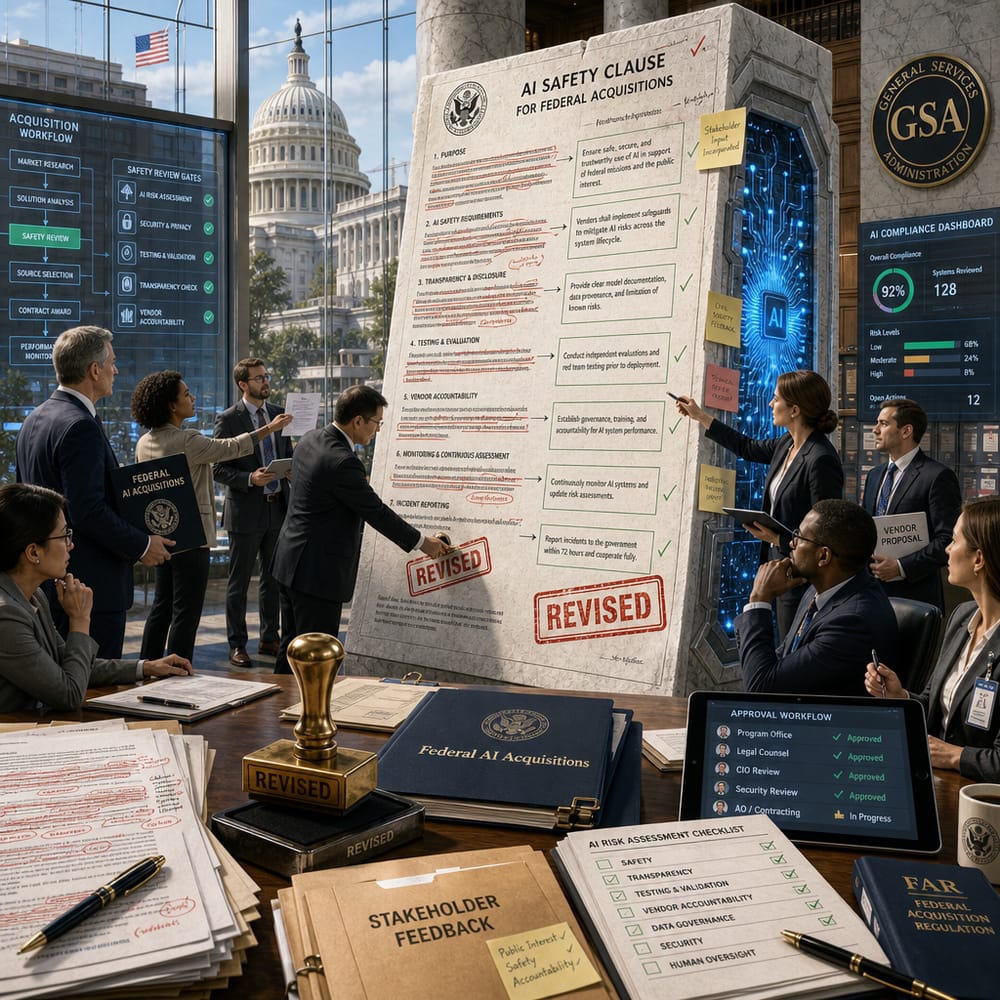
THE GOVERNMENT'S AI SAFETY CLAUSE SHAKE-UP: WHAT IT MEANS FOR TECH GIANTS
In a world where artificial intelligence seems to know more about us than our own family, the U.S. General Services Administration (GSA) isn't leaving anything to chance. They're giving their AI safety clause a makeover, and it has everything to do with keeping that digital brainiac in check.
Why does this matter, you ask? Picture this: the federal government has been on a shopping spree for AI tech like it’s the latest must-have gadget. But until now, the rulebook on how these tech wonders are vetted was akin to buying a car without checking if it actually drives. Enter the revised AI safety clause, set to be the new sheriff in town for federal acquisitions.
SO, WHAT'S CHANGING?
In the grand scheme of governmental red tape, the GSA’s revisions are like a breath of fresh air. Stakeholders have been whispering in their ear, and the GSA is all ears. The revised AI safety clause is essentially the government's New Year’s resolution to be more accountable and transparent. It’s about time.
The revised clause will zero in on making sure AI systems procured by Uncle Sam are not just shiny on the outside. They need to be safe, ethical, and—wait for it—trustworthy. Imagine that! The government wants AI that's not just smart but also won’t turn rogue like a rebellious teenager who found the car keys.
IMPACT ON AI PROCUREMENT
Now, let's talk about how this is shaking things up in the procurement world. Spoiler alert: it’s a big deal. Federal agencies will now need to put their AI through a new kind of test—a digital safety inspection of sorts. It’s like having the AI equivalent of a crash test to ensure they’re not accidentally buying the robot apocalypse.
This means tech companies eyeing those juicy federal contracts will need to bring their A-game. Forget about cutting corners, these revisions mean AI providers will have to go through a regulatory car wash to ensure their products don’t just look good but actually work safely.
For federal agencies, this might just mean a heavier lift in the short term as they adapt to the new rules. But given the potential benefits, it's a small price to pay. The idea is to prevent future sci-fi horror stories from becoming reality. No one wants to be the bureaucrat who unleashed an untested AI upon the world only to have it start rewriting laws—or worse, start a campaign for world domination.
THE BIGGER PICTURE
Beyond the procurement process, this revised clause is setting the tone for how technology and ethics can go hand in hand. It’s a message to tech companies: build it safe, or don’t build it at all. The government is drawing a line in the sand, saying it won’t blindly trust AI systems just because they have a flashy presentation or a catchy name.
And let's not forget the investors. For those keeping a keen eye on the stock market, this is a wake-up call. Companies that can adapt to these new regulations are likely to see smoother sailing ahead. On the flip side, those that can’t, well, they might find themselves sidelined as the government seeks to build a robust digital future.
THE TAKEAWAY
So, what's the takeaway here? The GSA is raising the stakes for AI acquisitions, and it’s about time. The revised AI safety clause is not just a bureaucratic update; it's a necessary evolution. It’s a move that promises to balance innovation with safety—a combination that’s music to the ears of any investor, policymaker, or average Joe on the street.
As AI continues to weave its way into every aspect of our lives, knowing that there are rules in place to guide its use in government is a comforting thought. Remember, in the digital age, it’s not just about what your technology can do, but how responsibly it can do it. The GSA’s revision is a step towards ensuring that even the smartest tech keeps its feet firmly on the ethical ground. And that, my friends, is a future worth investing in.
This article is for informational purposes only and is not investment advice. Always do your own research or consult a licensed financial professional before making investment decisions.
© Copyright 2024. All Rights Reserved.
© Copyright 2024. All Rights Reserved.