

Greed Index Rises While VIX Remains Low
Saturday, August 22, 2026
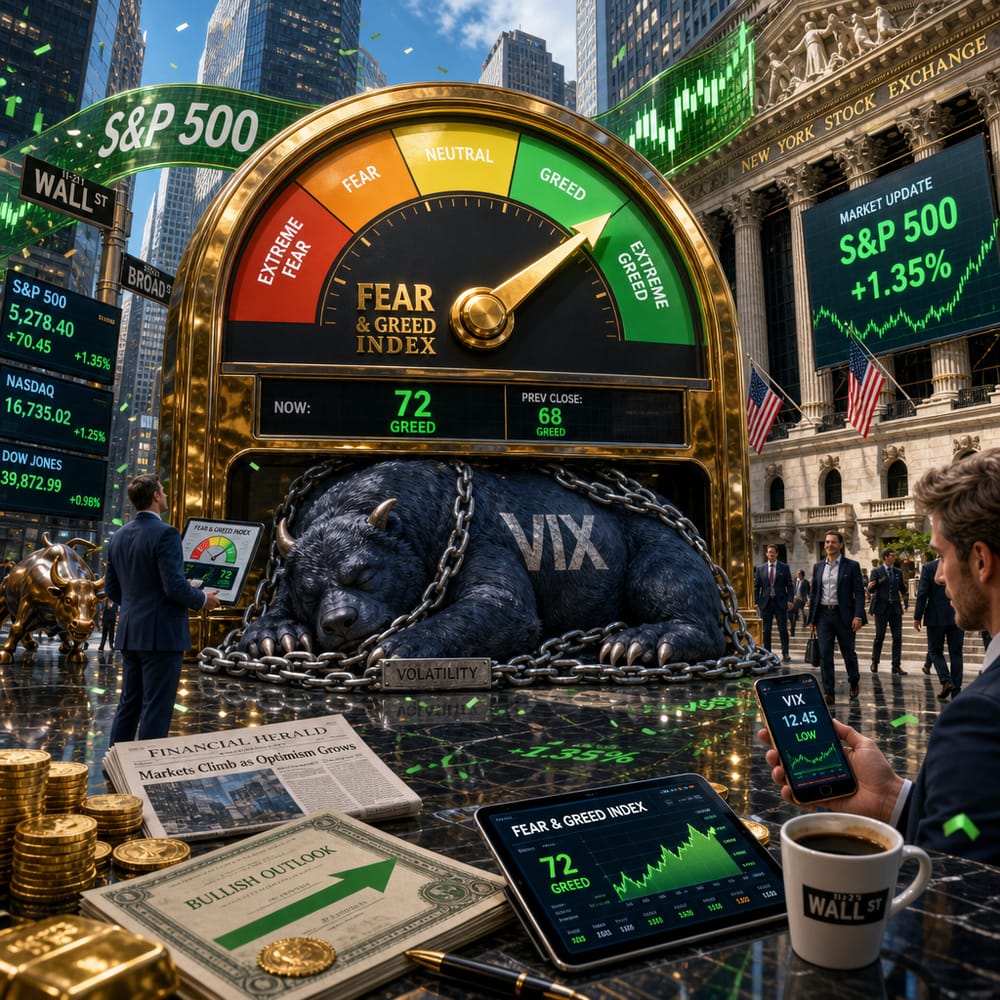
GREED INDEX RISES WHILE VIX REMAINS LOW: IS CALM BEFORE THE STORM?
Imagine walking into a serene beach, the sun shining warmly, the waves gently lapping, and everything seemingly at peace. But as you sip your piña colada, there's a tiny voice in your head asking, "Is this the calm before the storm?" Welcome to the current U.S. stock market.
The Fear & Greed Index, the mood ring of the market, is flashing "greed" like a neon sign outside a Vegas casino, even as the VIX — the market's fear gauge — relaxes in its lounge chair, showing no signs of stress. It's an intriguing divergence that has investors slightly puzzled, and maybe a bit worried, about what comes next.
WHAT DOES A LOW VIX MEAN?
Firstly, let's decode this seemingly cryptic VIX. Known as the Volatility Index, it's Wall Street’s way of measuring the expected volatility of the S&P 500. Think of it as the market's pulse. A high VIX means investors are nervous about the future, while a low VIX suggests everyone’s feeling pretty chill.
Currently, the VIX is as calm as a millennial at a cat café, suggesting that investors aren’t expecting the market to take them on a rollercoaster ride anytime soon. Low volatility typically means stable stock prices, leaving investors to bask in the stock market’s gentle sunshine.
But here's the twist: Low volatility can sometimes lull us into complacency. It’s like that quiet scene in a horror movie just before the big scare. History has taught us that periods of low volatility can precede market turmoil, so investors need to stay vigilant even during these tranquil times.
THE GREED FACTOR
Cue the Fear & Greed Index. This little number is like a barometer for investor sentiment, weighing in on whether fear or greed is ruling the roost. Right now, greed is winning the popularity contest. Investors are optimistic, buoyed by rising markets and promising economic data. Stocks are on an upward trajectory, and everyone's hoping for a piece of the pie.
But too much greed can lead to problems, like that extra slice of cake after Thanksgiving dinner. If investors get overly confident, they might overlook risks, leading to inflated stock prices and potential market bubbles. Remember the dot-com boom? Yeah, no one wants a sequel to that disaster.
WHAT'S THE GAME PLAN?
So, what's an investor to do with these mixed signals? For starters, recognize that the market's current tranquility doesn’t guarantee smooth sailing forever. Keep an eye on the VIX, because if it starts to rise, it could indicate that the market's mood is shifting towards fear.
Diversification remains your best friend. Spread your investments across different sectors to cushion against any potential downturns. And don’t be swayed by the siren call of greed; stay grounded and make informed decisions.
It’s also wise to keep a close watch on economic indicators. Inflation rates, employment numbers, and corporate earnings reports are like the tide — they can dramatically shift market sentiment. For example, rising inflation could lead to increased interest rates, spooking investors and triggering market volatility.
THE BIG PICTURE
In the grand scheme of things, the current divergence between the Fear & Greed Index and the VIX presents a curious picture of investor sentiment. Growth and optimism are the themes of the day, but savvy investors know that such periods can be precursors to volatility.
So, while it's tempting to kick back and enjoy the sunshine, keep your eyes on the horizon. In the world of investing, the weather can change quickly. Keep your portfolio balanced, your expectations realistic, and your strategy flexible. That way, whether the market stays calm or takes a sudden turn, you’ll be ready.
Remember, the stock market is a complex beast with a mind of its own. While indicators like the Fear & Greed Index and VIX offer valuable insights, they're just pieces of a larger puzzle. So, stay informed, stay alert, and may your financial journey be as smooth as your favorite beach drink.
This article is for informational purposes only and is not investment advice. Always do your own research or consult a licensed financial professional before making investment decisions.
© Copyright 2024. All Rights Reserved.
© Copyright 2024. All Rights Reserved.