

Google Joins EU’s AI Code, While Meta Slams the Brakes
Wednesday, July 30, 2025
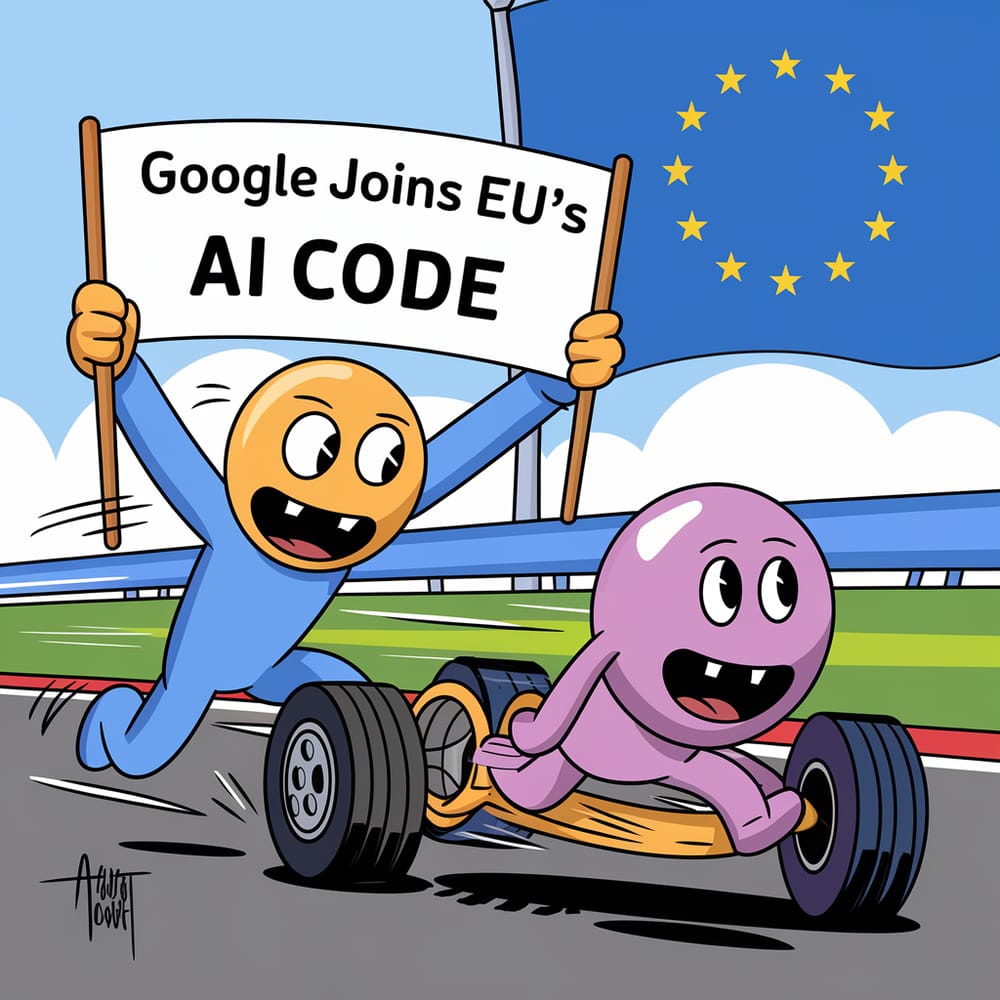
The European Union just lit the fuse on a new era of artificial intelligence oversight—and Silicon Valley's response is far from united. Google says it’s in. Meta? Not so fast.
🤝 Google Signs On—With Caution
Google confirmed Wednesday it will sign the EU’s AI code of practice, a voluntary guide to help tech giants align with the EU AI Act, the bloc’s landmark law overseeing artificial intelligence. The goal: ensure transparency, safety, and accountability in AI development.
But Google isn’t exactly throwing a parade. The company flagged serious concerns that the framework could slow down innovation and hurt European competitiveness.
“Prompt and widespread deployment is important,” said Kent Walker, Google’s global affairs president, adding that embracing AI could boost Europe’s economy by €1.4 trillion ($1.62 trillion) by 2034.
🚫 Meta Opts Out: “Stifling Innovation”
While Google is in, Meta is out—and it’s not shy about why. Earlier this month, Meta publicly refused to sign the EU code, warning it could “stunt” the growth of AI models across Europe.
“Europe is heading down the wrong path on AI,” wrote Meta’s global affairs chief Joel Kaplan, calling the code an “overreach” that introduces legal uncertainty and excessive demands on developers.
🧾 What’s in the Code?
The EU code lays out best practices for how companies should approach general-purpose AI systems, especially those integrated into widely used tools and platforms. It builds on the EU AI Act, pushing firms to disclose:
-How their models work
-What data was used
-Whether safety testing has been done
-If risks are properly mitigated
It’s optional—for now—but carries political weight, especially with AI regulation heating up globally.
⚖️ A Fine Line Between Guardrails and Red Tape
Even Google, despite signing, says the code’s potential overreach could chill development. The tech giant raised red flags about:
-Departures from EU copyright law
-Bureaucratic slowdowns in AI approval
-Demands that could expose trade secrets
It’s walking a tightrope—publicly backing ethical AI while guarding its innovation turf.
🌍 The Bigger Picture: EU Draws a Line in the Sand
The European Commission hopes that voluntary compliance now will ease future enforcement of the AI Act, expected to become legally binding by 2026. With Google’s signature, Brussels scores a symbolic win.
But Meta’s rejection underlines a growing divide among Big Tech on how AI should be governed—ethics vs. agility, regulation vs. innovation.
🎤 Final Word: Big Tech’s AI Cold War?
This isn’t just about rules on paper—it’s about who controls the future of AI in Europe. Google’s cautiously stepping in. Meta’s defiantly standing out. And regulators? They’re watching closely, knowing the next few years will define how (and where) AI evolves.
The split is real. And the stakes are only getting higher.
© Copyright 2024. All Rights Reserved.
© Copyright 2024. All Rights Reserved.