

Google's Strategic Power Deal with Constellation Energy
Thursday, October 08, 2026
GOOGLE AND CONSTELLATION ENERGY: A POWERFUL FUTURE FOR AI
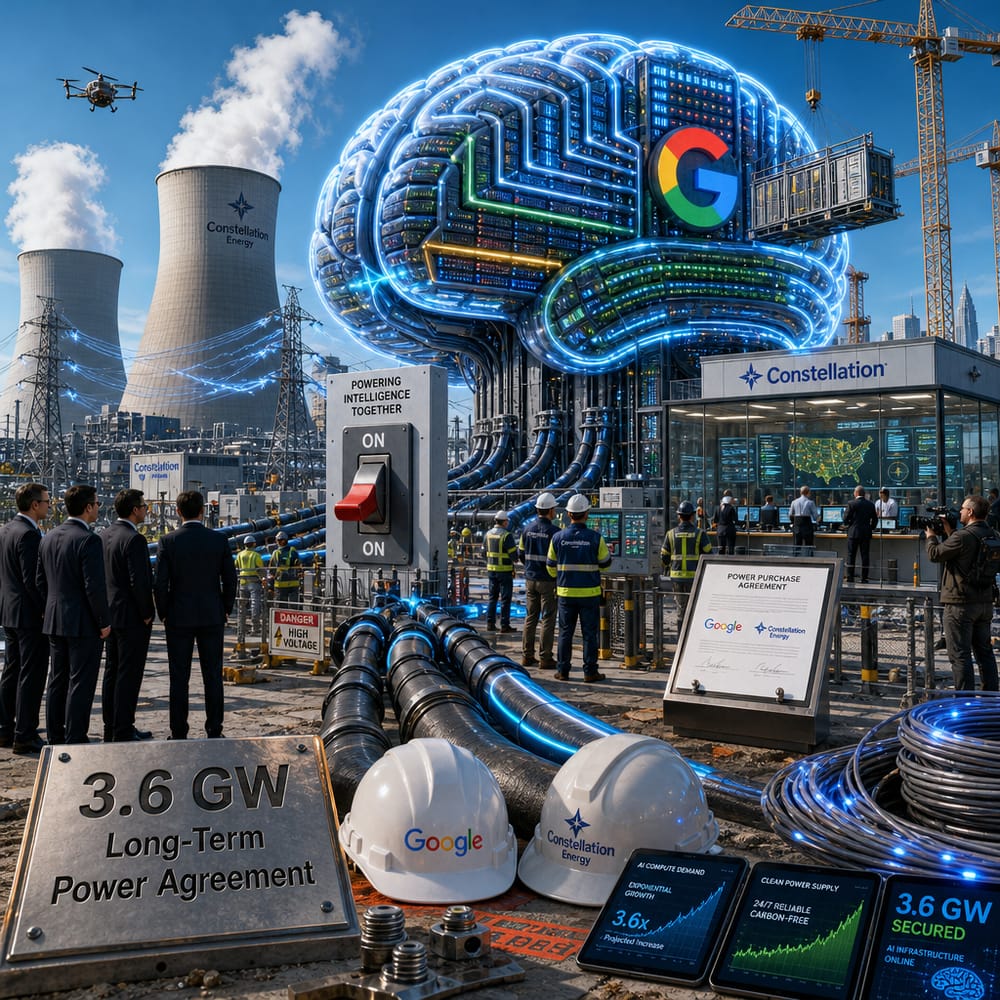
Picture this: Google, the tech titan that knows more about you than your best friend, just inked a deal that could power a small country. But instead of lighting up homes, it’ll fuel the next generation of artificial intelligence. Google’s latest move to secure 3.6 gigawatts of electricity—yes, gigawatts, like in Back to the Future—from Constellation Energy isn't about keeping the lights on at your typical office. This is about turning on the afterburners for AI development in their data centers.
It's like Google just fueled up its AI race car with rocket-grade fuel. But what does this mean for us mere mortals who aren’t programming the next AI overlord? Let's break it down.
THE AI ARMS RACE
In the world of AI, data is king, and computing power is the throne. These AI systems, from the ones recommending your next Netflix binge to those that could eventually drive your car, are hungry. They devour data like Pac-Man munching on dots, and all that processing needs a robust supply of energy.
By securing this power deal, Google is essentially locking in a steady flow of juice to feed its burgeoning AI endeavors. This isn’t just about growth; it’s about dominance. More power means more computational muscle to train AI models, pushing the boundaries of what these systems can do. Google isn't just participating in the AI race; it's aiming to lead the pack.
UTILITIES’ NEW BEST FRIEND: TECH GIANTS
Now, what does all this mean for the energy sector? Say hello to a brave new world where tech companies are some of the biggest customers for utilities. Companies like Constellation Energy are no longer just dealing with the usual suspects like municipalities or industrial clients. They're striking deals with tech behemoths whose power demands are skyrocketing thanks to AI, which is giving power companies a new avenue for growth.
For Constellation, bagging a contract with Google isn’t just another day at the office; it's a strategic win. It positions them as a key player in the tech-fueled energy market. Plus, these kinds of deals provide the certainty and long-term revenue streams that utilities love. So, while you're waiting for your smart assistant to predict the weather, Constellation is enjoying a sunny forecast on its balance sheet.
IMPACT ON THE MARKET
For investors, this partnership is a signal that the tech and energy sectors are becoming increasingly intertwined. As AI continues to expand, the demand for reliable, sustainable energy sources will follow suit. This could drive innovation in renewable energy as tech companies look to power their gargantuan data operations sustainably.
Moreover, this collaboration might spark an energy procurement trend among tech giants. If you're betting on stocks, keeping an eye on energy companies that can secure similar deals with tech firms might just be the winning play. It's a marriage of two industries that, until recently, seemed like they were from different worlds.
THE FUTURE, POWERED BY PARTNERSHIPS
As AI continues to evolve, the partnerships between tech and energy firms are likely to grow more crucial. Google's agreement with Constellation Energy highlights the strategic importance of securing energy resources to support tech infrastructure.
In summary, this isn't just a story about a power deal; it's a narrative about the future of technology and infrastructure. Google is systematically paving the way for an AI-dominated future, and energy companies like Constellation are primed to power that vision.
So, the next time your Google Assistant flawlessly schedules your day, remember that behind that seemingly simple task is a complex ecosystem fueled by strategic energy decisions. And for investors, this partnership is a peek into a future where tech and energy are inseparable, each driving the other into new territories of growth and innovation.
This article is for informational purposes only and is not investment advice. Always do your own research or consult a licensed financial professional before making investment decisions.
© Copyright 2024. All Rights Reserved.
© Copyright 2024. All Rights Reserved.