

Google's Space-Based AI Infrastructure Initiative
Thursday, October 01, 2026
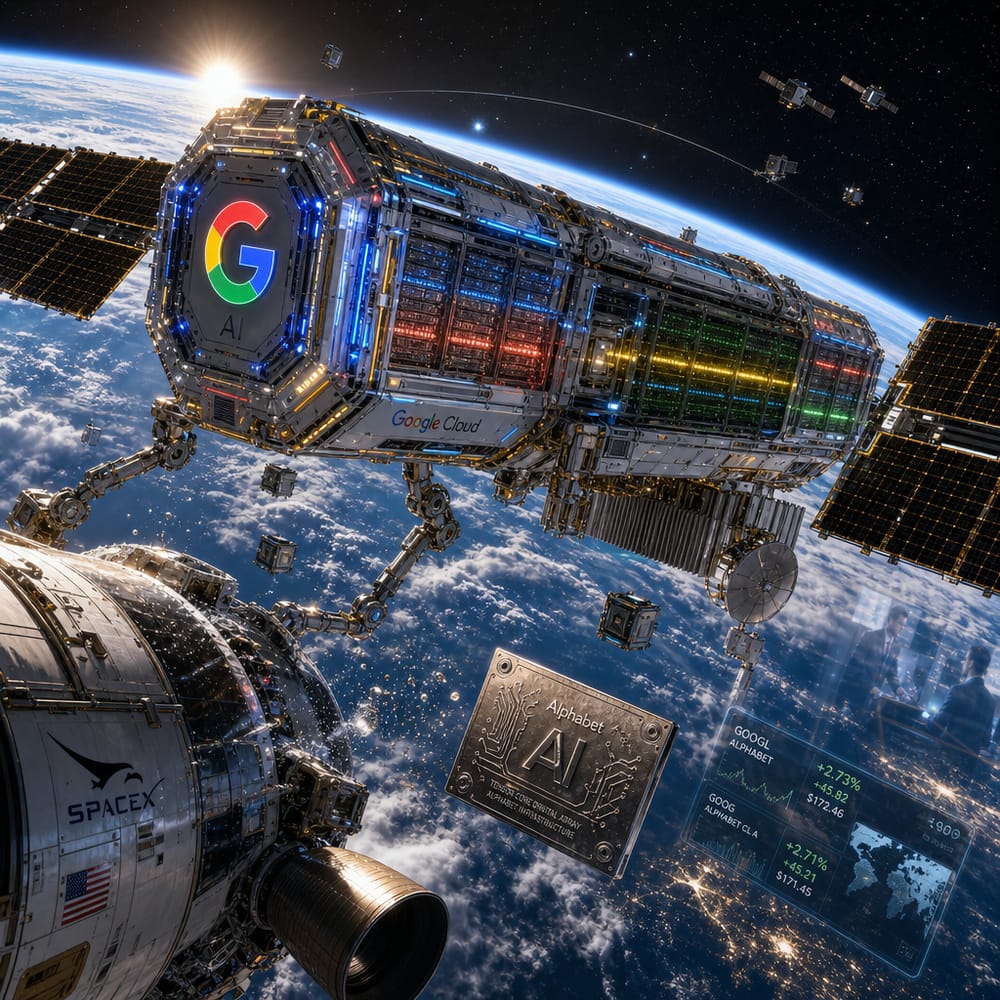
GOOGLE'S SPACE-BASED AI: THE CLOUD BUSTS THROUGH THE STRATOSPHERE
If space is the final frontier, Google just strapped an AI rocket to it and hit launch. Literally. In a move that sounds more like science fiction than tech news, Google has sent its custom AI chips—tensor processing units, or TPUs for those not fluent in geek speak—into orbit aboard a SpaceX Falcon 9. The mission? Build data centers in space.
Welcome to a new era of cloud computing, where the cloud isn't just a metaphor. Now, it's galactic. But what does this mean for you, me, and the digital universe we live in? Grab your space helmet and let's dive in.
THE COSMIC CLOUD
So, why shlep AI hardware into space? The answer is as vast as the cosmos itself: real estate, or rather the lack thereof on Earth. Space represents "infinite real estate," where the limitations of land and cooling vanish quicker than you can say "the cloud." We're talking about harnessing the sun's power to keep AI engines humming without the pesky problem of overheating. Forget air conditioning; these babies will be solar-powered.
This is not just a tech flex; it's a full-on rethink of the AI infrastructure. With land prices skyrocketing and energy costs burning a hole in the ozone layer, Google is betting on the ultimate in high-altitude real estate. In orbit, there’s no need for sprawling data centers that guzzle electricity and real estate. Instead, you get to munch on some free solar nectar while sidestepping the terrestrial bills.
THE PRICE IS RIGHT (OR WILL BE)
Let’s talk numbers—cost, specifically. Building data centers in space sounds expensive, but the potential savings are astronomical. The initial investment might make your wallet wince, but the ongoing costs could see a meteoric drop. Think of it as buying a forever stamp on energy and land expenses. No more battling for pricey land or paying for air conditioning that rivals your AC bill during a summer heatwave.
And it's not just about slashing costs. We're talking about boosting performance. No pesky geographical limitations mean these space-based data centers could provide services faster and more reliably. Faster processing speeds could have ripple effects on industries relying on AI, from healthcare diagnostics to self-driving cars.
THE NEW SPACE RACE
With Google’s audacious leap, the space race isn't just for rocket launches and Mars landings anymore. The cosmic cloud introduces a new battleground among tech titans. While Alphabet might have a head start, don’t count out its competitors. Amazon and Microsoft, I’m looking at you. These behemoths won't let Google enjoy its orbital real estate without a fight, and the competition could be as fierce as a black hole’s grip on light.
In practical terms, this means more innovation and potentially better services for consumers. With the giants battling it out in the stars, expect a new wave of improvements in AI-powered tech and services on Earth. It’s a win-win for those of us who enjoy seeing AI make our lives easier.
THE RIPPLE EFFECT
So what’s the big picture? Beyond the immediate tech and investment angles, Google's leap into space signals a seismic shift in how we think about the infrastructure that powers our digital lives. It’s akin to going from dial-up to fiber optics, but on a cosmic scale. And it raises intriguing questions about the future of cloud computing.
Will we see tech companies fighting for orbital slots instead of server farms? Could cloud computing's future lie not in a server room but in a satellite spinning around the Earth? And how will governments and regulatory bodies react to this shift? After all, space, while vast, is a shared environment.
For investors, the implications are equally enticing. There’s a whole universe of opportunities waiting as this new industry unfolds. While Alphabet continues to pioneer the space-based AI frontier, keep an eye on other players ready to board this interstellar train.
One thing is sure: the cloud is no longer the limit. In this brave new world, the sky isn’t high enough. It’s time to look beyond, where AI and cloud computing aren’t just orbiting the Earth—they’re defining its future.
This article is for informational purposes only and is not investment advice. Always do your own research or consult a licensed financial professional before making investment decisions.
© Copyright 2024. All Rights Reserved.
© Copyright 2024. All Rights Reserved.