

Google’s Finland Data-Center Pause: Environmental vs. Tech Expansion Tension
Thursday, October 08, 2026
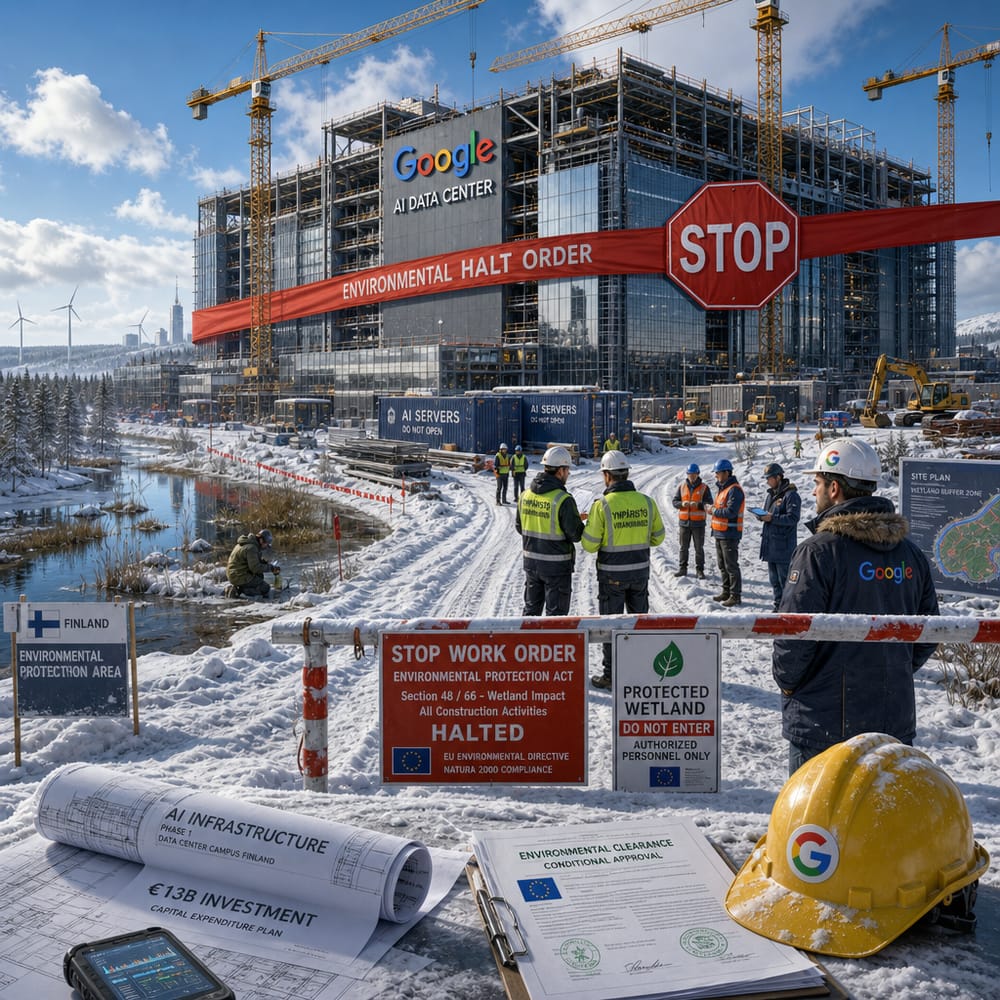
GOOGLE'S FINLAND DATA-CENTER PAUSE: ENVIRONMENTAL VS. TECH EXPANSION TENSION
Imagine this: You're Google, the tech titan that's shaken up everything from search engines to self-driving cars. You're dropping a casual €13 billion to build two massive AI data centers in Finland. You know, the kind with enough computing power to probably run a small country. But just as you’re about to put the pedal to the metal, local authorities slam on the brakes. Why? Environmental clearance issues. Yep, Mother Nature has her own set of rules, and right now, she’s not budging.
So, what's the deal? You see, Google’s expansion plans are a bit like trying to drive a Ferrari through a crowded street. You want to go full speed, but there are obstacles everywhere. This halt isn't just a local hiccup; it's a wake-up call for the entire tech industry. It's the classic clash of titans: rapid tech expansion versus environmental responsibility. And spoiler alert: Both sides are equally fierce.
HOW WILL THIS HALT AFFECT GOOGLE'S AI EXPANSION PLANS?
Google's grand design for AI domination is like a chess game where the king just got cornered. The delay in Finland is a time-out that could have ripple effects across the board. With AI, speed is of the essence. The faster you can process data, the smarter your algorithms become. A pause in construction means a pause in progress, potentially giving rivals like Amazon and Microsoft a chance to catch up.
Now, if you’re sitting there thinking, "Well, what’s the big deal with a couple of data centers?" consider this: These aren't your regular data centers. They're the backbone for AI innovations, from your virtual assistants to possibly the next big thing we haven't even dreamed of yet. It's Google’s way of laying the groundwork for the future, and any delay is like missing a flight to an exclusive tech summit.
BROADER IMPLICATIONS FOR TECH COMPANIES
But it's not just Google feeling the pinch. The tech world is watching, popcorn in hand, because this drama could soon be coming to a theater near them. Companies everywhere are facing mounting pressure to prove they're not just tech-savvy but eco-conscious too. Regulatory bodies worldwide are flexing their muscles, and tech companies need to walk the tightrope between innovation and regulation.
The lesson here? Tech companies need to start thinking green — not just in terms of cash but carbon footprints. Balancing ambitious growth with environmental stewardship is no longer optional; it’s the new normal. The likes of Google need to show they've got their ESG (Environmental, Social, and Governance) game on point.
HOW MIGHT THIS INFLUENCE ESG INVESTMENT STRATEGIES?
For investors, this pause is like a flashing red light. ESG, once the underdog in investment strategies, is now front and center. More than ever, investors are scrutinizing how companies handle environmental challenges. Google’s hiccup in Finland could make ESG considerations the superhero investors need.
Investors, take note: Companies that ignore environmental regulations do so at their peril. The trend is shifting towards businesses that get it — those that see sustainability as a partner, not an antagonist. The future winners in the stock market may very well be the ones leading the charge in sustainable innovation.
In the grand scheme of things, this little showdown in Finland offers a preview of what’s likely to become a common scene in tech hubs around the world. As companies strive to weave themselves into the fabric of tomorrow’s technology, they must also account for the planet’s delicate ecosystem. Otherwise, they risk being sidelined by both regulators and eco-conscious consumers.
In the end, whether you’re a tech giant like Google or a retail investor keeping an eye on your portfolio, remember this: The road to innovation is a winding one, with a few unexpected stops along the way. Buckle up, stay alert, and maybe, just maybe, you'll enjoy the ride.
This article is for informational purposes only and is not investment advice. Always do your own research or consult a licensed financial professional before making investment decisions.
© Copyright 2024. All Rights Reserved.
© Copyright 2024. All Rights Reserved.