

Google's Chrome Under Threat Amid Perplexity Bid
Sunday, August 30, 2026
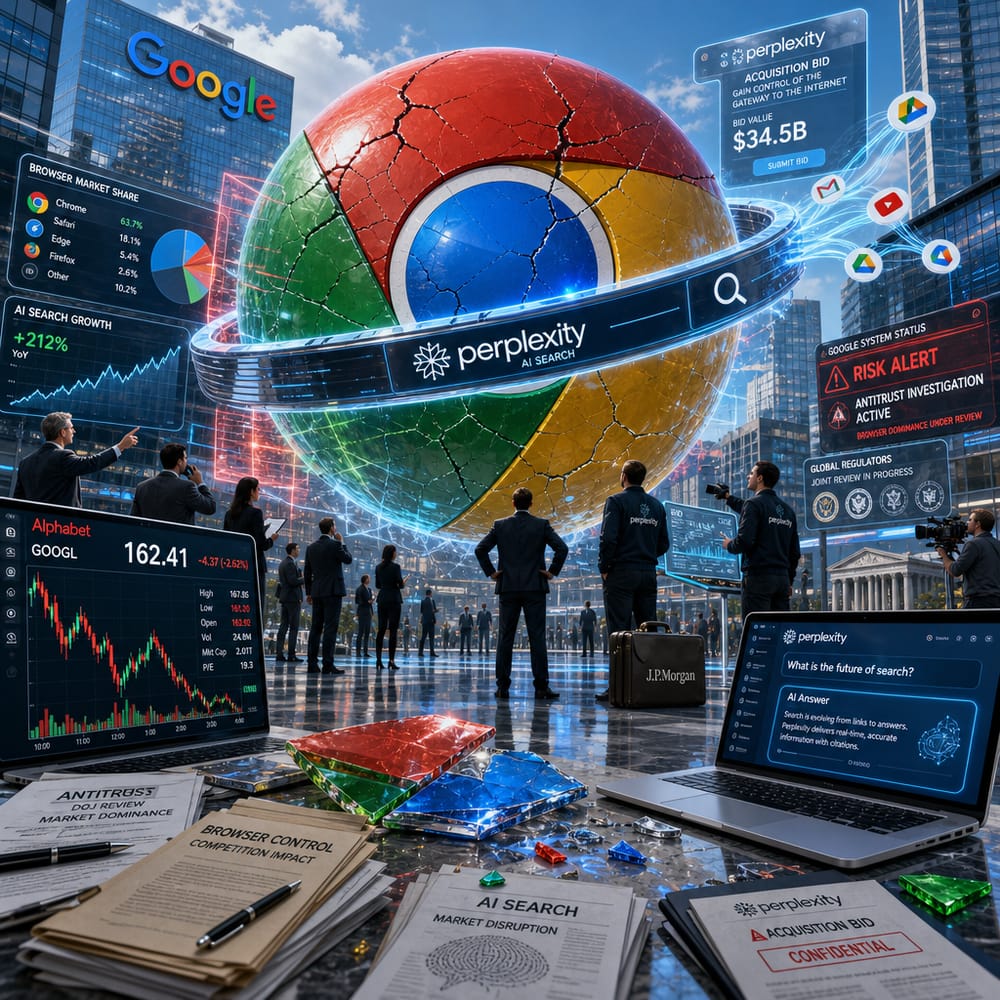
GOOGLE'S CHROME UNDER THREAT AMID PERPLEXITY BID
Imagine a world where Google’s Chrome isn’t the go-to for all your impulsive searches and incognito shenanigans. Sounds wild, right? But before you dismiss it as pure sci-fi, let’s dive into the brewing storm between Google and a plucky upstart named Perplexity. This AI-powered search platform is giving Google’s Chrome a run for its money, and it’s looking juicier than a reality TV showdown.
So, what's got Google clutching its pearls? Perplexity has emerged from the tech wilderness, wielding its AI prowess in a way that’s making the Silicon Valley giant sweat. With its nifty algorithm and a promise of an ad-free search experience, Perplexity is attracting those who are tired of drowning in ads and irrelevant search results. It's like the underdog superhero in a comic book, taking on the villainous corporation — but with fewer capes and more code.
The big question is, what happens if this newcomer carves a significant slice of the search pie? Firstly, the implications for Google are massive. Chrome, the sleek and shiny browser that dominates our digital lives, could see its user base wane if Perplexity hits the right notes. We all know Google lives off data like a reality star on drama, and fewer users mean less data, which could punch a hole in its advertising revenue balloon.
Now, you might be wondering, why should the everyday investor care? Well, my friend, Google’s market share is like a house of cards balanced on a very lucrative deck. A shake-up here impacts not just Google — sorry, Alphabet — and its legions of shareholders, but also the broader tech landscape. If Perplexity’s appeal grows, we might witness a shift in how search platforms operate, with more emphasis on user privacy and experience over ad dollars. The result? A seismic shift in how tech giants, startups, and investors approach the digital gold mine of online searches.
But there’s another layer to this tale. The regulatory watchdogs in both the EU and the US have been circling Big Tech like sharks around a too-complacent seal. A rising Perplexity could add fuel to their antitrust fire. Google’s dominance has been a sore spot for regulators, and any decrease in market share could embolden their stance for stricter regulations around monopolistic practices. This could open the floodgates for more competition and innovation but might also mean more headaches and red tape for Google.
Let’s not forget the legal labyrinth Google may have to navigate. Antitrust cases are like the never-ending story — long, complicated, and expensive. If regulators decide that Google’s market tactics are edging on the illegal or unfair, Alphabet might find itself in a courtroom battle that could redefine its strategies and business model.
As for the potential outcomes? Well, if Google wants to keep Perplexity in check, it might need to rethink its browser and search strategies. We could see Chrome getting a revamp, focusing more on privacy features and less on ad-based monetization. Or, if you’re a fan of plot twists, maybe Google will attempt to snap up Perplexity before it grows too powerful, although that would likely trigger yet another antitrust debate.
Either way, this isn’t just a turf war over search engines; it’s a reflection of the broader battle between tech titans and plucky innovators. It’s about who controls the future of how we interact with the digital world. So next time you find yourself deep-diving into the internet’s endless abyss, remember that the world of search is evolving under your fingertips.
For the retail investor, this saga is a reminder to keep an eye on the tech sector’s pulse. Google might still be the reigning champion, but upstarts like Perplexity are rewriting the rulebook, and who doesn’t love a good underdog story with stakes as high as the clouds? Stay sharp; the world of AI-enabled search is only just beginning to heat up.
This article is for informational purposes only and is not investment advice. Always do your own research or consult a licensed financial professional before making investment decisions.
© Copyright 2024. All Rights Reserved.
© Copyright 2024. All Rights Reserved.