

Google Expands Gemini AI Platform for Law Firms
Tuesday, August 25, 2026
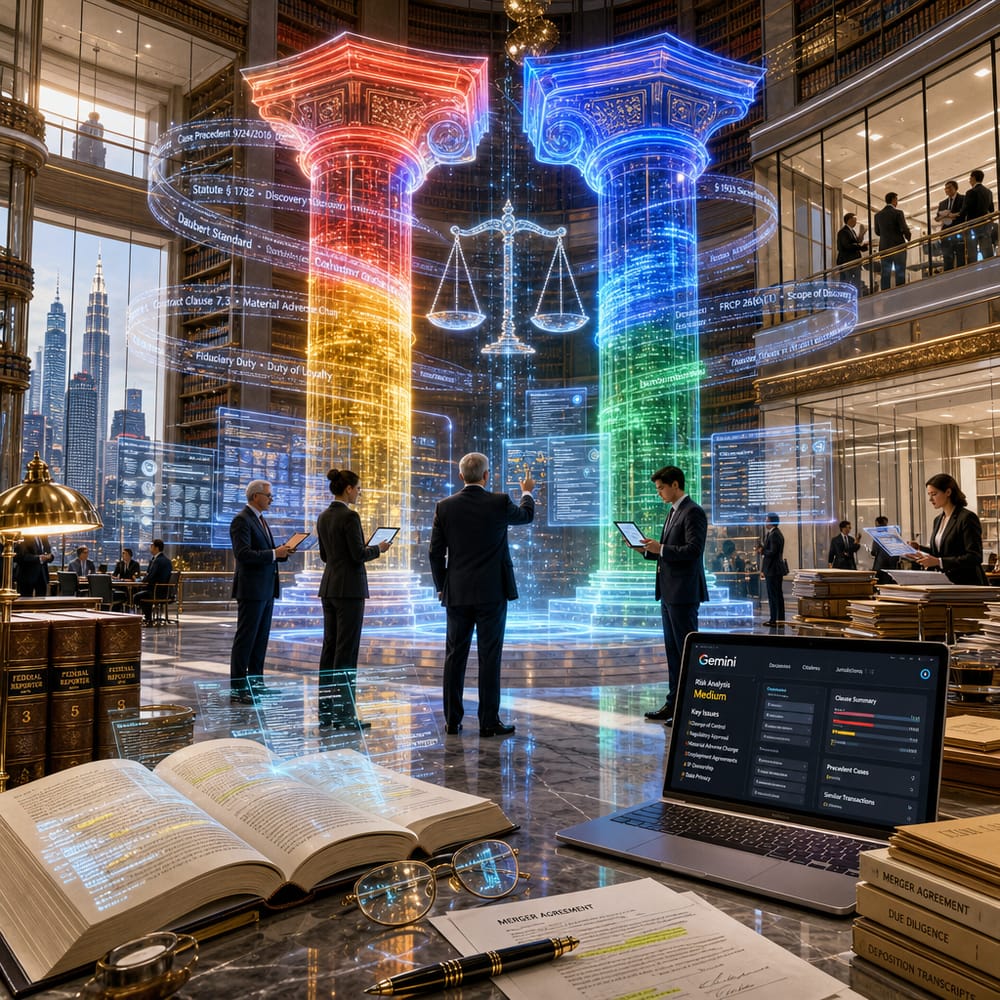
GOOGLE'S NEW LAWYER: GEMINI AI TAKES THE BAR
Picture this: Google, already the grand wizard of search engines, has decided to moonlight as a legal assistant. Yes, you heard it right. The tech titan has expanded its Gemini AI platform to cater specifically to law firms. With one swipe of its silicon wand, Google aims to revolutionize the legal landscape by serving up a cocktail of efficiency and ethical dilemmas. Because why not let AI handle your briefs while you sip coffee and look important?
THE LEGAL LANDSCAPE: A STARRY SKY OR A STORM BREWING?
So what’s the big deal? Imagine a world where attorneys aren't chained to a mountain of paperwork or hunched over a desk sifting through legalese. Instead, AI takes over the grunt work, and lawyers do what they do best: debate, argue, and occasionally win cases. By embedding Gemini AI into the legal realm, Google isn’t just throwing a bone; it’s tossing a meaty, tech-infused steak into the lion’s den.
With AI handling document analysis and research tasks at warp speed, legal eagles can focus on strategy, creativity, and those epic courtroom dramas that make them look like rockstars. Everything from research to drafting could be as easy as, well, Googling it.
But hold your gavels. This AI revolution in pinstripes and power suits might also ruffle some feathers. The human touch—nuance, empathy, gut instinct—these are areas where our digital doppelgangers might still trip over their virtual feet.
ETHICAL WIGGLES: A SLIPPERY SLOPE
Let’s dive into the ethical abyss, shall we? AI in law isn't just an efficiency game; it's a slippery slope that could have you questioning the very essence of justice. Can AI be truly unbiased? Can lines of code grasp the subtlety of human morality? Google's Gemini AI might chew through data faster than a law student guzzling coffee during finals, but it can't attend jury duty or understand that silent stare of a judge.
The use of AI brings questions about data privacy, decision-making, and accountability. Who’s to blame when an AI hiccup leads to a courtroom debacle? The machine? The programmer? Or the lawyer who took advice from something without a law degree?
Law firms will have to grapple with these questions as they decide how much weight to give AI recommendations. Because one thing’s clear: when it comes to ethics, AI doesn't have the final say.
STOCKS, SHOCKS AND TECHNO-LOCKS
Let's talk dollars. Google, the puppet master of Gemini AI, might see an uptick in investor interest as the legal sector eagerly—or nervously—embraces this tech. But don’t go pouring your 401(k) into Google just yet. The real play is watching how this impacts the broader tech sector.
Gemini AI’s legal leap is just the opening salvo in an AI arms race. Other tech giants might soon rush to unleash their own AI wonderkids on the unsuspecting world of law. Competition could be fierce, with companies battling to provide the most reliable, efficient, and—dare we say—human-like AI solutions.
In the end, Google’s foray into law with Gemini AI is more than just headlines. It’s a harbinger of how AI might define the future of professional services. With great power comes great responsibility—and maybe a few sleepless nights for lawyers wondering if they’ll still be relevant.
FINAL GAVEL TAP
Whether you’re cheering from the bleachers or clenching your teeth, Google’s expansion into the legal sector with Gemini AI is a seismic shift. It could streamline processes, save money, and open up new ethical quandaries that we only dreamed of in sci-fi. So keep your ears peeled and your eyes on the docket, because the law might never be the same. The courtroom drama has just been given a techie makeover, and it’s one show you won't want to miss.
This article is for informational purposes only and is not investment advice. Always do your own research or consult a licensed financial professional before making investment decisions.
© Copyright 2024. All Rights Reserved.
© Copyright 2024. All Rights Reserved.