

Gold's Safe-Haven Trade Cracks as Iran Fear Fades and Miners Tumble
Monday, June 22, 2026
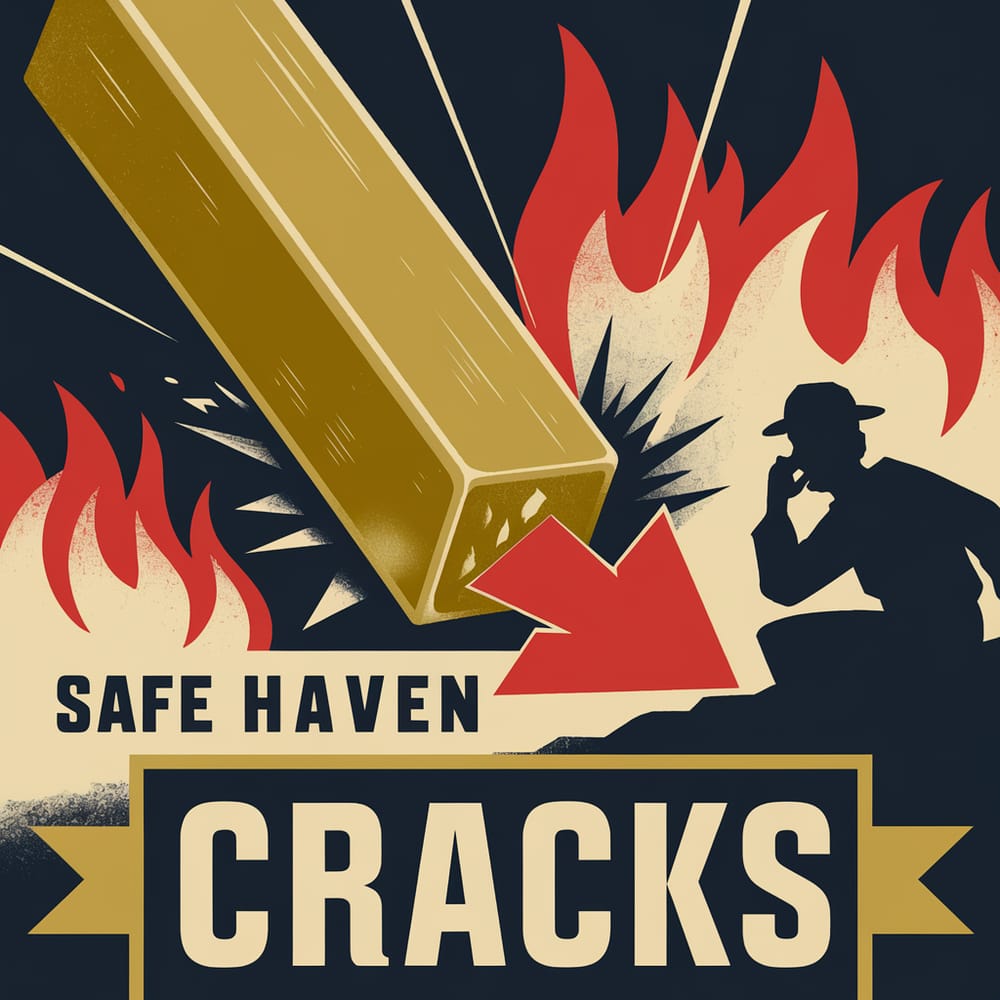
For weeks, gold was the trade that worked while everything else wobbled. Then the fear faded — and so did the metal. As the U.S.-Iran ceasefire held and another extension calmed nerves about the Strait of Hormuz, gold slid more than 2% and dragged the mining stocks down with it. Alamos Gold tumbled roughly 12% in premarket trading, while AngloGold Ashanti dropped more than 6%. The safe-haven bid that powered the rally is suddenly running in reverse.
Why Gold Is Falling
Gold does not pay interest, so it thrives on fear and falls when fear leaves the room. With Iran tensions cooling and crude prices easing, investors no longer feel the urgency to park money in a defensive metal. Money that rushed into gold during the worst of the war scare is now rotating back toward stocks, where the S&P 500 and Nasdaq have been clawing toward new highs.
The Interest-Rate Squeeze
There is a second, quieter headwind. The Iran-driven oil spike pushed inflation expectations higher, and a hawkish Federal Reserve has signaled fewer rate cuts ahead — even hinting at the possibility of a hike. Higher real yields raise the opportunity cost of holding gold, since every dollar in a non-yielding metal is a dollar not earning interest in Treasuries. A firmer dollar piles on, making gold more expensive for buyers overseas.
Why Miners Fall Harder Than the Metal
When gold drops 2%, gold miners often drop far more, and Monday was a textbook example. Mining companies carry fixed costs — labor, fuel, equipment — that do not shrink when the gold price does. So a modest move in the metal becomes an outsized swing in profit margins, and the stocks amplify it. That leverage cuts both ways: miners soar when gold rallies and crater when it slips.
The Sentiment Shift Underneath It All
The deeper story is psychological. Markets appear to have decided that peak geopolitical risk is now in the rearview mirror. The fact that Iran skipped talks yet still got a ceasefire extension told traders the worst-case scenarios are off the table. Once that belief takes hold, the entire logic for owning protective assets weakens, and gold loses the narrative that carried it higher.
What Retail Investors Should Watch
None of this means gold is broken. The metal has a long history of selling off on fading fear, then finding its footing when the next worry arrives — and a hawkish Fed cuts both ways, since sticky inflation can eventually send buyers back to hard assets. The key levels to watch are whether the ceasefire actually holds and what the May PCE inflation report says on Thursday. For now, the lesson is simple: safe-haven trades are only as durable as the fear behind them, and this week, that fear took a holiday.
This article is for informational and educational purposes only and does not constitute investment advice. Always do your own research or consult a licensed financial professional before making investment decisions.
© Copyright 2024. All Rights Reserved.
© Copyright 2024. All Rights Reserved.