

Goldman Sachs Shuffles Conviction List: Microsoft In, Broadcom Out
Saturday, August 22, 2026
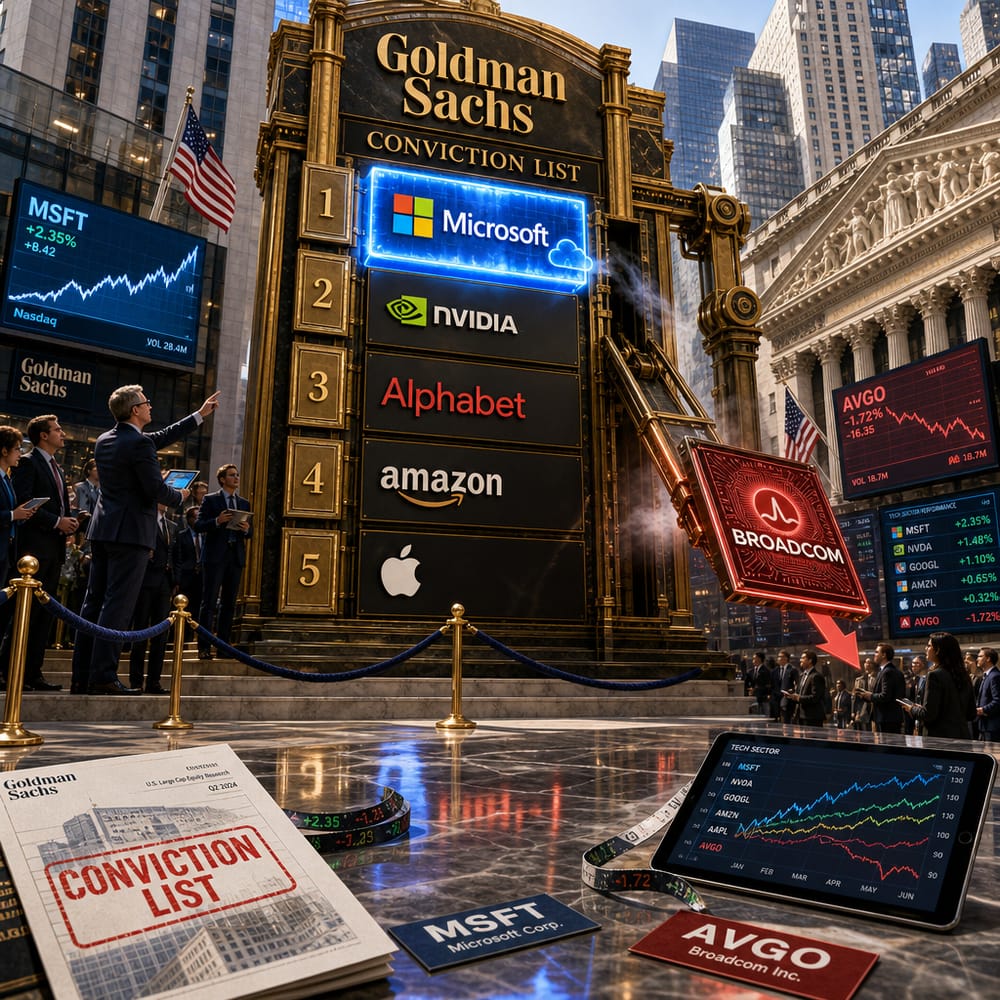
GOLDMAN SACHS SHUFFLES CONVICTION LIST: MICROSOFT IN, BROADCOM OUT
Goldman Sachs just reshuffled its favorite tech stocks like they were playlist tracks at a DJ booth, and it’s got Wall Street buzzing. Microsoft is now sitting pretty on Goldman’s U.S. Conviction List, a lineup of stocks the investment bank believes will outperform. Meanwhile, Broadcom, which was previously in the spotlight, is now getting the cold shoulder. If you’re wondering what’s behind this switcheroo, pull up a chair.
WHAT MADE MICROSOFT GOLDMAN'S NEW BESTIE?
Imagine you’re running a tech company and you’ve just been tapped by Goldman Sachs—it's like being picked by the cool kids to sit at their lunch table. Microsoft has been busy flexing its muscles in the cloud computing space and artificial intelligence, the belle of the ball in the tech world right now. Their Azure cloud platform is giving Amazon's AWS a run for its money, and with AI integration into products like Office and its Azure services, it’s clear Microsoft’s growth story is far from over. Add to that their diverse revenue streams—from gaming with Xbox to business software—and you’ve got a company that looks like it'll keep the hits coming.
While some companies rattle off buzzwords like AI to sound trendy, Microsoft is actually delivering the goods. Their recent quarterly earnings report was like a mixtape of bangers—impressive numbers across the board. Goldman’s analysts, always with an ear to the ground, must have been nodding in approval, and that’s why Microsoft is now on their Conviction List.
BROADCOM: WHY THE COLD SHOULDER?
Now, let’s talk about Broadcom. Once the apple of Goldman’s eye, it’s now been gently nudged off the favorite list. It’s not because Broadcom suddenly stopped being good at what they do—far from it. Broadcom is a big name in the semiconductor industry, but it looks like Goldman is side-eyeing some potential road bumps ahead.
A biggie is the ongoing geopolitical tensions. With the semiconductor supply chain being as delicate as a soufflé, any hiccups thanks to trade spats, like the recent U.S.-Canada tariff drama, could make things tricky for Broadcom. They’re also facing fiercer competition in the chip sector and price hikes from suppliers like Nvidia aren’t helping. All these could be a drag on Broadcom’s performance, according to Goldman's crystal ball.
WHAT DOES THIS MEAN FOR TECH INVESTORS?
For those who’ve been hiding under a rock, the tech sector is like the wild west of Wall Street—high risks but also high rewards. Goldman’s list shuffles bring to light where the tides might be turning. By backing Microsoft, Goldman’s saying they’re betting big on cloud computing and AI as the future powerhouses of the industry.
On the flip side, Broadcom’s removal hints at caution among investment giants. It’s like a little reminder that even solid companies might face bumps in the road. It doesn’t mean investors should panic-sell Broadcom, but it’s a nudge to keep an eye on the horizon for any storm clouds.
THE WIDER PICTURE
This Goldman shuffle also sends ripples through the tech sector’s investor sentiment. It’s a signal flare showing where institutional investors might be steering their massive ships of capital. Tech stock volatility is par for the course, but if you’re in it for the long haul, understanding these moves can help you ride the waves instead of getting swamped by them.
So, what’s the takeaway for you, the retail investor? It’s a lesson in resilience and opportunity. Microsoft’s climb on Goldman's list isn't just because it's a tech behemoth; it’s because it’s an adaptable one. In contrast, Broadcom reminds us that even giants need to watch their step in a volatile world.
In the end, these changes highlight how dynamic and unpredictable the tech world can be. Keep your eyes peeled, your portfolio balanced, and always be ready for the next beat in the market’s relentless rhythm.
This article is for informational purposes only and is not investment advice. Always do your own research or consult a licensed financial professional before making investment decisions.
© Copyright 2024. All Rights Reserved.
© Copyright 2024. All Rights Reserved.