

Goldman-Like Rotation? Bitcoin Sees Modest Daily Inflow While Ethereum Suffers Continued Outflows
Sunday, October 11, 2026
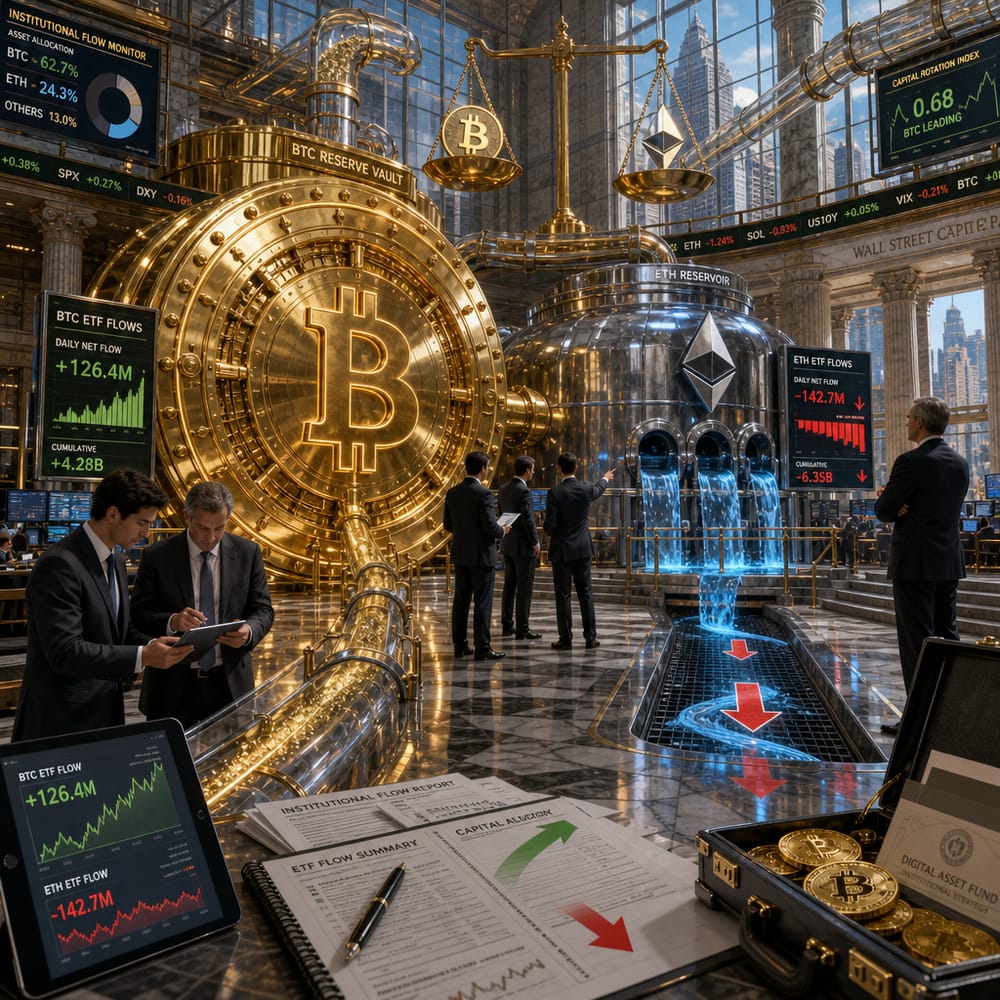
BITCOIN AND ETHEREUM: ARE WE WATCHING A CRYPTO ROTATION UNFOLD?
In a market that moves at the speed of light, Bitcoin and Ethereum are the tortoise and the hare of the crypto world—but which is which right now? In recent weeks, Bitcoin ETFs have been playing the hare, quietly raking in modest inflows while Ethereum ETFs are more like a tortoise, slowly seeing outflows plod away. Is this a sign of a shuffle within the crypto ecosystem, or just the market taking a breather?
First things first, let’s dissect the inflow of funds into Bitcoin ETFs. While the headline might read "modest," the fact that investors are still pouring money into Bitcoin is telling. It's like a group of marathon runners sticking with the leader because they believe in its endurance. This signals a continued confidence in Bitcoin's role as the granddaddy of digital currencies, the flagship that will weather the storm of market volatility. Investors might be saying, "Sure, it's risky, but if any crypto is going to remain standing in five years, it's probably Bitcoin."
On the flip side, Ethereum isn't having such a rosy time with its ETFs. Outflows suggest that investors may be reconsidering their positions in this blockchain giant. Why the cold feet? Well, Ethereum's ongoing transition to a proof-of-stake network—an overhaul akin to changing the engine of a car mid-race—has had its share of delays and concerns. Investors might be thinking twice, waiting to see if the network can deliver on its promises of efficiency and scalability. It's a classic case of "wait and see" where market participants are hedging their bets.
But let's not be too quick to write Ethereum off. The outflows could also signal a broader rotation within the crypto market rather than an outright abandonment. As Bitcoin regains its sparkle, Ethereum might just be taking a backseat temporarily—like a rock band lead guitarist letting the drummer have their solo moment. The seesaw nature of crypto investments means attention often shifts from one asset to another based on emerging narratives and investor sentiment. This shift could hint at a strategy to consolidate gains or simply diversify risk.
Could this be part of a larger trend, a genuine rotation within the market? Well, anyone who's been around crypto long enough knows it's a market full of surprises. If you blink, you might miss the next big shift. The current ETF flows could be a sign that investors are seeking safer harbors amidst broader economic uncertainties. In times of instability, Bitcoin often benefits from its status as "digital gold," a perceived safe haven despite its volatility. Investors might be parking funds in Bitcoin, awaiting clearer skies for Ethereum.
Another factor to consider is the regulatory landscape. With ongoing debates over digital currency regulations, investors are cautious. Bitcoin, established and well-acknowledged, might feel like the safer bet in the face of potential legal hurdles. Ethereum, with its more complex ecosystem of decentralized applications, faces greater scrutiny and, consequently, more regulatory risk.
Ultimately, whether these ETF flows mark the beginning of a crypto rotation or a temporary blip is yet to be seen. One thing is for sure—investors are recalibrating their strategies, and both Bitcoin and Ethereum will need to prove their mettle. In the crypto world, reputation is king, and the market is ever-watchful, ready to crown a new leader or reinstate an old one based on the shifting sands of investor confidence.
So, what’s your move? Keep watching those ETF flows, they might just be the breadcrumbs leading you to the next big opportunity in crypto. But remember, in a market that's anything but predictable, staying informed and adaptable is your best bet against the crypto rollercoaster.
This article is for informational purposes only and is not investment advice. Always do your own research or consult a licensed financial professional before making investment decisions.
© Copyright 2024. All Rights Reserved.
© Copyright 2024. All Rights Reserved.