

Global Funds Dump AI Stocks as Oil Shock Sparks Inflation Fears
Wednesday, March 04, 2026
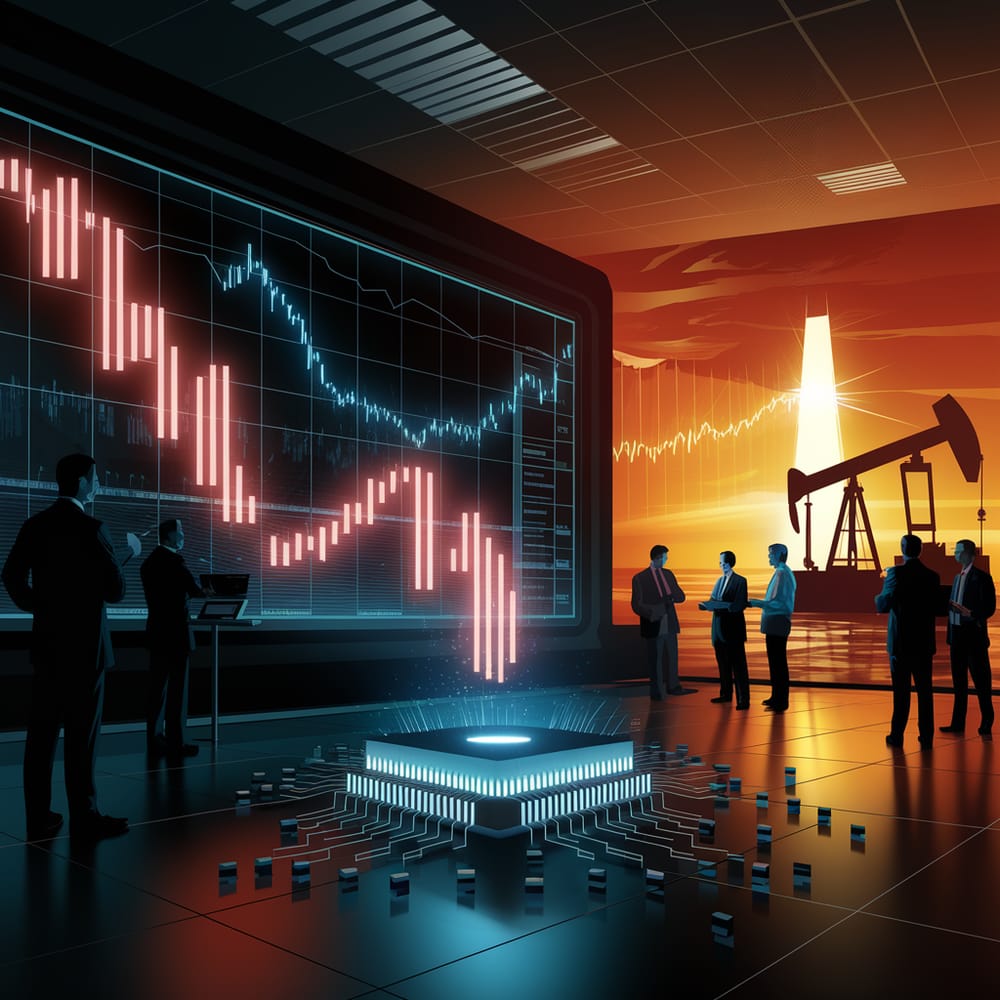
AI’s Hottest Trade Hits a Wall
The red-hot artificial intelligence trade is suddenly facing a sharp reversal. Global investors have begun pulling money from Asia’s tech-heavy markets as fears of an oil-driven inflation shock collide with stretched valuations in AI-linked stocks. Foreign funds dumped roughly three point one billion dollars in South Korean equities this week alone, after unloading a record thirteen point seven billion dollars last month. Taiwan has also seen heavy selling, with investors pulling another three point six billion dollars and pushing the market toward its largest weekly outflow in months.
Chip Giants Lead the Slide
The pullback has landed hardest on semiconductor leaders that powered much of the AI rally. In South Korea, memory chip giants Samsung Electronics and SK Hynix have each fallen around twenty percent in just a week. Taiwan Semiconductor Manufacturing has also been dragged lower. These companies were major beneficiaries of the global race to build AI infrastructure, but the sudden shift in macro sentiment is forcing investors to reassess whether the enormous spending boom will translate into sustainable profits.
Geopolitics Meets Market Positioning
The selloff isn’t happening in isolation. Escalating tensions in the Middle East and a spike in oil prices have injected a new layer of uncertainty into global markets. Investors who had crowded into AI trades are now cutting exposure quickly as they brace for inflation risks tied to higher energy costs. In some markets the shift has been dramatic, with South Korea’s benchmark Kospi index suffering its worst single-day drop on record.
Derisk Now, Ask Questions Later
Even smaller Asian markets have felt the shockwaves, with Thailand’s stock exchange briefly halting trading after steep losses in AI-linked names. The abrupt retreat highlights how crowded the AI trade had become. For many global funds, the strategy now is simple: reduce risk first and reassess later. Some analysts argue the pullback may prove temporary, describing it more as a pause in momentum than the end of the AI boom. But for now, the message from investors is clear — when geopolitical shocks collide with crowded trades, the exits get crowded fast.
© Copyright 2024. All Rights Reserved.
© Copyright 2024. All Rights Reserved.