

Global Semiconductor Selloff Intensifies Amid Bond Yield Spike
Wednesday, August 19, 2026
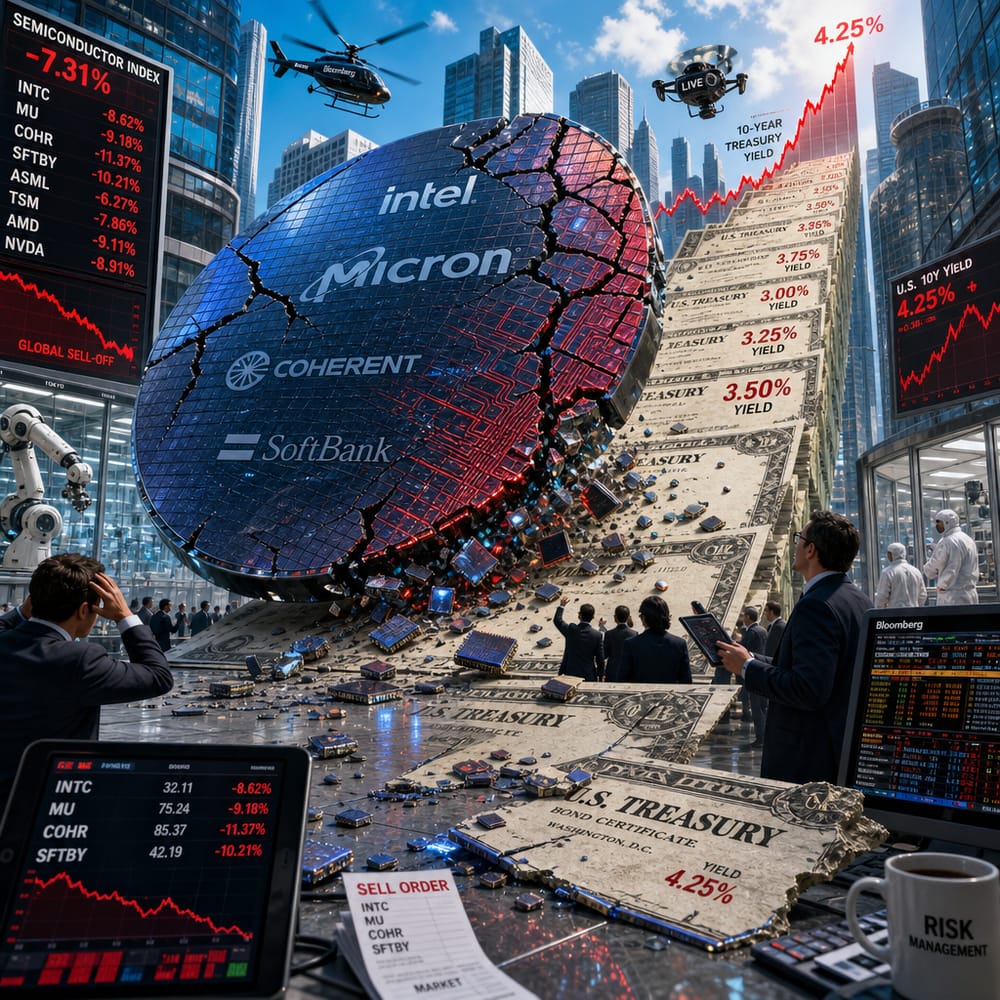
THE SEMICONDUCTOR SOUFFLÉ: WHY CHIP STOCKS ARE MELTING IN THE YIELD HEAT
Ever tried balancing a soufflé while running a marathon? That’s what semiconductor stocks are attempting as U.S. Treasury yields sprint to new heights. And just like a collapsing soufflé, the tech-heavy sector is deflating fast. The culprits? Rising bond yields. The victims? Big hitters like Intel and Micron. But fear not, dear reader, as we sift through the financial flour, let's unravel this crispy tangle and figure out how you, the savvy investor, might navigate the oven's heat.
So, what’s the deal with bond yields anyway, and why do they have tech stocks like semiconductors in a tizzy? Imagine bond yields as the quiet kid in the classroom who suddenly gets all the attention — a little sunshine, and they grow tall. When bond yields climb, the cost to borrow money also rises. For tech companies fueled on promises of future profits (we’re looking at you, semiconductors), the here-and-now of higher financing costs can feel like a bad hair day in a thunderstorm.
Intel, Micron, and others in the semiconductor gang aren’t living in a vacuum. Rising yields make competing investment options like bonds more attractive — after all, they’re the safer bet. When investors see a solid return in bonds, they might be tempted to take their chips off the tech stock table. It’s a classic game of risk and reward. But this time, rising yields are the loud thundering cue for these investors to shuffle their portfolios.
Here's the rub for semiconductor companies: they thrive on innovation and expansion, both of which can be expensive. Picture Intel’s ambitious moves into AI or Micron’s investment in next-gen memory technology — these aren’t projects you can fund with pocket change found in the couch cushions. Higher interest rates mean it costs more to finance such ventures. Suddenly, those shiny projects with far-off paydays look less like golden geese and more like costly gambles.
But wait, there’s a plot twist. Despite the doom and gloom, not all semiconductor players are getting burned. Take Coherent, for instance. While others might be tightening belts, Coherent’s diverse tech reach could shield them from some of this storm. And let’s not forget the SoftBank-backed projects; they’re always full of surprises, like a piñata with an explosive yield of candy.
So, how should you, the intrepid investor, navigate this yield-fueled turbulence? First off, don’t panic. History shows us that markets are cyclical. They’ve got moods that swing faster than a caffeinated squirrel. What’s crucial here is diversification. Don’t put all your savings into semiconductors or tech stocks alone; mix it up with some bonds or perhaps a sip of those juicy dividend stocks that pay you to wait.
Keep an eye on the Federal Reserve like a hawk on a field mouse. Their interest rate moves are the breadcrumbs that lead the market’s direction. If they decide to pause hikes, it might just be the breath of fresh air semiconductors need. Conversely, a hawkish Fed could mean more pressure on tech stock valuations, so stay alert.
And finally, don't forget the golden rule of investing: time in the market beats timing the market. Sure, today might feel like a stormy squall, but over the long haul, tech innovation doesn’t just stop because of a little macroeconomic turbulence. People will still want faster chips, better AI, and smarter devices. In a world brimming with tech potential, semiconductors are akin to the silicon backbone, crucial but often underappreciated.
So as the semiconductor soufflé wobbles and wavers with the bond yield breeze, keep your cool. Remember, it’s all part of the grand financial feast. Diversify, stay informed, and above all, trust that with each dip, there’s usually a rise begging to play follow the leader.
This article is for informational purposes only and is not investment advice. Always do your own research or consult a licensed financial professional before making investment decisions.
© Copyright 2024. All Rights Reserved.
© Copyright 2024. All Rights Reserved.