

Global Risk-Off Sentiment Hits U.S. Markets
Tuesday, August 18, 2026
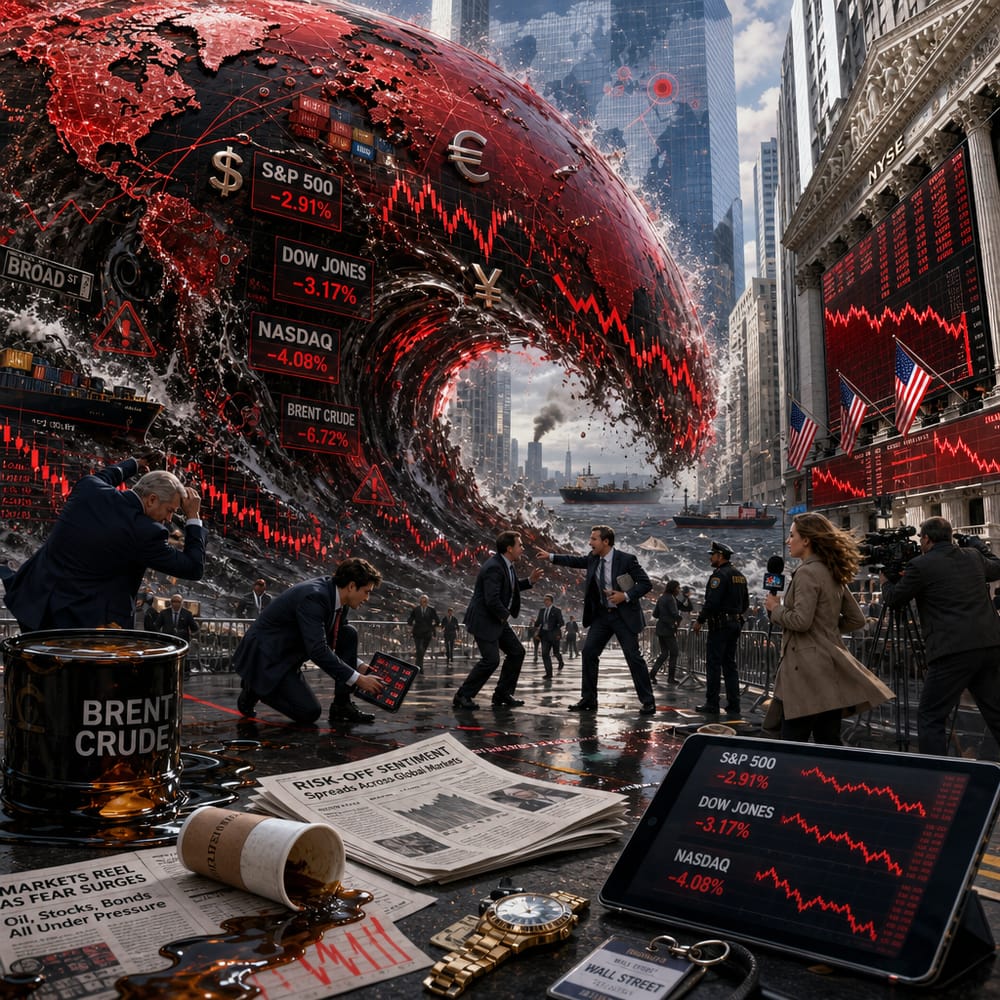
GLOBAL RISK-OFF SENTIMENT HITS U.S. MARKETS
When the global stage gets shaky, the ripple effects hit Wall Street faster than a viral cat video. This week, a cocktail of geopolitical jitters sent savvy U.S. investors diving for cover, watching as a global risk-off sentiment sparked a broad-based sell-off in U.S. equity markets. From Main Street to Wall Street, it’s time to understand how a geopolitical storm in the Strait of Hormuz can whip up a market frenzy in the Big Apple.
But first, let's paint the picture: Imagine you're at the center of a crowded theater, and someone yells "fire!"—that's roughly akin to what happens when international tensions crank up. Investors duck and cover, ditching stocks for the safety of bonds and gold faster than you can say "diversify."
This week, the tension tango is courtesy of escalating concerns in the Middle East. The Strait of Hormuz—a critical artery for global oil—suddenly feels more like a clogged pipe. President Trump’s threats to Oman, coupled with drone strikes from Iran-backed rebels on Saudi oil facilities, have created a frenzy. The result? A marketplace teetering on the edge of its seat, clutching its purse strings just a bit tighter.
The S&P 500, Dow, and Nasdaq didn't escape unscathed. They caught a chill from this international cold wind, showing red as investors scurried for the exits. It's like watching your favorite team's quarterback take a hit: uncomfortable and nerve-wracking. And it's not just stocks feeling the heat—or rather, the cold. Brent crude prices, typically sensitive to the Middle East drama, took a roller-coaster ride, reminding us all how dependent global energy markets are on geopolitical peace—or lack thereof.
So, what's driving this market storm? It’s all about the geopolitical factors dangling the proverbial sword of Damocles over investors' heads. Iran's saber-rattling and the ominous silence from the U.S., alongside rumors of more drama than a daytime soap opera, have made investors understandably jittery. Mix in persistent inflation concerns and the grip of a global bond sell-off, and you've got a pot that's ready to boil over.
Now, onto the $64,000 question (maybe more, maybe less, depending on your portfolio's exposure): How can investors protect their portfolios in this risk-off environment? Let’s break it down.
First, breathe. Panic selling is the financial equivalent of a knee-jerk reaction. Instead, consider focusing on diversification. Like a balanced diet, a diversified portfolio can keep you healthy through rough patches. Think of bonds as your market seatbelt, offering a little cushion when equity prices jump around like caffeinated squirrels.
Next, keep an eye on sectors that might defy gravity. When geopolitical tensions rise, defense stocks can march to their own drumbeat, often gaining as tensions ignite. Companies in the sector, like Lockheed Martin, might just be the defensive play your portfolio needs. Then there's gold—the classic haven for nervous Nellies. It's been a trusted ally in the face of uncertainty, holding its value when all else seems to crumble.
And then there's the good ol’ dollar, flexing its muscles as a safe haven when global stability falters. With the WSJ Dollar Index making gains, holding a bit of greenback in your back pocket isn't the worst idea in times of turmoil.
But remember, all that glitters is not gold—or stocks or bonds. Stay informed and nimble. Monitor the headlines and consider the impact of geopolitical developments on market trends. It's like playing an endless game of chess, where the geopolitical board can shift with the slightest breeze.
As markets digest the latest geopolitical rumblings, understanding the interconnectedness of global events and their impact on our hometown markets is crucial. While these international dramas unfold, remember that awareness is power. Stay informed, stay balanced, and remember that even the fiercest market storm eventually passes.
In the end, global markets are interconnected like never before. When one domino falls, the ripple effects reach far and wide. So, whether it's a Middle Eastern flashpoint or a domestic policy shift, staying on top of the news is a must. The world is a stage—and the market an audience with a front-row seat to the drama.
This article is for informational purposes only and is not investment advice. Always do your own research or consult a licensed financial professional before making investment decisions.
© Copyright 2024. All Rights Reserved.
© Copyright 2024. All Rights Reserved.