

Germany Pushes for ‘Zero-for-Zero’ Tariff Deal Amid Transatlantic Strain
Friday, April 25, 2025
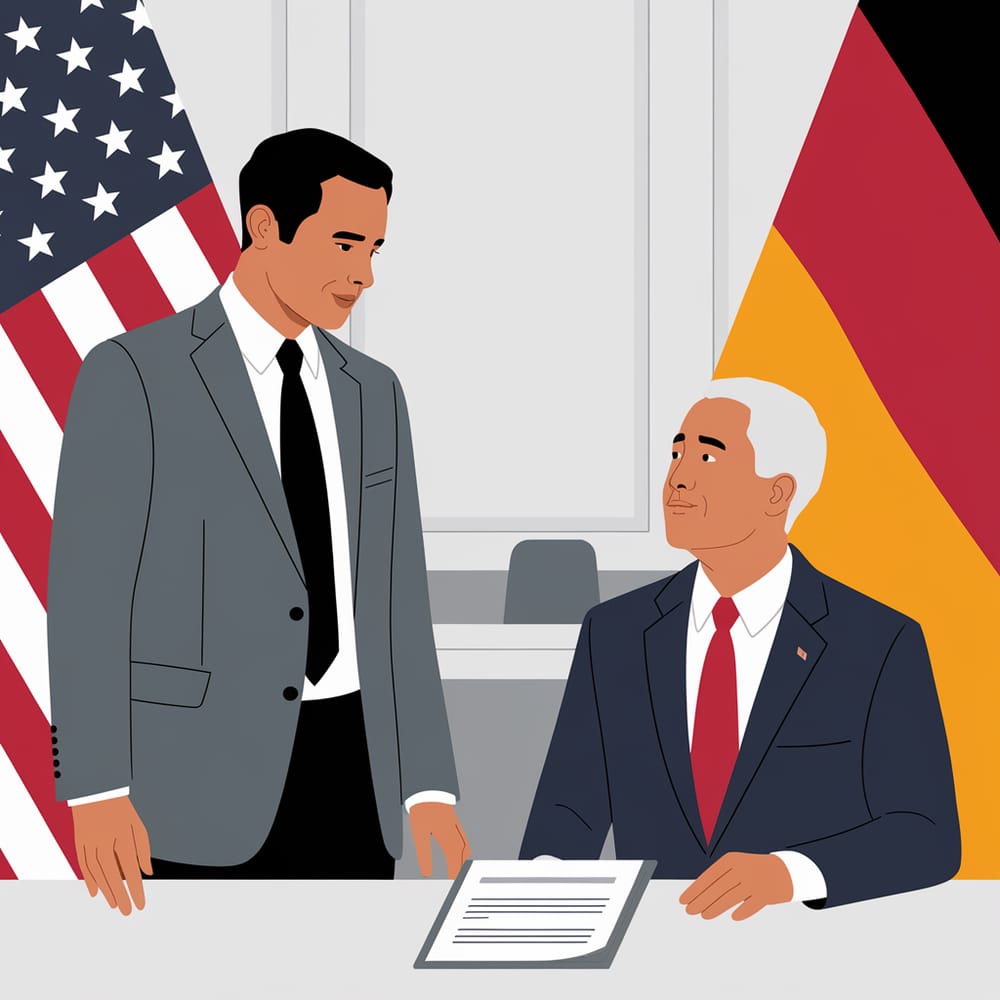
Despite rising tariff tensions between the U.S. and Europe, Germany is holding out hope for a rational resolution—one built on cooperation, not confrontation.
Joerg Kukies, Germany’s acting finance minister, told CNBC that the transatlantic partnership remains intact, even after President Trump’s aggressive tariff actions. His preferred solution? A “zero-for-zero” tariff agreement—scrapping duties on both sides for industrial goods to restore stability in global trade.
“For trust to be broken, a lot more would have to happen,” Kukies said, emphasizing the deep-rooted ties between the U.S. and Europe. “We won’t get carried away by the statement of tariffs.”
Kukies struck a diplomatic tone, saying both sides need to better understand each other’s perspectives. But he also made it clear that Germany—whose economy is heavily reliant on trade—is feeling the heat. Trump recently slapped a 10% tariff on German goods, down from an initially proposed 20%, but still a blow to a nation already teetering near stagnation.
The German government lowered its 2025 growth forecast to 0.0%, citing U.S. trade policy as a key factor. The IMF also downgraded Germany, projecting a 0.2% economic contraction this year.
Germany hopes for a negotiated outcome, but the path won’t be easy. Trump has already rejected an EU proposal for mutual tariff elimination on industrial goods.
Still, with European Commission President Ursula von der Leyen backing a similar deal, there’s hope that talks could resume—especially with pressure mounting on both sides to avoid a full-blown trade war.
Bottom line: Germany wants a tariff truce, not a trade fight. But with Trump doubling down and the EU wary of retaliation, the zero-for-zero dream faces an uphill climb.
© Copyright 2024. All Rights Reserved.
© Copyright 2024. All Rights Reserved.